Herbaveda Overseas

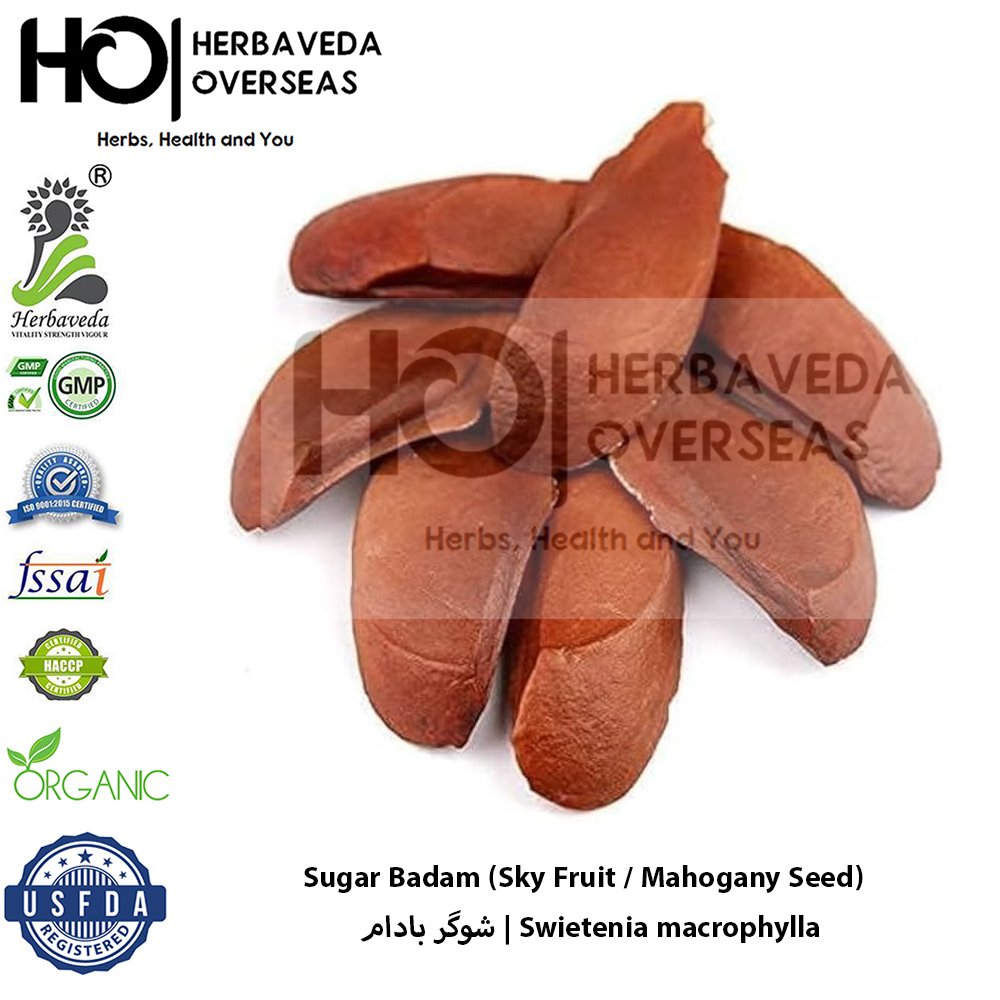
Sugar Badam (Sky Fruit / Mahogany Seed) | شوگر بادام | Swietenia macrophylla

in stock

Swietenia macrophylla is a large tropical hardwood tree native to the forests of Central and South America — the source of the prized big-leaf mahogany timber. Its seeds — marketed in Asia as ‘sky fruit’ or ‘sugar badam’ — have attracted popular interest in Southeast Asia and India for traditional preparations associated with metabolic health.

  • Free Shipping & Exchanges
  • Flexible and secure payment, pay on delivery
  • 600,000 happy customers
Guarantee Safe & Secure Checkout
SKU: herb_10340 Categories: ,

Quick facts: Sugar Badam (Sky Fruit / Mahogany Seed)

Common name
Sugar Badam, Sky Fruit / Mahogany Seed
Hindi / local name
شوگر بادام
Botanical name
Swietenia macrophylla
Type
Whole edible and oil seeds
Packed by
Herbaveda Overseas, Khari Baoli, Delhi (since 1971)
Storage
Airtight container, cool and dry place, away from sunlight
Bulk / export
Available – ask for a wholesale quote

What is Sugar Badam called in English?

Sugar Badam (شوگر بادام) is Sky Fruit / Mahogany Seed – botanical name Swietenia macrophylla.

How do I order Sugar Badam in bulk?

Send us your quantity and destination through the contact page or WhatsApp +91-99717-54285 for a wholesale or export quote.

For traditional and culinary use. Not intended to diagnose, treat, cure or prevent any disease. Consult a doctor before use, especially if you are pregnant, nursing or taking medicines.

Description

Swietenia macrophylla, big-leaf mahogany, is a large, emergent tropical forest tree of the family Meliaceae, native to the tropical forests of Central America, the Amazon basin, and northern South America. Listed as Vulnerable on the IUCN Red List due to historical over-exploitation for its prized timber, the large winged seeds have been marketed in Southeast Asia and more recently in India as ‘sky fruit’ or ‘sugar badam’, traditionally associated with metabolic wellness. The seeds contain terpenoids including swietenine and swietenolide. While phytochemical research from Southeast Asia has investigated the seeds’ metabolic effects in animal models, traditional documentation specifically for the Indian subcontinent is limited, and claims should be approached with ethnobotanical caution.
shopping cart