Herbaveda Overseas

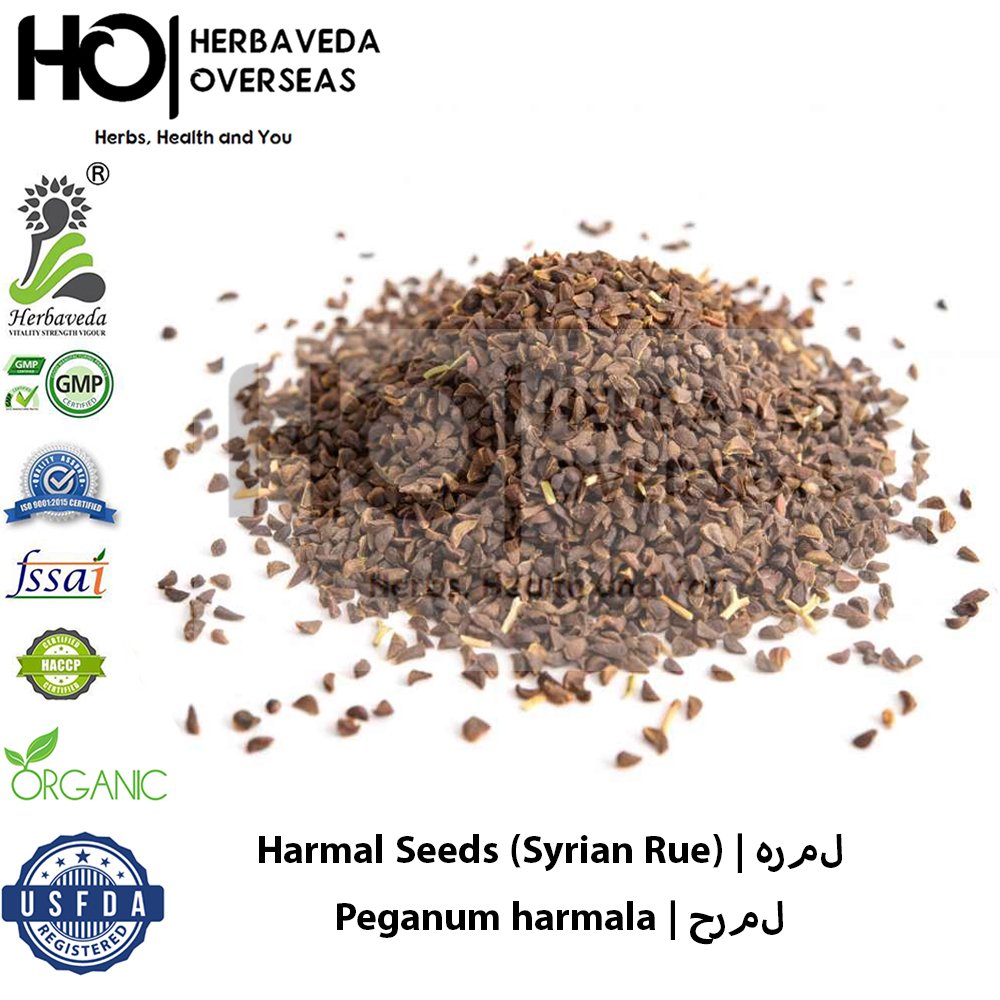
Harmal Seeds (Syrian Rue) | هرمل | Peganum harmala

in stock

Peganum harmala is a bushy perennial herb native to the steppes and semi-deserts of the Middle East, Central Asia, and the northwestern Indian subcontinent. Its seeds are documented across Unani, traditional Persian, and folk medical systems for their alkaloid content, and have a long history as a ceremonial fumigant and dye plant.

  • Free Shipping & Exchanges
  • Flexible and secure payment, pay on delivery
  • 600,000 happy customers
Guarantee Safe & Secure Checkout

Quick facts: Harmal Seeds (Syrian Rue)

Common name
Harmal Seeds, Syrian Rue
Hindi / local name
هرمل
Botanical name
Peganum harmala
Type
Whole edible and oil seeds
Packed by
Herbaveda Overseas, Khari Baoli, Delhi (since 1971)
Storage
Airtight container, cool and dry place, away from sunlight
Bulk / export
Available – ask for a wholesale quote

What is Harmal Seeds called in English?

Harmal Seeds (هرمل) is Syrian Rue – botanical name Peganum harmala.

How do I order Harmal Seeds in bulk?

Send us your quantity and destination through the contact page or WhatsApp +91-99717-54285 for a wholesale or export quote.

For traditional and culinary use. Not intended to diagnose, treat, cure or prevent any disease. Consult a doctor before use, especially if you are pregnant, nursing or taking medicines.

Description

Peganum harmala, Syrian rue or wild rue, is a bushy, multi-branched perennial herb of the family Nitrariaceae, native to the arid steppes, desert margins, and stony semi-desert soils of the Middle East, Central Asia, and the northwestern Indian subcontinent from Iran through Afghanistan to Pakistan and Rajasthan. The small, brown, triangular seeds are rich in beta-carboline alkaloids — primarily harmine and harmaline — which serve as reversible monoamine oxidase inhibitors and have attracted significant pharmacological research interest. In Unani pharmacopoeia, the seeds are documented as Harmal and employed in formulations for neurological and reproductive conditions under strict protocols. The plant also holds cultural significance as a fumigation and ritual plant across Persian, Turkish, and Central Asian folk traditions.
shopping cart