
Description
What is it?
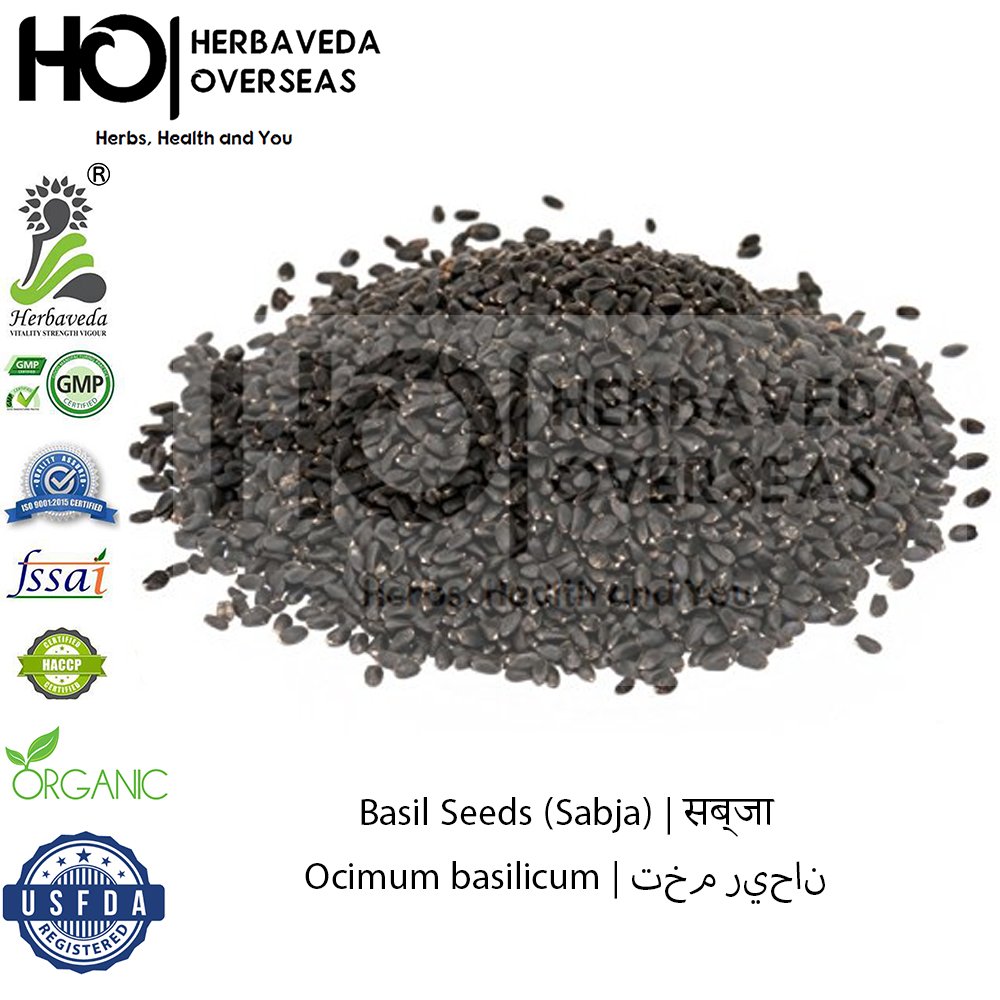
Sabja is the seed of sweet basil, a fragrant plant of the mint family grown across India. The tiny black seeds have no taste of their own. When soaked, each seed forms a soft, clear jelly coat within a few minutes. This makes sabja a favourite in falooda, nimbu pani, rose sharbat and other summer drinks across India, Pakistan and Iran. Sabja is not the same as tulsi seed or chia seed.
Quick facts
- Botanical name: Ocimum basilicum L.
- Family: Lamiaceae
- Part supplied: whole dried seeds
- Hindi: सब्जा, तुकमरिया
- Urdu: تخم ریحان
- Other names: Tukmaria, falooda seeds, Tukhm-e-Rehan (Unani), sweet basil seeds
Traditional uses
- Soaked and added to falooda, sharbats and kulfi as a cooling summer ingredient.
- Listed in Unani texts as Tukhm-e-Rehan and used in cooling preparations.
- Used in home drinks during Ramzan and the hot months.
Who buys it from us
- Food and beverage brands
- Falooda and sweet shops
- Grocery and dry-fruit wholesalers
- Unani manufacturers
Quality and packing
- Small, jet-black, even-sized seeds.
- Swell quickly in water and form a clear jelly coat.
- Free from dust, stones and stalk pieces.
- Packed in bulk bags to the buyer’s requirement and shipped across India from Delhi.
Herbaveda Overseas has traded raw herbs from Khari Baoli, Delhi, since 1971. Use our Request a Quote form for the latest bulk price, a sample or a custom pack size.
Frequently asked questions
Is sabja the same as chia seed?
No. Chia is a different plant. Sabja seeds are smaller, rounder and swell much faster in water.
Is sabja the same as tulsi seed?
No. Sabja comes from sweet basil; tulsi seed comes from holy basil.
Do you supply sabja seeds in bulk?
Yes, across India. Send an enquiry with your quantity.
Sold as a raw herb for traditional and trade use. This information is educational and is not a substitute for medical advice.