
Description
What is it?
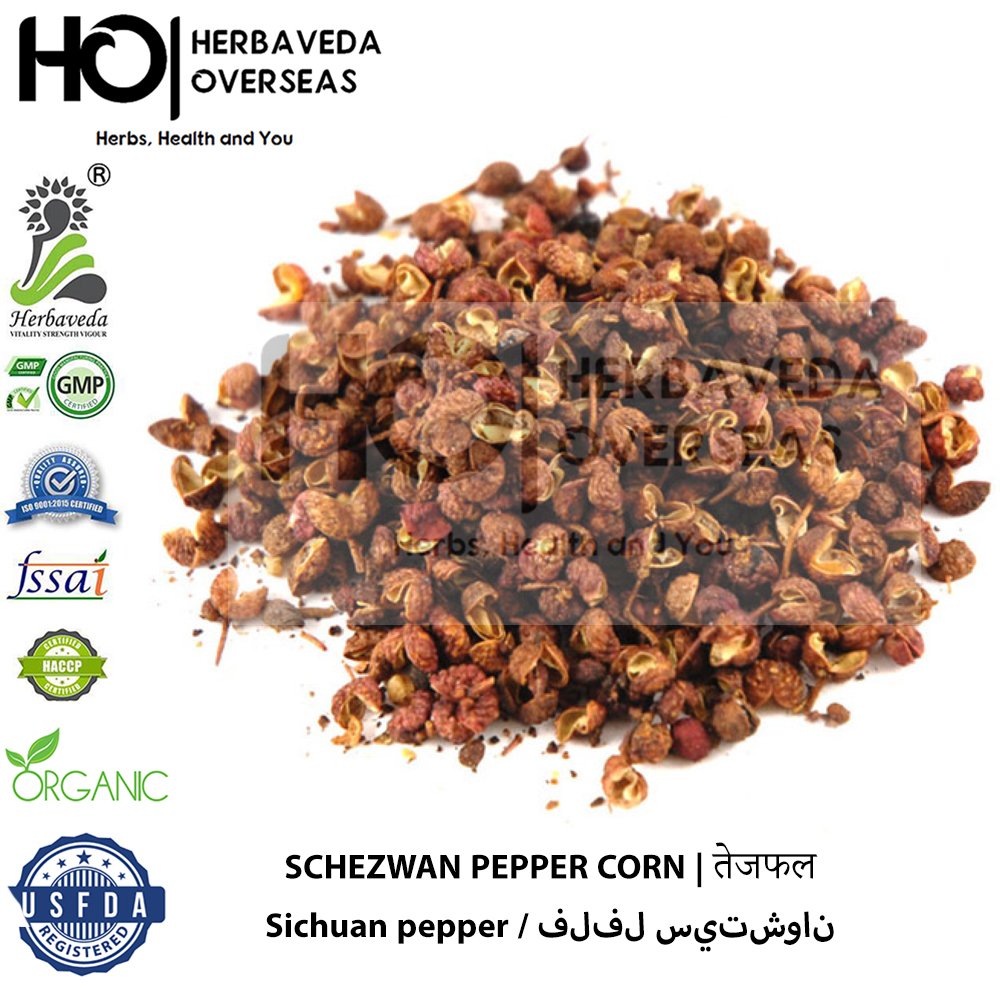
Sichuan pepper is not a true pepper. It is the dried, split fruit husk of a thorny Zanthoxylum shrub. It smells of lemon and gives a tingling, numbing feel on the lips and tongue. It is listed here under Zanthoxylum bungeanum of China; in the Himalayas a close relative, timur (Zanthoxylum armatum), is used in the same way in pickles and chutneys.
Quick facts
- Botanical name: Zanthoxylum bungeanum Maxim. (as listed)
- Family: Rutaceae (citrus family)
- Part supplied: dried fruit husks
- Hindi: तिमुर, तेजबल
- Other names: Timur (Nepali), Tejphal, Tumburu (Sanskrit), Chinese prickly ash, hua jiao (Chinese)
Traditional uses
- Used in Sichuan and Indo-Chinese cooking, often with dried red chillies.
- Used in Nepali and Himalayan pickles, chutneys and momo sauces.
- Described in Ayurvedic texts as Tumburu, used for digestion.
- Traditionally chewed in the hills for the mouth and teeth.
Who buys it from us
- Chinese, Nepali and Tibetan restaurants
- Spice blenders and sauce makers
- Food brands and caterers
- Ayurvedic manufacturers
Quality and packing
- Split, reddish-brown husks with few black seeds or stalks.
- Strong lemony smell and a clear tingling, numbing feel on the tongue.
- No dust or mould.
- Packed in bulk bags to the buyer’s requirement and shipped across India from Delhi.
Herbaveda Overseas has traded raw herbs from Khari Baoli, Delhi, since 1971. Use our Request a Quote form for the latest bulk price, a sample or a custom pack size.
Frequently asked questions
Is Sichuan pepper the same as black pepper?
No. It comes from a different plant and gives a tingling, numbing feel instead of heat.
Is timur the same as Sichuan pepper?
They are close relatives and are used the same way.
Do you supply in bulk?
Yes. Send an enquiry with your quantity.
Sold as a raw herb for traditional and trade use. This information is educational and is not a substitute for medical advice.