
Description
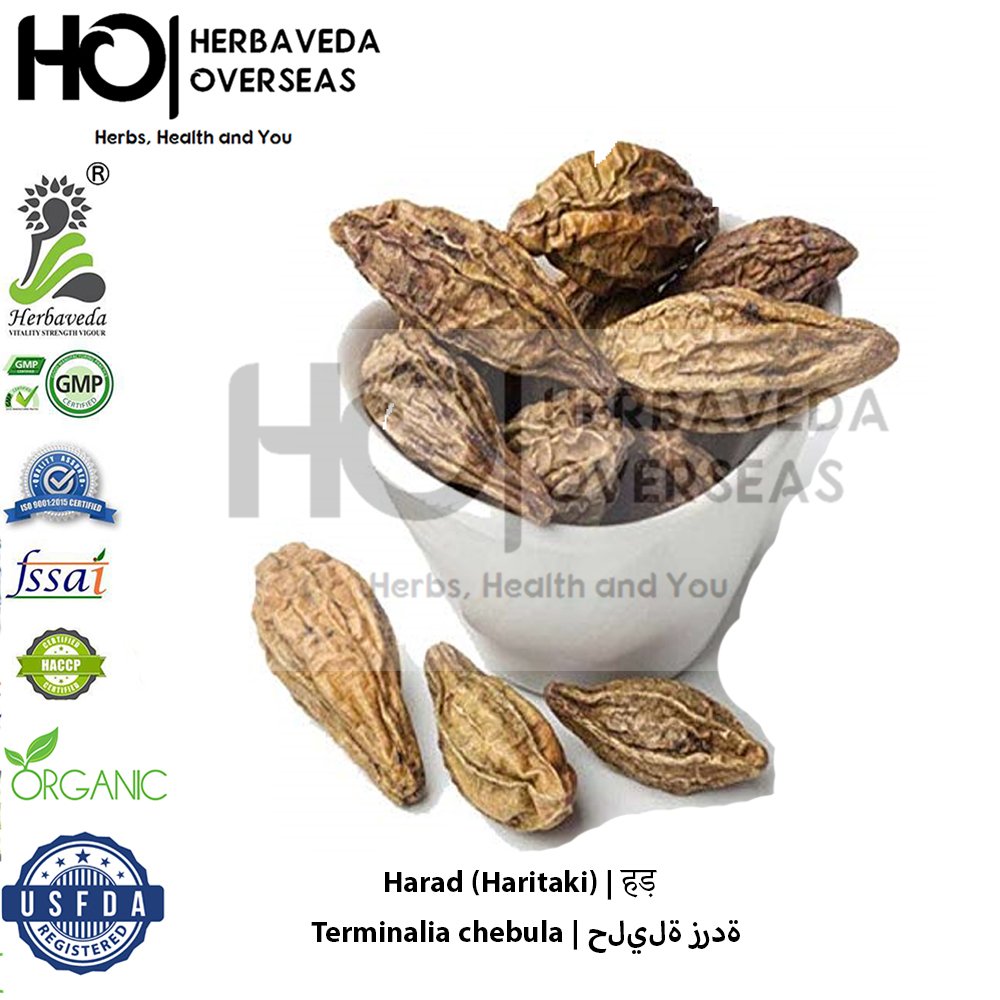
Terminalia chebula, known in Ayurveda as Haritaki and described in classical texts as the ‘king of medicines,’ is a large deciduous tree of the family Combretaceae, native to the tropical and subtropical dry forests of South and Southeast Asia, distributed from northern India through Myanmar, Thailand, and southern China. The dried drupe — collected at varying stages of maturity to yield seven distinct pharmacological varieties described in the Charaka Samhita — is one of the three constituent fruits of the classical polyherbal compound Triphala. Haritaki is cited across virtually all major Ayurvedic classical texts as a primary Rasayana herb, traditionally incorporated into formulations for digestive, respiratory, and cognitive health. The NMPB classifies it among priority medicinal plant species for domestic cultivation and conservation.