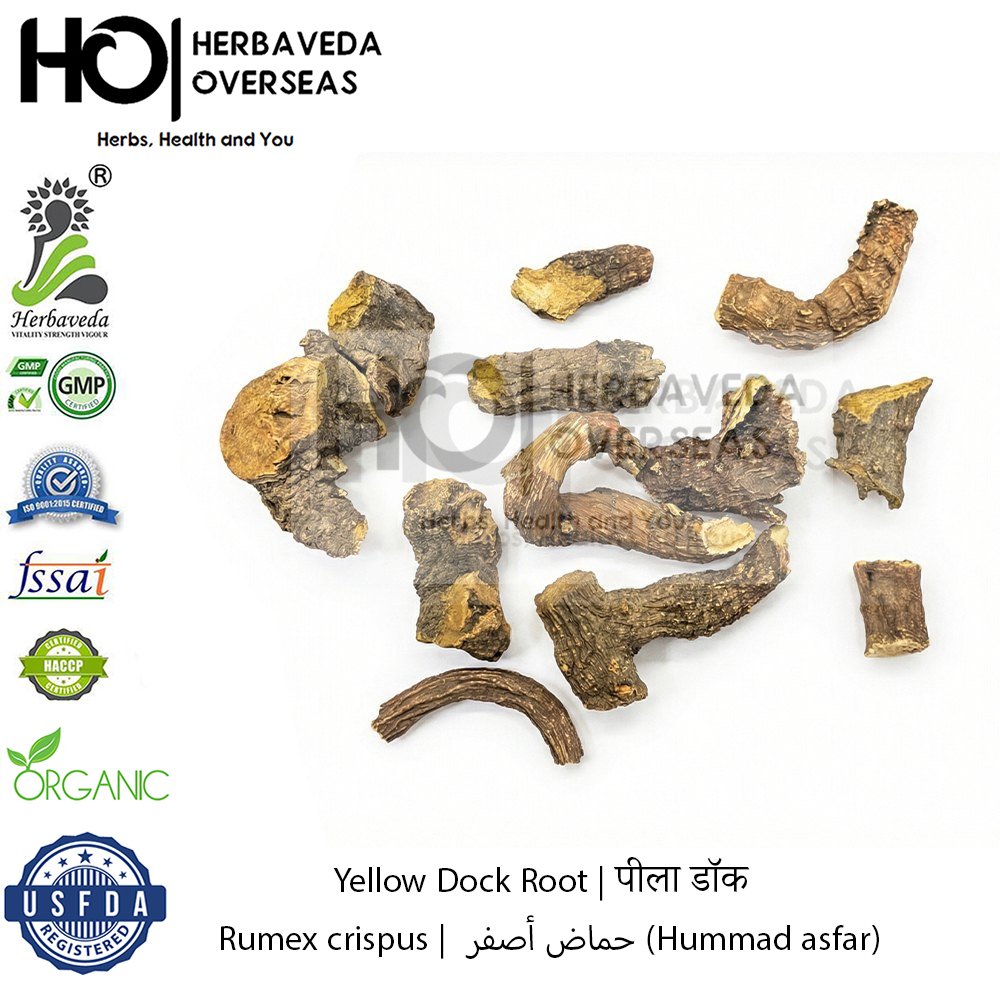

Description
What is it?
Yellow dock, or curled dock, is a common weed of fields and roadsides in Europe, now found across much of the world. It has long leaves with wavy, curled edges and a deep taproot that is yellow inside – hence the name. Western herbalists have used the root for centuries as a bitter herb for digestion. It is a cousin of sorrel (khatta palak).
Quick facts
- Botanical name: Rumex crispus L.
- Family: Polygonaceae (dock family)
- Part supplied: dried, cut roots
- Hindi: पीला डॉक
- Urdu: پیلا ڈاک
- Other names: curled dock, curly dock, narrow-leaved dock
Traditional uses
- Used in European and American folk herbalism as a bitter herb for digestion.
- Traditionally described as a “blood cleansing” herb in old Western herbals.
- Used by brands in herbal teas, tinctures and supplements.
Safety
Yellow dock has a natural laxative action and contains oxalates. Use only small amounts for short periods. Avoid it in pregnancy and while breastfeeding, for children, and if you have kidney stones or kidney problems. Keep out of reach of children.
Who buys it from us
- Herbal tea and supplement makers
- Extract and tincture manufacturers
- Herb retailers and importers
Quality and packing
- Cut root pieces, rusty-brown outside and yellowish inside.
- Dry and hard, with a bitter taste; free from soil and mould.
- Packed in bulk bags to the buyer’s requirement and shipped across India from Delhi.
Herbaveda Overseas has traded raw herbs from Khari Baoli, Delhi, since 1971. Use our Request a Quote form for the latest bulk price, a sample or a custom pack size.
Frequently asked questions
Why is it called yellow dock?
Because the inside of its root is yellow.
Does yellow dock act as a laxative?
It contains natural anthraquinones, which have a mild laxative action, so it is used in small amounts.
Do you supply yellow dock root in bulk?
Yes. Send an enquiry with your quantity.
Sold as a raw herb for traditional and trade use. This information is educational and is not a substitute for medical advice.