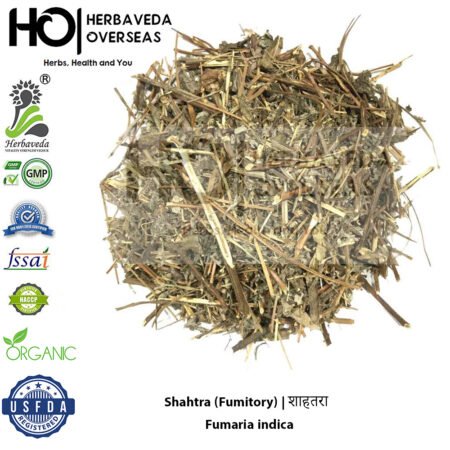
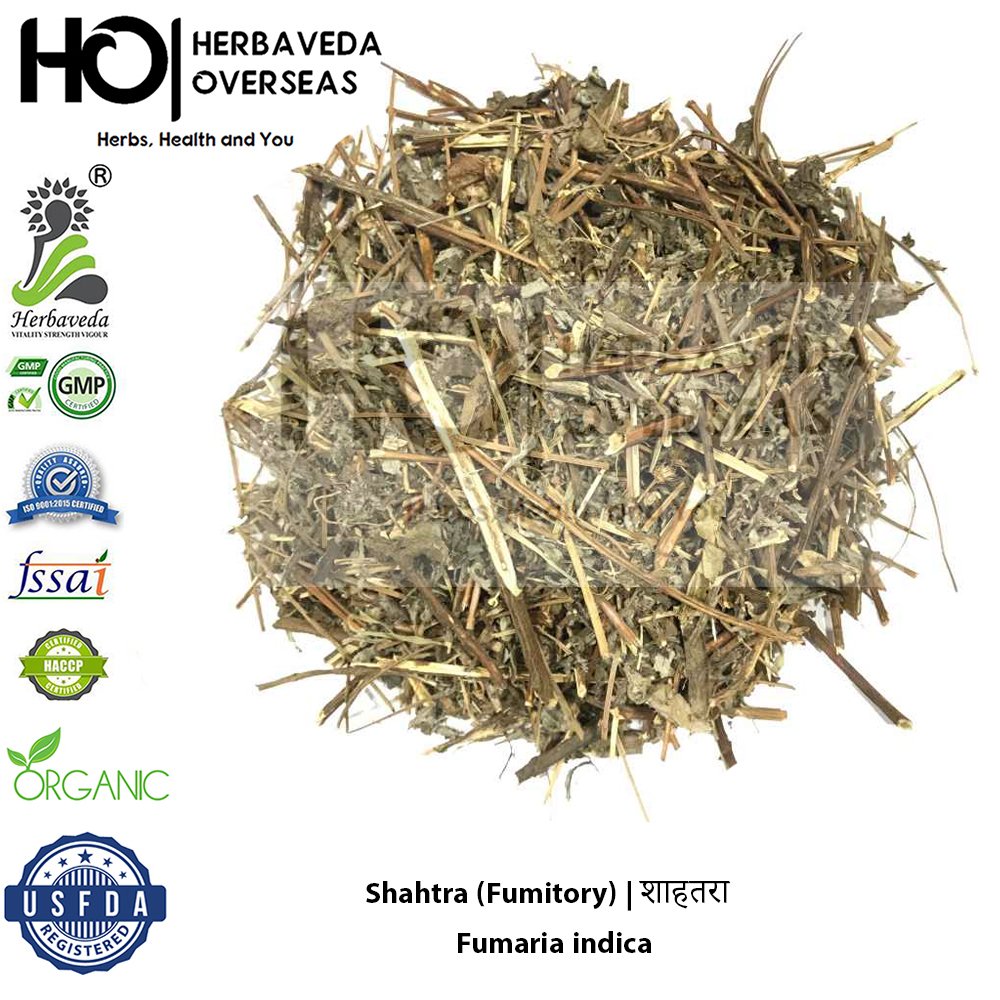
Shahtra (Fumitory) | शाहतरा | Fumaria indica

1000 in stock

Price range: ₹242.00 through ₹315.00 inc GST

Fumaria indica is a delicate annual herb native to the plains and lower hills of the Indian subcontinent, commonly growing in disturbed agricultural land and winter crops. Its bitter aerial parts are documented in classical Unani pharmacopoeia as Shahtara — one of the most important blood-purifying and anti-infective herbs in the Islamic medical tradition.

Buy It Now
  • Free Shipping & Exchanges
  • Flexible and secure payment, pay on delivery
  • 600,000 happy customers
Guarantee Safe & Secure Checkout
SKU: hbv2_10526_parent Categories: , , ,

Quick facts: Shahtra (Fumitory)

Common name
Shahtra, Fumitory
Hindi / local name
शाहतरा
Botanical name
Fumaria indica
Type
Raw roots
Pack sizes
0.5 kg, 1 kg (from ₹242)
Packed by
Herbaveda Overseas, Khari Baoli, Delhi (since 1971)
Storage
Airtight container, cool and dry place, away from sunlight
Bulk / export
Available – ask for a wholesale quote

What is Shahtra called in English?

Shahtra (शाहतरा) is Fumitory – botanical name Fumaria indica.

Can I buy Shahtra in bulk?

Yes. Retail packs are sold here; for bulk quantities, contact us for wholesale and export prices.

For traditional and culinary use. Not intended to diagnose, treat, cure or prevent any disease. Consult a doctor before use, especially if you are pregnant, nursing or taking medicines.

Description

Fumaria indica, Indian fumitory, is a slender, branching annual herb of the family Fumariaceae, native to the temperate and subtropical zones of the Indian subcontinent — particularly the wheat-growing plains of Punjab, Haryana, Uttar Pradesh, and Rajasthan — where it grows as a common winter crop weed. The plant bears finely divided, feathery blue-green leaves and small, pink and dark purple tubular flowers. Known as Shahtara in classical Unani medicine and referenced in the Charaka Samhita as Pitapapada, the aerial parts are among the most consistently documented blood-purifying herbs in both Unani and Ayurvedic traditions. Documented in Ibn Sina’s Al-Qanun fi al-Tibb for hepatic, blood purification, and skin applications, it is a primary ingredient in classical Unani formulations including Sharbat Ushba and various Jawarish preparations. The plant is also incorporated in Ayurvedic spring cleansing (Vasanta Ritucharya) regimens.
Additional information

WeightN/A
DimensionsN/A