
Description
What is it?
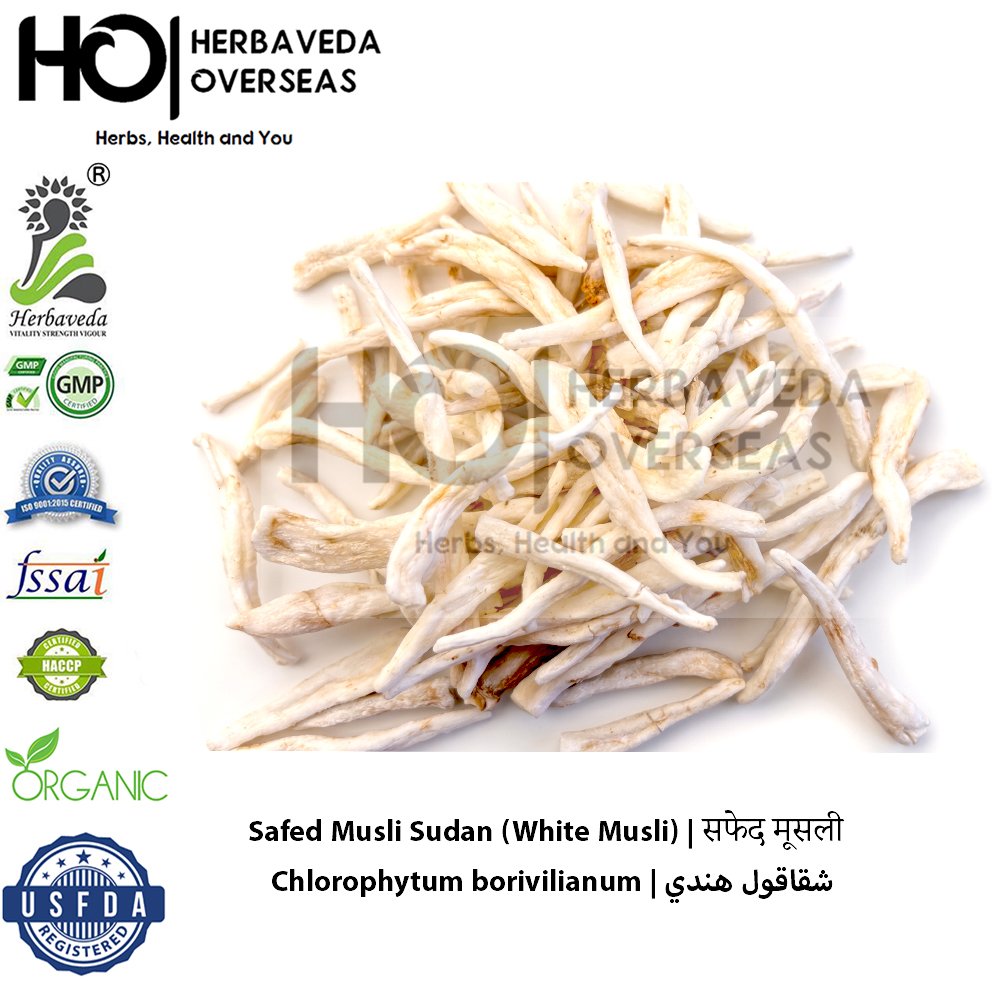
Safed Musli is the white, fleshy root tuber of a small lily-like plant. Besides Indian musli, the Khari Baoli market trades an imported grade from Sudan. Sudan musli comes from wild African Chlorophytum plants; it is usually darker and thinner than Indian cultivated musli, and it is priced lower.
Quick facts
- Botanical name: Chlorophytum species (traded as Chlorophytum borivilianum)
- Family: Asparagaceae
- Part supplied: dried, peeled root tubers
- Origin: Sudan (imported)
- Hindi: सफेद मूसली
- Urdu: سفید موسلی
- Other names: Shweta Musli (Sanskrit), Dholi Musli (Gujarati), Taniravi thang (Tamil), white musli
Traditional uses
- Described in Ayurvedic texts as a Vajikarana (vitality) and Rasayana herb.
- Used in strength, stamina and post-natal tonics and in Unani majoons.
- Ground for churna, capsules and extracts by manufacturers.
Who buys it from us
- Ayurvedic and Unani manufacturers
- Nutraceutical and extract units
- Hakims, vaidyas and pansari shops
Quality and packing
- Creamy-white to ivory, dry tuber pieces.
- Breaks with a clean snap and becomes sticky when chewed.
- No black spots, mould or soil.
- Packed in bulk bags to the buyer’s requirement and shipped across India from Delhi.
Herbaveda Overseas has traded raw herbs from Khari Baoli, Delhi, since 1971. Use our Request a Quote form for the latest bulk price, a sample or a custom pack size.
Frequently asked questions
How is Sudan musli different from Indian musli?
Sudan musli is imported and wild-collected, usually thinner and darker. Indian musli is cultivated, whiter and costlier.
Is it the same species?
It is traded as safed musli, but African material can come from related Chlorophytum species. Ask for a sample if you need a specific grade.
Do you supply Sudan musli in bulk?
Yes. Send an enquiry with your quantity.
Sold as a raw herb for traditional and trade use. This information is educational and is not a substitute for medical advice.