
Description
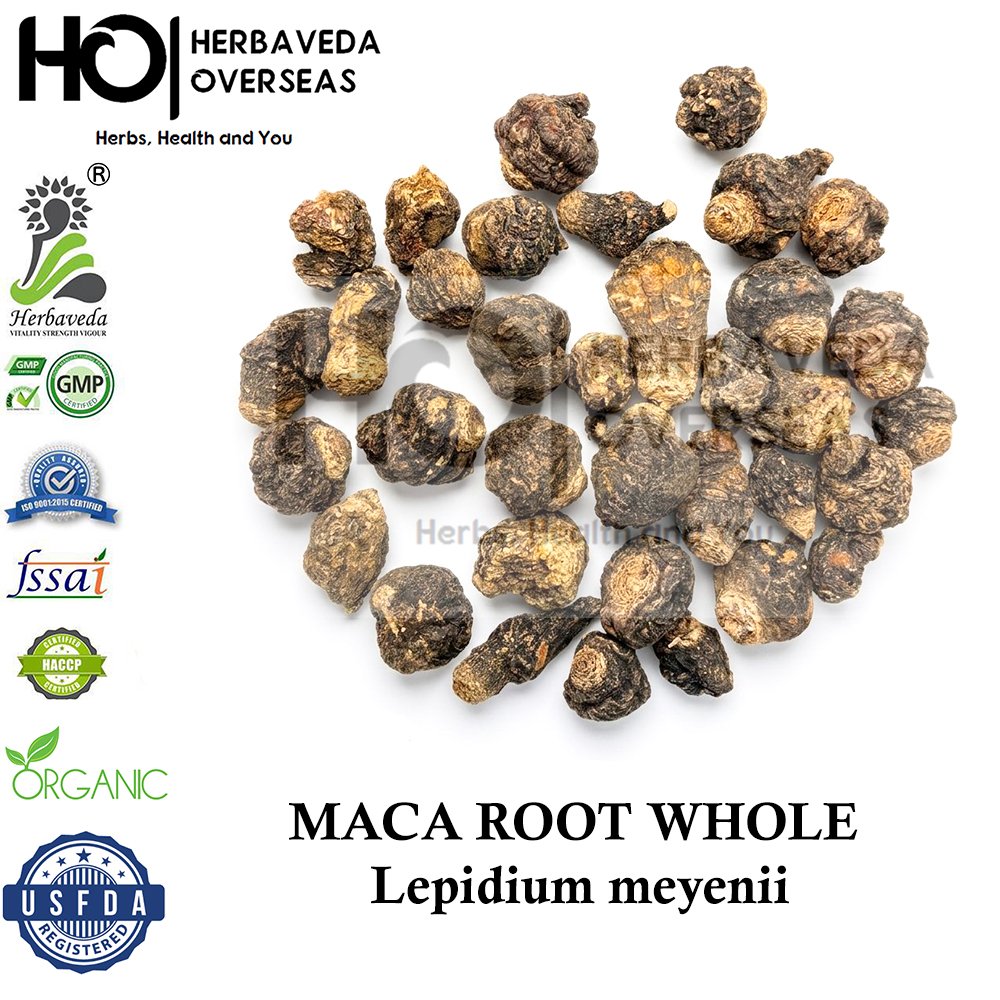
Lepidium meyenii, maca, is a small, low-growing biennial or perennial herb of the family Brassicaceae, endemic to the high-altitude Puna grasslands of the central Andes in Peru and Bolivia — one of the highest crop-cultivation zones on Earth, at 3,800–4,800 metres. The plant’s enlarged hypocotyl (often called a tuber or radish) comes in cream, yellow, red, purple, and black colour morphs with traditionally distinct applications ascribed to each in Andean ethnobotany. Cultivated by the Quechua and Aymara peoples as a staple food and an important traditional vitality food since the Incan empire, maca was introduced to international herbal commerce in the 1990s. The dried, powdered root is now globally traded and incorporated into formulations for reproductive vitality, hormonal balance, and athletic endurance.