Herbaveda Overseas

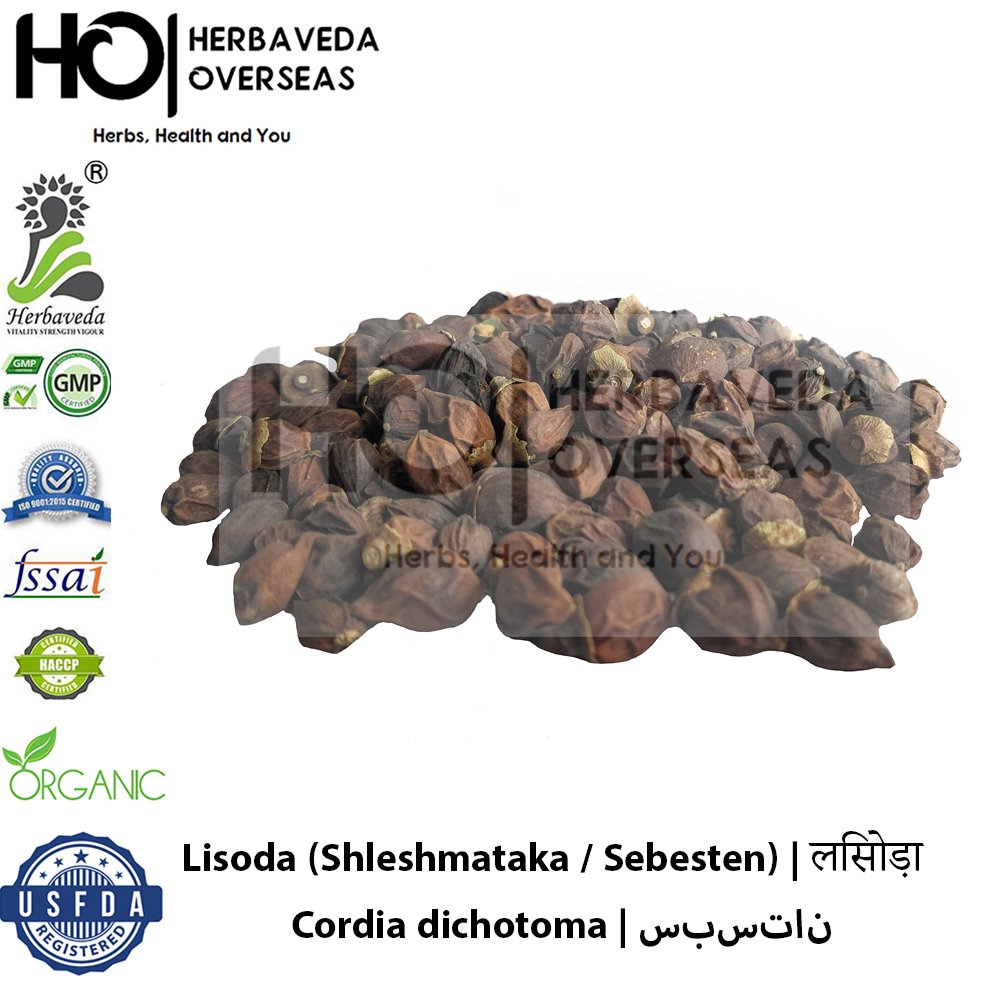
Lisoda (Shleshmataka / Sebesten) | लिसोड़ा | Cordia dichotoma

in stock

Cordia dichotoma is a deciduous tree widely distributed across tropical and subtropical South Asia, Southeast Asia, and Australia. Its small, sticky, edible drupes — and the mucilaginous seed pulp — are documented in classical Ayurvedic literature as a primary demulcent and expectorant botanical in respiratory preparations.

  • Free Shipping & Exchanges
  • Flexible and secure payment, pay on delivery
  • 600,000 happy customers
Guarantee Safe & Secure Checkout

Quick facts: Lisoda (Shleshmataka / Sebesten)

Common name
Lisoda, Shleshmataka / Sebesten
Hindi / local name
लिसोड़ा
Botanical name
Cordia dichotoma
Type
Berries
Packed by
Herbaveda Overseas, Khari Baoli, Delhi (since 1971)
Storage
Airtight container, cool and dry place, away from sunlight
Bulk / export
Available – ask for a wholesale quote

What is Lisoda called in English?

Lisoda (लिसोड़ा) is Shleshmataka / Sebesten – botanical name Cordia dichotoma.

How do I order Lisoda in bulk?

Send us your quantity and destination through the contact page or WhatsApp +91-99717-54285 for a wholesale or export quote.

For traditional and culinary use. Not intended to diagnose, treat, cure or prevent any disease. Consult a doctor before use, especially if you are pregnant, nursing or taking medicines.

Description

Cordia dichotoma, the Pholidota tree or Indian cherry, is a small to medium-sized deciduous tree of the family Boraginaceae, widely distributed across the tropical and subtropical forests, scrublands, and dry riverbanks of South and Southeast Asia — from Pakistan through India and Sri Lanka to Australia. The tree produces small, fleshy, yellowish drupes with a highly mucilaginous pulp surrounding the hard seed. Known in Ayurveda as Shleshmataka and documented in the Charaka Samhita, the fruit and seed mucilage are incorporated in classical respiratory formulations including Eladi Churna and various Avaleh (linctus) preparations traditionally associated with cough, bronchial congestion, and throat soothing. The ripe fruit is also consumed as a seasonal food by rural communities across Rajasthan, Gujarat, and Maharashtra.
shopping cart