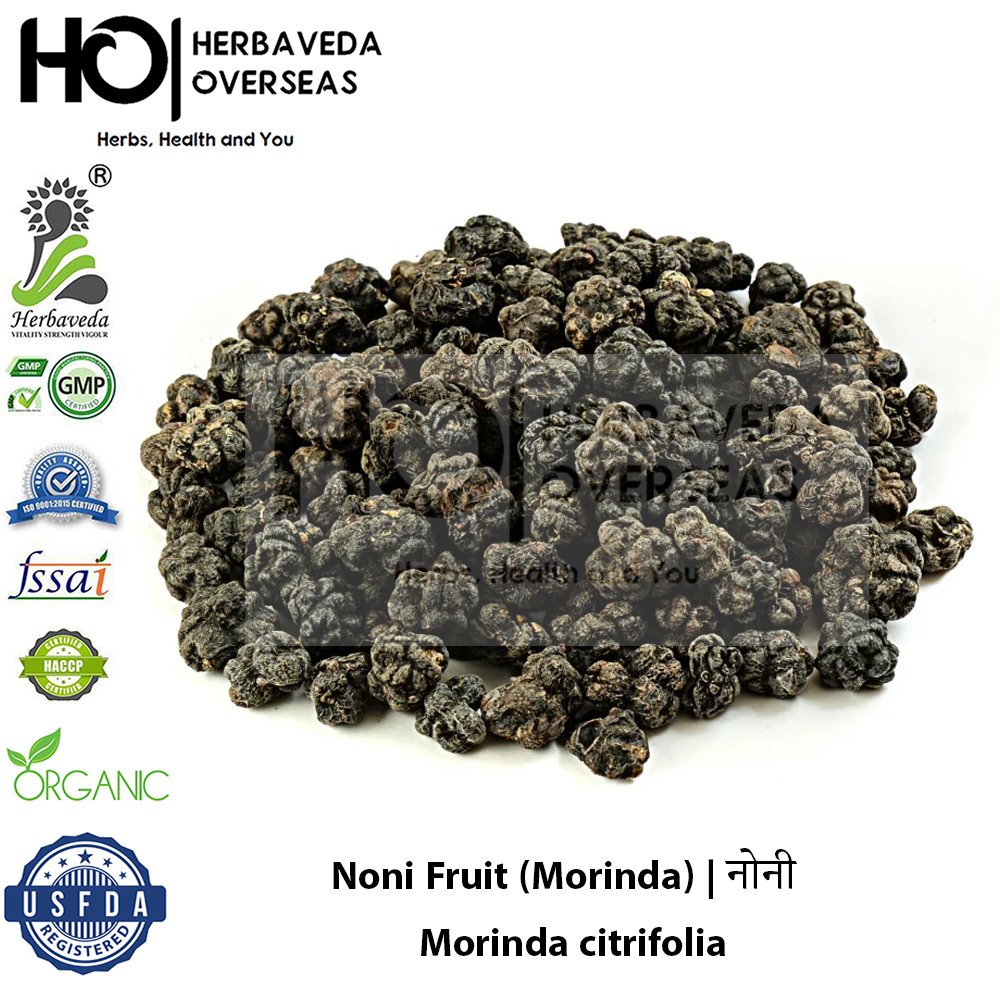

Description
Morinda citrifolia, the Indian mulberry or noni, is a small evergreen tree of the family Rubiaceae, native to tropical Southeast Asia and Australasia — from India through Southeast Asia to the Pacific Islands and Australia. It was distributed across Polynesia by ancient voyaging peoples who cultivated it as a food, dye, and medicine plant of primary cultural importance. The large, ovoid, syncarpous fruit is distinctive for its foul, cheese-like odour upon ripening due to the release of caprylic and caproic acids. Known in Ayurveda as Ashyuka or Noni, the fruit is documented in classical texts and extensively in Pacific ethnobotanical literature for preparations addressing joint conditions, digestive health, and immune support. In India, the tree grows in coastal habitats of Tamil Nadu, Kerala, the Andaman Islands, and along the west coast.