
Description
What is it?
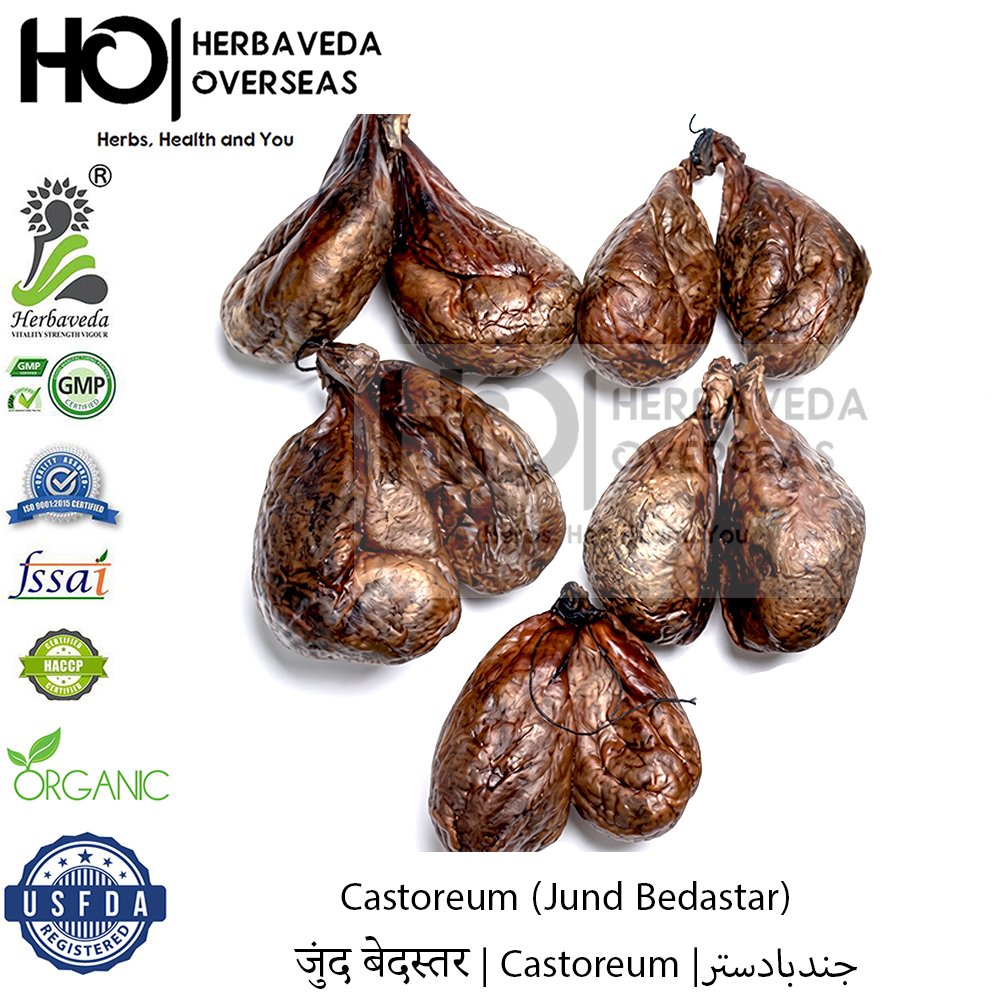
Jund Bedastar, known in English as castoreum, is a dark, firm, resin-like substance that comes from the scent glands of the beaver. It has a strong, warm, leathery smell. It has been traded for centuries for two main purposes: as an ingredient in the Unani system of medicine, and as a fixative in fine perfumes and attars.
Quick facts
- Name in Unani: Jund Bedastar / Jund-e-Bedastar
- Source: Beaver (Castor species) – animal-derived
- Form supplied: dried whole pods and pieces
- Hindi: जुंद बेदस्तर
- Urdu: جند بیدستر
- Other names: Junde Badastar, castoreum
Traditional uses
- In Unani medicine it is described as a warming ingredient and is added in small amounts to traditional tonics prepared by hakims.
- In perfumery and attar-making, its leathery note is used to fix and deepen a fragrance.
Who buys it from us
- Unani manufacturers and dawakhanas
- Hakims and traditional practitioners
- Attar makers and perfumers
Quality and packing
- Dry, firm pieces with a deep brown colour.
- A strong, warm, leathery smell; no mould or damp patches.
- Packed in bulk bags to the buyer’s requirement and shipped across India from Delhi.
Herbaveda Overseas has traded raw herbs from Khari Baoli, Delhi, since 1971. Use our Request a Quote form for the latest bulk price, a sample or a custom pack size.
Frequently asked questions
Is Jund Bedastar the same as castor oil?
No. Castor oil comes from the castor plant (Ricinus communis). Jund Bedastar is an animal-derived substance from the beaver.
Why is Jund Bedastar so expensive?
It is rare, collected in small amounts and imported, which makes genuine material costly.
Do you supply Jund Bedastar in bulk?
Yes. Send an enquiry with the quantity you need and we will share the current price.
Sold as a raw herb for traditional and trade use. This information is educational and is not a substitute for medical advice.