
Description
What is it?
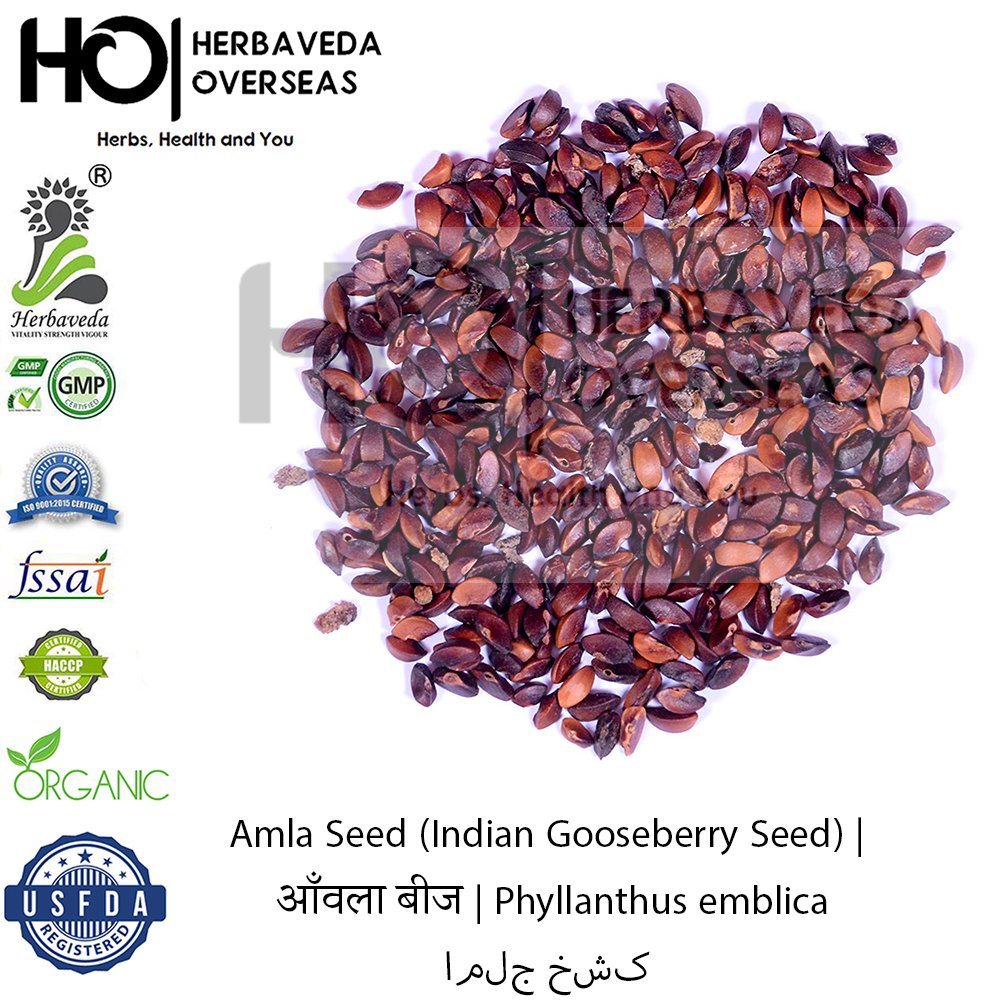
Every amla fruit has a hard, six-sided stone that holds six small, triangular seeds. When amla is processed for powder, murabba or candy, the stones are separated and the seeds are collected. Most supply comes from Uttar Pradesh (especially Pratapgarh), Madhya Pradesh and Himachal Pradesh. While the fruit is the famous part, the seed is also mentioned in texts such as the Bhavaprakasha Nighantu.
Quick facts
- Botanical name: Phyllanthus emblica L. (Emblica officinalis)
- Family: Phyllanthaceae
- Part supplied: dried seeds
- Hindi: आँवला बीज
- Urdu: آملہ بیج
- Other names: Amalaki beej (Sanskrit), Indian gooseberry seed, Nellikai vithai (Tamil)
Traditional uses
- Mentioned in classical Ayurvedic texts for specific traditional preparations.
- Ground and used in hair oils and hair packs.
- Sown by nurseries to raise amla plants.
Who buys it from us
- Ayurvedic manufacturers
- Hair-oil and cosmetic makers
- Plant nurseries
Quality and packing
- Small, triangular, brown seeds, clean and dry.
- Free from shell pieces, dust and insect damage.
- Packed in bulk bags to the buyer’s requirement and shipped across India from Delhi.
Herbaveda Overseas has traded raw herbs from Khari Baoli, Delhi, since 1971. Use our Request a Quote form for the latest bulk price, a sample or a custom pack size.
Frequently asked questions
Is amla seed the same as amla fruit?
No. The seed is the small kernel inside the hard stone of the fruit.
Can amla seeds be sown?
Yes, fresh, well-stored seeds are used by nurseries to grow amla plants.
Do you supply amla seeds in bulk?
Yes. Send an enquiry with your quantity.
Sold as a raw herb for traditional and trade use. This information is educational and is not a substitute for medical advice.