
Description
What is it?
The castor plant is a tall, fast-growing shrub with large hand-shaped leaves and spiny seed capsules. India is the world’s largest producer of castor, mostly from Gujarat, Rajasthan and Andhra Pradesh. The seeds are pressed to make castor oil, used in industry, hair care and traditional medicine. The whole seed contains ricin, a powerful poison, so it is not for eating.
Quick facts
- Botanical name: Ricinus communis L.
- Family: Euphorbiaceae
- Part supplied: whole dried seeds
- Hindi: अरण्डी बीज, एरंड बीज
- Urdu: ارنڈی بیج
- Other names: Eranda (Sanskrit), Bedanjeer (Unani), Amanakku (Tamil), castor bean
Traditional uses
- Pressed for castor oil, used in hair and skin care and in industry.
- Listed as Eranda in Ayurveda, where the oil is a well-known Virechana (purging) agent and the seeds are used only after purification by practitioners.
- Used in Unani practice as Bedanjeer.
Safety
Whole castor seeds contain ricin, a very strong poison. Never chew, crush or swallow them, and keep them away from children and animals. Castor oil sold for use is a separately processed product. In Ayurveda the seeds are used only by qualified practitioners after traditional purification (shodhana).
Who buys it from us
- Oil pressers
- Licensed Ayurvedic and Unani manufacturers
- Seed and agri traders
Quality and packing
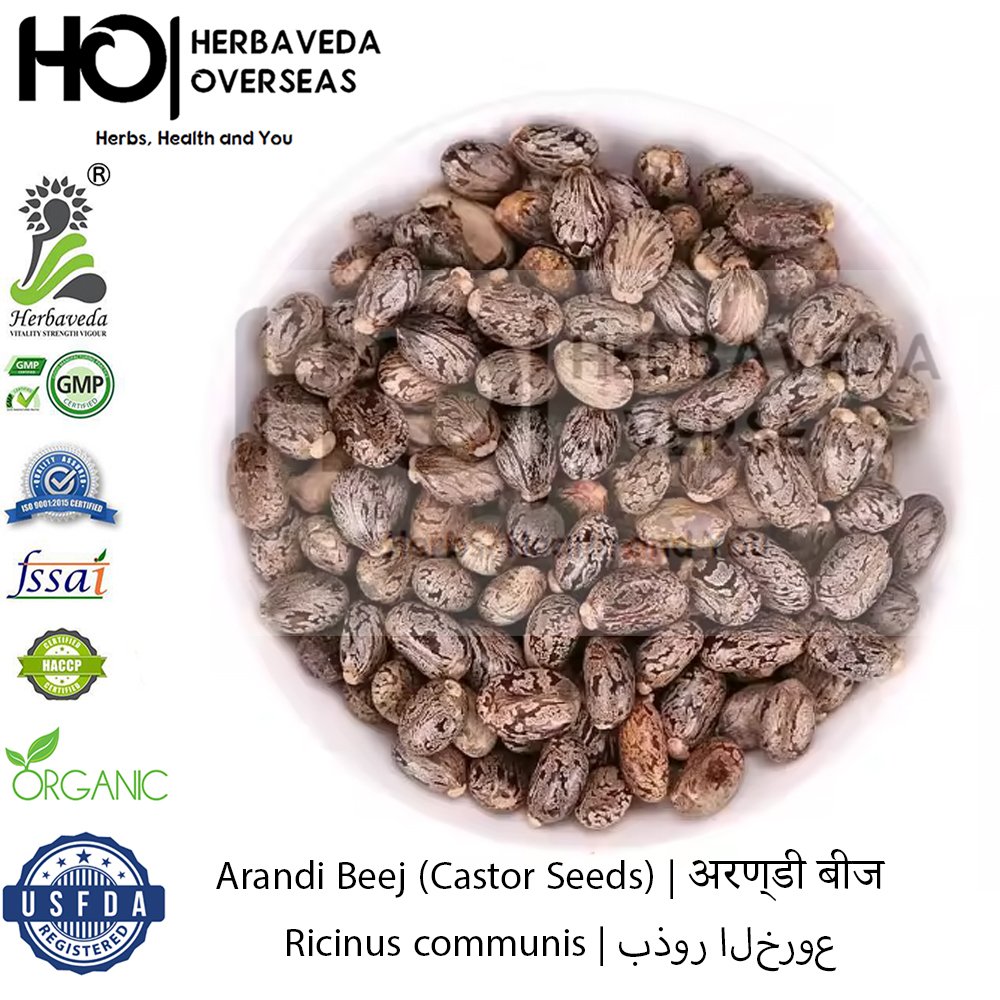
- Shiny, mottled seeds, grey-brown with darker patterns.
- Whole and unbroken, dry and free from dust and husk.
- Packed in bulk bags to the buyer’s requirement and shipped across India from Delhi.
Herbaveda Overseas has traded raw herbs from Khari Baoli, Delhi, since 1971. Use our Request a Quote form for the latest bulk price, a sample or a custom pack size.
Buying and quality notes
How to check quality: Good castor seeds are plump, glossy and unbroken, with a mottled grey-and-brown pattern. Reject lots with shrivelled, cracked or dusty seeds. Seed size and colour vary by variety, so keep one variety per lot for oil pressing or sowing.
Safety note: Castor seeds must not be chewed or eaten. Keep them away from children and animals. We supply them for oil extraction, sowing and trade use.
Storage: Keep in a dry, cool place in sealed sacks. Damp storage spoils the oil content.
Frequently asked questions
Are castor seeds poisonous?
Yes. Whole seeds contain ricin and must never be eaten.
Is castor oil also poisonous?
Properly processed castor oil does not contain ricin, but it is a separate product made under controlled conditions.
Do you supply castor seeds in bulk?
Yes. Send an enquiry with your quantity.
Sold as a raw herb for traditional and trade use. This information is educational and is not a substitute for medical advice.