
Description
What is it?
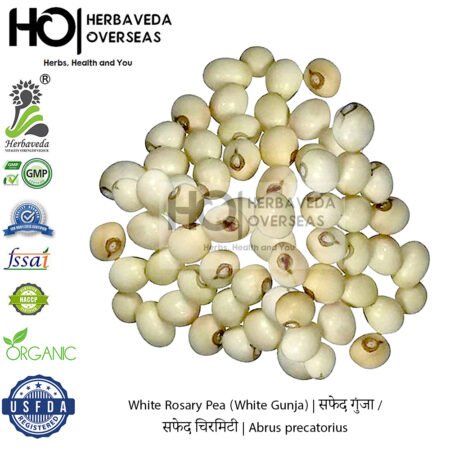
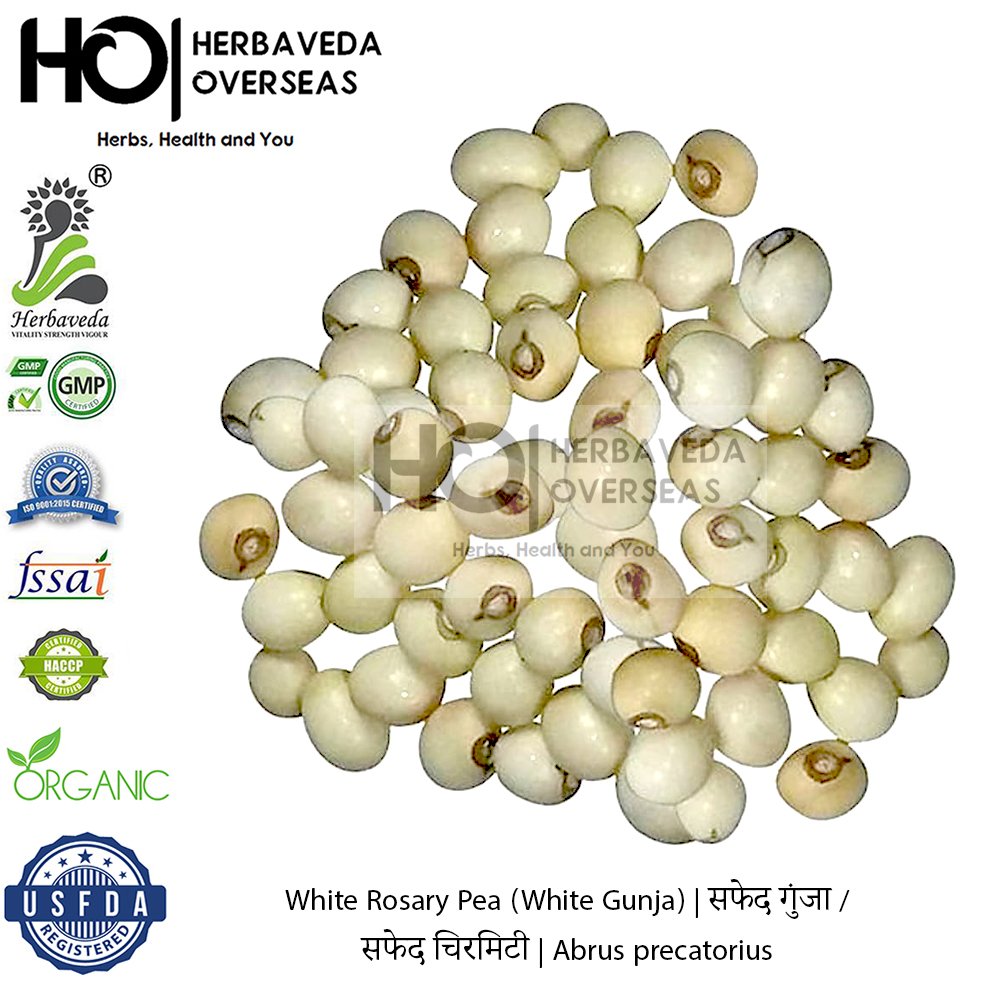
White Rosary Pea is the rarer, creamy-white form of gunja seed. The familiar gunja is red with a black spot; these are pale and glossy. They are bought mostly for puja, malas and decoration.
Also known as
Safed Gunja, Safed Chirmiti, Shweta Gunja (Sanskrit), Chanothi (Gujarati), سفید گھونگچی (Urdu), white rosary pea, Abrus precatorius
How it is used
- Puja: kept in puja spaces and used in some rituals.
- Malas and jewellery: used whole as natural beads.
- Craft: used in rangoli, frames and decoration.
Safety
Gunja seeds contain abrin, a very strong poison. Never chew, crush or swallow them, and keep them away from children and pets. Wash your hands after handling. In Ayurveda they are used only by qualified practitioners after special purification (shodhana).
How to judge good quality
- Glossy, hard seeds, creamy-white, often with a small dark spot.
- Whole and unbroken, free from dust and insect damage.
Storage
Keep in a closed, clearly labelled container, away from food, children and pets.
Frequently asked questions
Is it safe to handle?
Whole seeds are safe to handle, but they are poisonous if chewed or swallowed. Wash your hands after use.
Why was gunja used as a weight?
The seeds are very even in weight, so jewellers used one seed as a “ratti”.
Do you deliver across India?
Yes. Orders ship from Delhi to all states, usually within 1–3 working days. For bulk quantities, use our Request a Quote form.
Herbaveda, Delhi – trusted since 1971.
Sold as a raw herb for traditional and trade use. This information is educational and is not a substitute for medical advice.