
Description
What is it?
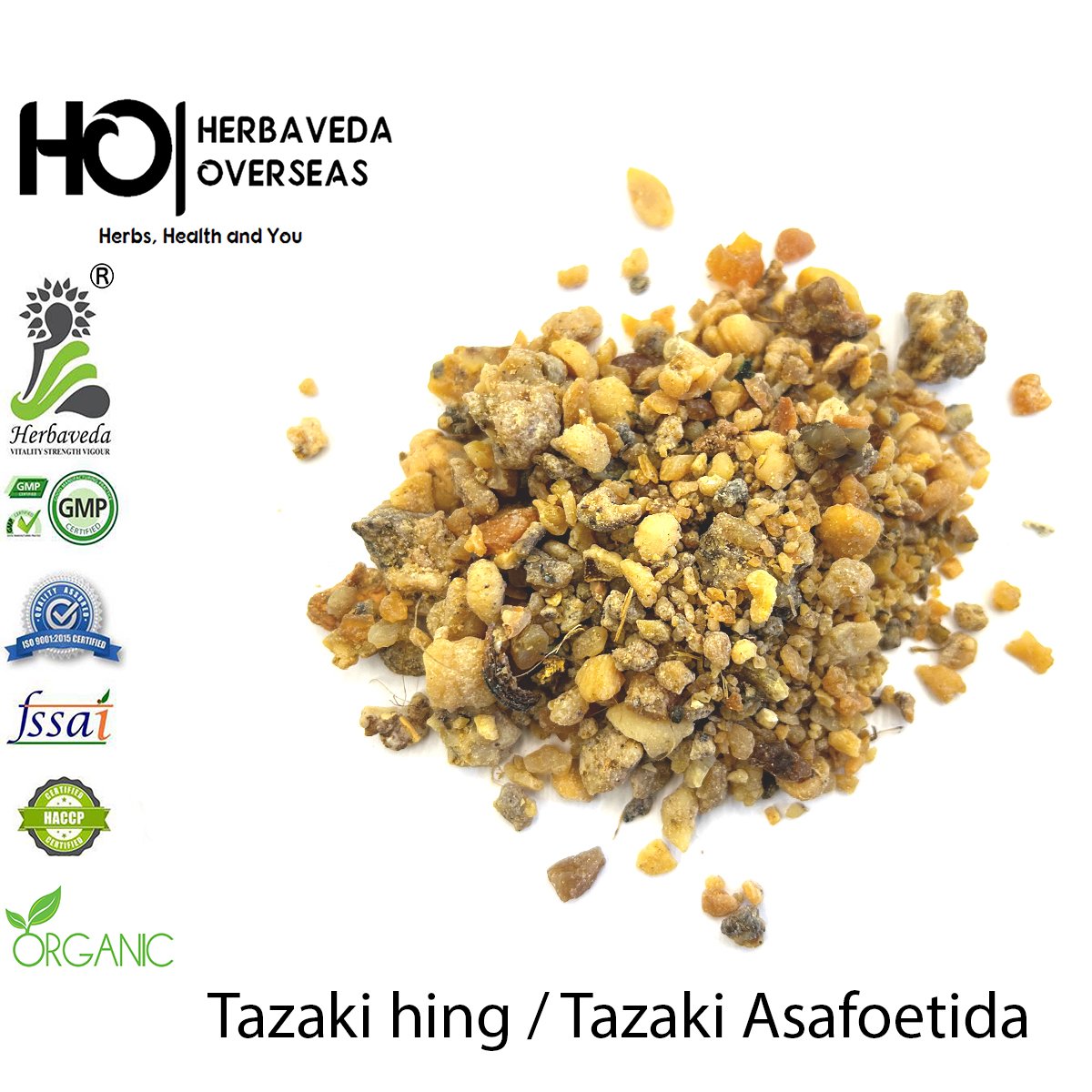
Tazaki Hing means “fresh hing”. It is the raw resin of a tall wild fennel-like plant that grows in the dry mountains of Iran and Afghanistan. Collectors cut the top of the thick root and scrape off the milky sap as it dries over several weeks. Fresh resin has a much stronger smell than older or blended hing. Most of the hing sold in Indian kitchens is made by mixing this raw resin with flour or gum.
Quick facts
- Botanical name: Ferula assa-foetida L.
- Family: Apiaceae
- Part supplied: raw oleo-gum-resin from the root
- Hindi: हींग, ताज़ा हींग
- Urdu: تازہ ہینگ، ہینگ
- Other names: Hingu (Sanskrit), Perungayam (Tamil), Inguva (Telugu), asafoetida, devil’s dung
Traditional uses
- The base for compounded hing used in tadka for dals, sabzis and pickles.
- Listed as Hingu in Ayurvedic texts and used in traditional digestive churnas such as Hingvashtak.
- Used in Unani preparations as Hiltit.
Who buys it from us
- Hing processors and compounders
- Spice and masala companies
- Ayurvedic and Unani manufacturers
Quality and packing
- Soft to firm, sticky lumps, yellowish-brown to reddish-brown.
- A very strong, sharp smell even through the pack – the stronger, the fresher.
- Dissolves in warm water to a milky liquid; free from sand and stones.
- Packed in bulk bags to the buyer’s requirement and shipped across India from Delhi.
Herbaveda Overseas has traded raw herbs from Khari Baoli, Delhi, since 1971. Use our Request a Quote form for the latest bulk price, a sample or a custom pack size.
Frequently asked questions
What is the difference between Tazaki Hing and normal hing?
Tazaki Hing is fresh, pure resin. Normal kitchen hing is usually resin blended with flour or gum to make it milder and easier to use.
Where does it come from?
Mostly from Afghanistan and Iran, where the plant grows wild.
Do you supply Tazaki Hing in bulk?
Yes. Send an enquiry with your quantity.
Sold as a raw herb for traditional and trade use. This information is educational and is not a substitute for medical advice.