Herbaveda Overseas

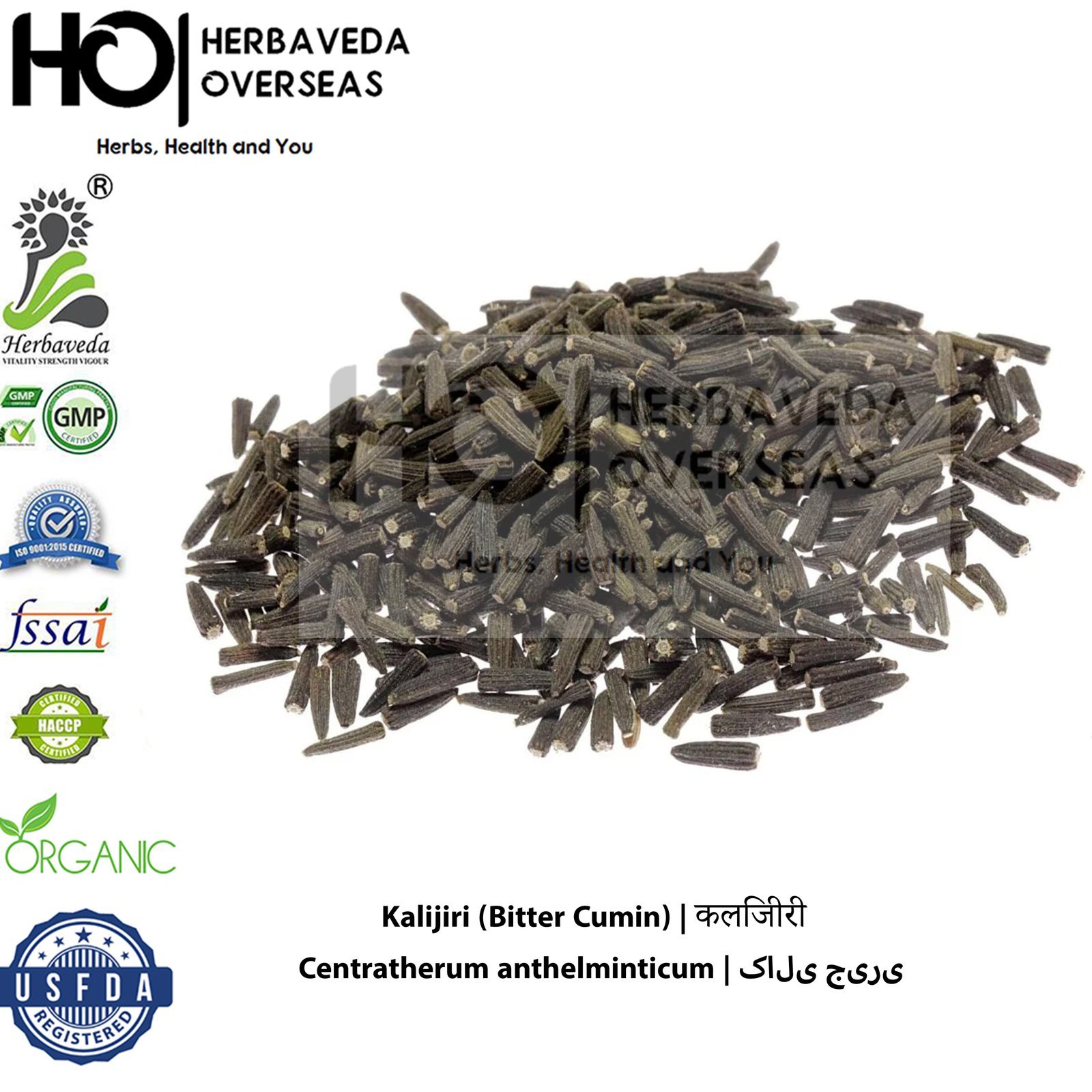
Kalijiri (Bitter Cumin) | कलिजीरी | Centratherum anthelminticum

in stock

Centratherum anthelminticum is an annual herb native to the tropical regions of the Indian subcontinent, growing in dry fields, grassland margins, and disturbed soils from the plains to moderate altitudes. Its black seeds are documented in Ayurvedic and Unani literature for preparations traditionally associated with parasitic conditions and skin health.

  • Free Shipping & Exchanges
  • Flexible and secure payment, pay on delivery
  • 600,000 happy customers
Guarantee Safe & Secure Checkout

Quick facts: Kalijiri (Bitter Cumin)

Common name
Kalijiri, Bitter Cumin
Hindi / local name
कलिजीरी
Botanical name
Centratherum anthelminticum
Type
Whole edible and oil seeds
Packed by
Herbaveda Overseas, Khari Baoli, Delhi (since 1971)
Storage
Airtight container, cool and dry place, away from sunlight
Bulk / export
Available – ask for a wholesale quote

What is Kalijiri called in English?

Kalijiri (कलिजीरी) is Bitter Cumin – botanical name Centratherum anthelminticum.

How do I order Kalijiri in bulk?

Send us your quantity and destination through the contact page or WhatsApp +91-99717-54285 for a wholesale or export quote.

For traditional and culinary use. Not intended to diagnose, treat, cure or prevent any disease. Consult a doctor before use, especially if you are pregnant, nursing or taking medicines.

Description

Centratherum anthelminticum, commonly known as bitter cumin or Kali Jeera in some regional traditions, is an erect annual herb of the family Asteraceae, native to the tropical dry regions of the Indian subcontinent — particularly Rajasthan, Gujarat, Maharashtra, and the Deccan. It colonises fallow fields, dry grasslands, and roadsides. The small, dark, ribbed seeds — traded as Kalijiri or Somraj — are documented in Ayurvedic texts including the Bhavaprakasha Nighantu as an ingredient in preparations for parasitic infestations of the gastrointestinal tract, and in Unani formulations for skin conditions. The seeds should be distinguished from black cumin (Bunium persicum) and Nigella sativa despite some shared vernacular nomenclature in regional Indian markets.
shopping cart