Herbaveda Overseas

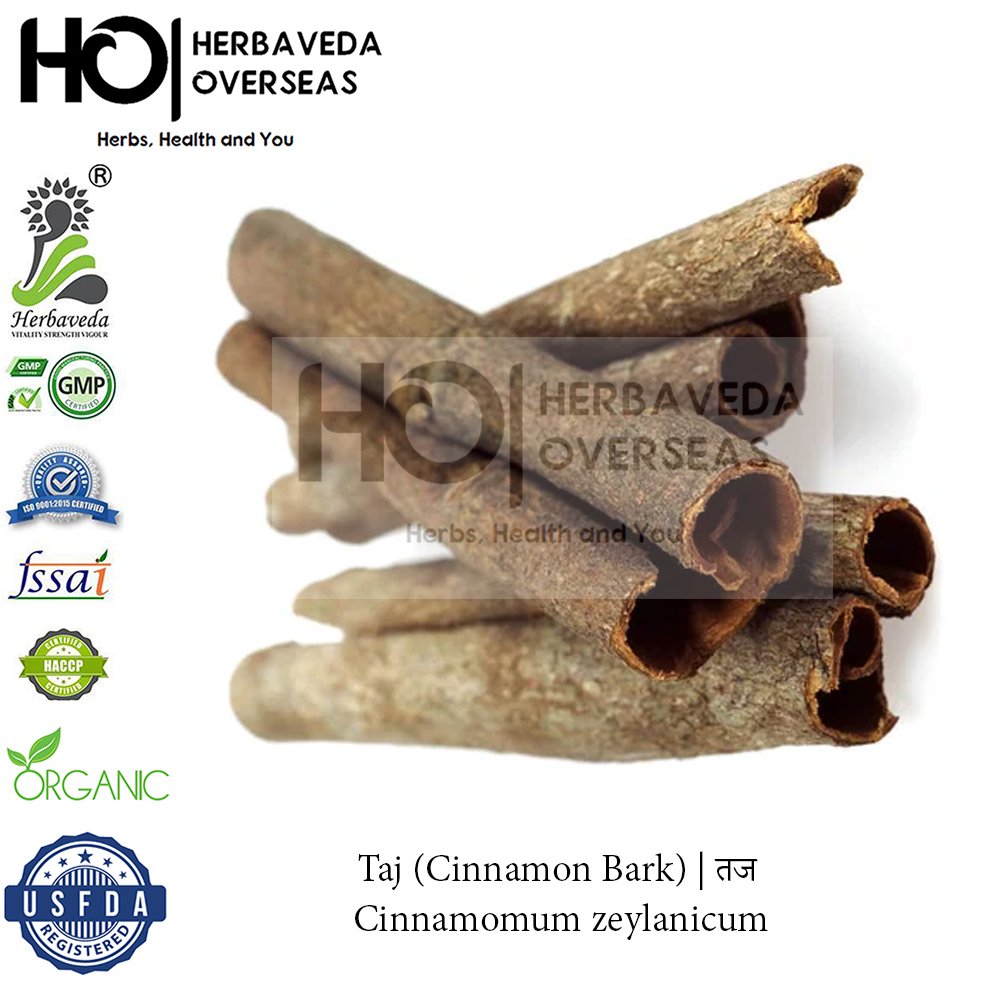
Taj (Cinnamon Bark) | तज | Cinnamomum zeylanicum

in stock

Cinnamomum zeylanicum is a small evergreen tree native to Sri Lanka (Ceylon) and the adjacent southern coast of India, producing the world’s finest cinnamon from its inner bark. Among the oldest traded spices in human history, it is documented in Egyptian papyri, the Ebers Papyrus, the Bible, and classical Ayurvedic, Unani, and Chinese pharmaceutical texts.

  • Free Shipping & Exchanges
  • Flexible and secure payment, pay on delivery
  • 600,000 happy customers
Guarantee Safe & Secure Checkout
SKU: herb_10343 Categories: ,

Quick facts: Taj (Cinnamon Bark)

Common name
Taj, Cinnamon Bark
Hindi / local name
तज
Botanical name
Cinnamomum zeylanicum
Type
Raw barks
Packed by
Herbaveda Overseas, Khari Baoli, Delhi (since 1971)
Storage
Airtight container, cool and dry place, away from sunlight
Bulk / export
Available – ask for a wholesale quote

What is Taj called in English?

Taj (तज) is Cinnamon Bark – botanical name Cinnamomum zeylanicum.

How do I order Taj in bulk?

Send us your quantity and destination through the contact page or WhatsApp +91-99717-54285 for a wholesale or export quote.

For traditional and culinary use. Not intended to diagnose, treat, cure or prevent any disease. Consult a doctor before use, especially if you are pregnant, nursing or taking medicines.

Description

Cinnamomum zeylanicum (syn. C. verum), true or Ceylon cinnamon, is a small evergreen tree of the family Lauraceae, native to Sri Lanka and the Malabar coast of southwestern India. The inner bark, stripped from young branches, dried, and rolled into the characteristic tight quills of Ceylon cinnamon, constitutes one of the most significant aromatic spices in world commerce. Documented in Egyptian records of 2000 BCE, the Ebers Papyrus, the Biblical Song of Solomon, and the Charaka Samhita as Twak, this spice has been continuously traded over four millennia. Ceylon cinnamon is distinguished from the more pungent Cassia (Cinnamomum cassia) by its lower coumarin content, thinner bark layers, and more delicate, complex flavour profile. In Ayurveda, it is incorporated in digestive, carminative, and metabolic preparations, and is a component of classical masala blends and compound formulations.
shopping cart