Herbaveda Overseas

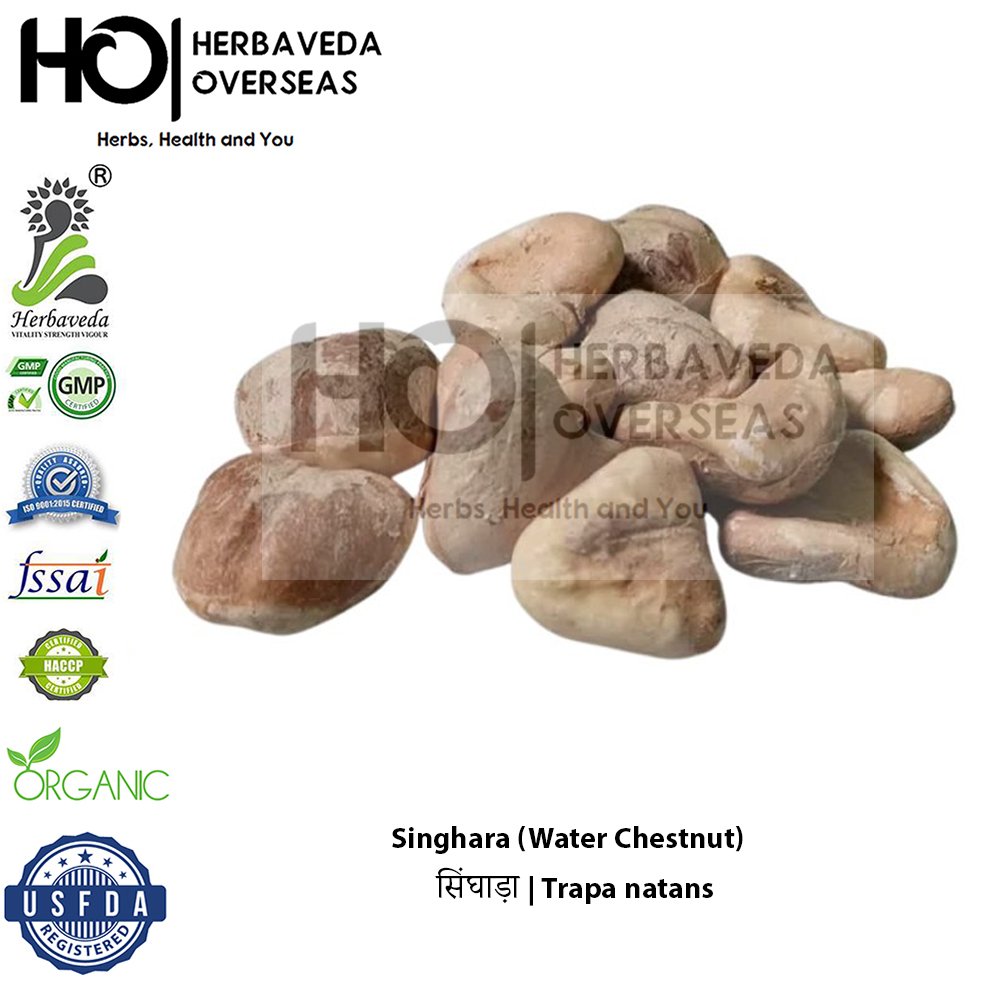
Singhara (Water Chestnut) | सिंघाड़ा | Trapa natans

in stock

Trapa natans is an annual aquatic herb native to temperate and tropical Asia, Europe, and Africa, growing in still and slow-moving water bodies. Its starchy, horn-shaped fruits — water chestnuts — are a significant food crop and documented in classical Ayurvedic texts as a cooling, nutritive, and Pitta-alleviating dietary preparation.

  • Free Shipping & Exchanges
  • Flexible and secure payment, pay on delivery
  • 600,000 happy customers
Guarantee Safe & Secure Checkout

Quick facts: Singhara (Water Chestnut)

Common name
Singhara, Water Chestnut
Hindi / local name
सिंघाड़ा
Botanical name
Trapa natans
Type
Whole edible and oil seeds
Packed by
Herbaveda Overseas, Khari Baoli, Delhi (since 1971)
Storage
Airtight container, cool and dry place, away from sunlight
Bulk / export
Available – ask for a wholesale quote

What is Singhara called in English?

Singhara (सिंघाड़ा) is Water Chestnut – botanical name Trapa natans.

How do I order Singhara in bulk?

Send us your quantity and destination through the contact page or WhatsApp +91-99717-54285 for a wholesale or export quote.

For traditional and culinary use. Not intended to diagnose, treat, cure or prevent any disease. Consult a doctor before use, especially if you are pregnant, nursing or taking medicines.

Description

Trapa natans, water chestnut, is a floating annual aquatic herb of the family Lythraceae (subfamily Trapoideae), native to warm temperate regions of Eurasia and Africa, widely cultivated across the Indian subcontinent — particularly in the ponds, lakes, and slow rivers of Uttar Pradesh, Bihar, Manipur, and West Bengal. The triangular, horn-shaped, horny fruits — Singhara — are a significant traditional food crop harvested in late autumn. Rich in starch, proteins, and minerals, the Singhara fruit is consumed raw, boiled, or dried and ground to produce Singhara flour, which is a permitted food during Hindu fasting periods. In classical Ayurveda, the fruit is known as Sringataka and is documented in the Charaka Samhita as a cooling, Pitta-alleviating, Ojas-promoting (vitality-enhancing) food and nutritive preparation.
shopping cart