
Description
What is it?
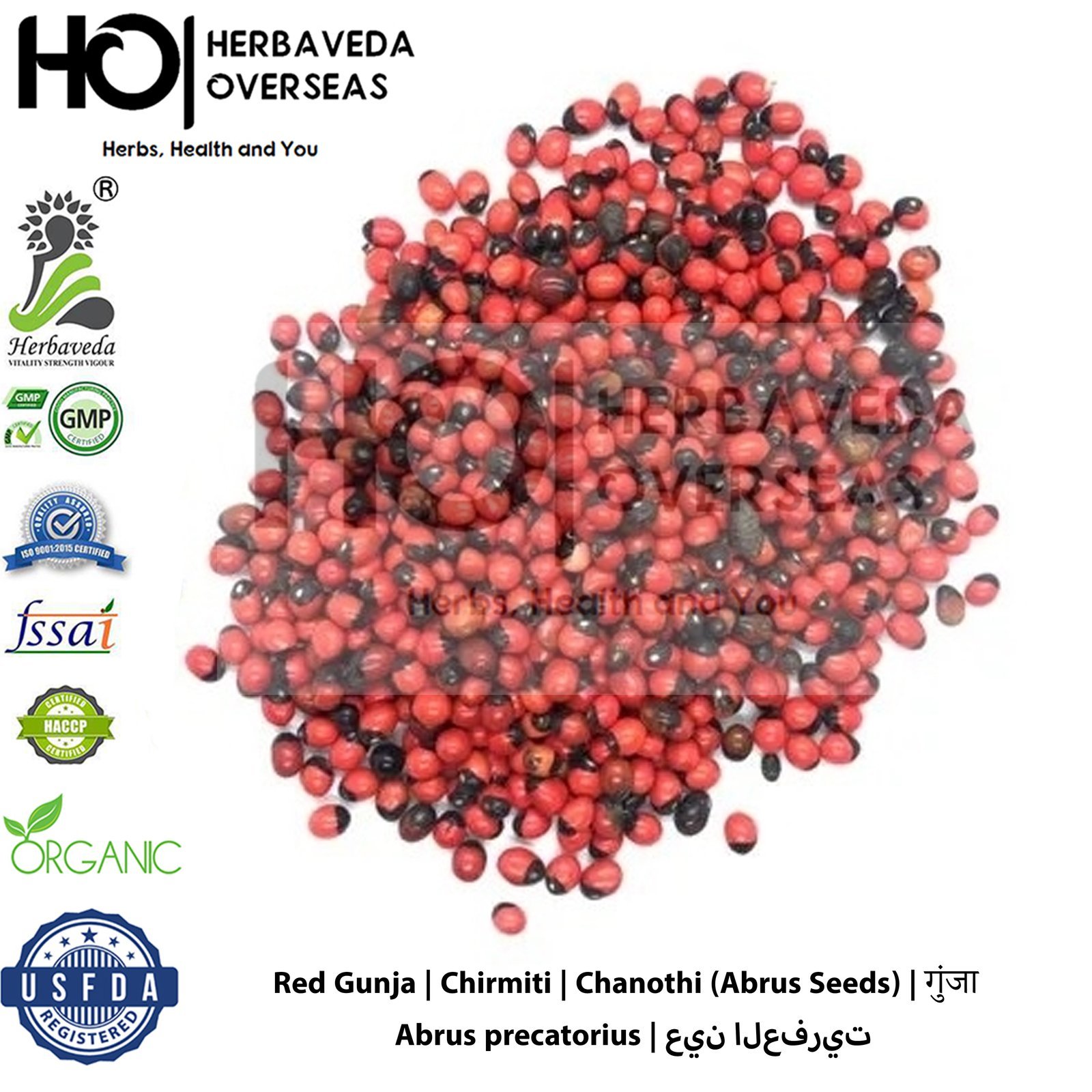
Gunja is a climbing plant of the pea family whose pods hold small, shiny seeds – bright red with a black spot. The seeds are so even in weight that jewellers in India once used them as a unit of weight, the “ratti”. The seeds contain abrin, a powerful poison, so they are handled with great care.
Quick facts
- Botanical name: Abrus precatorius L.
- Family: Fabaceae
- Part supplied: whole dried seeds
- Hindi: गुंजा, रत्ती, घुंघची
- Urdu: گھونگچی
- Other names: Chirmiti (Marathi), Chanothi (Gujarati), Kundumani (Tamil), rosary pea, jequirity
Traditional uses
- Used in puja and traditional rituals.
- Used as beads in jewellery, malas and craft work.
- Historically used as the “ratti” weight by jewellers.
- Used in Ayurveda by qualified practitioners after purification, mainly in external preparations such as hair oils.
Safety
Gunja seeds contain abrin, a very strong poison. Never chew, crush or swallow them, and keep them away from children and pets. Wash your hands after handling. In Ayurveda they are used only by qualified practitioners after special purification (shodhana).
Who buys it from us
- Puja-samagri wholesalers
- Jewellery and craft makers
- Licensed Ayurvedic manufacturers
Quality and packing
- Glossy, hard seeds, bright red with a black spot.
- Whole and unbroken, free from dust and insect damage.
- Packed in bulk bags to the buyer’s requirement and shipped across India from Delhi.
Herbaveda Overseas has traded raw herbs from Khari Baoli, Delhi, since 1971. Use our Request a Quote form for the latest bulk price, a sample or a custom pack size.
Frequently asked questions
Is red gunja poisonous?
Yes. The seeds are poisonous if chewed or swallowed. They are safe to handle whole, but wash your hands afterwards.
What is the difference between red and white gunja?
Both come from Abrus precatorius; they are different colour forms of the same plant.
Do you supply gunja seeds in bulk?
Yes. Send an enquiry with your quantity.
Sold as a raw herb for traditional and trade use. This information is educational and is not a substitute for medical advice.