
Description
What is it?
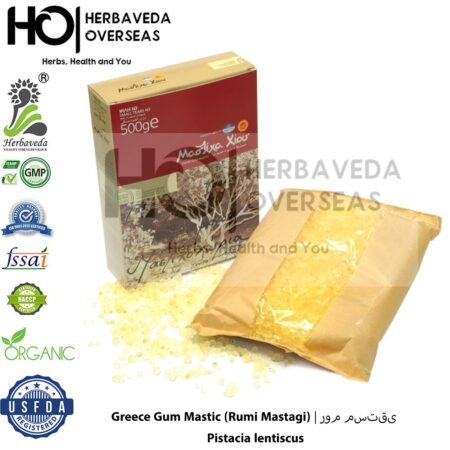
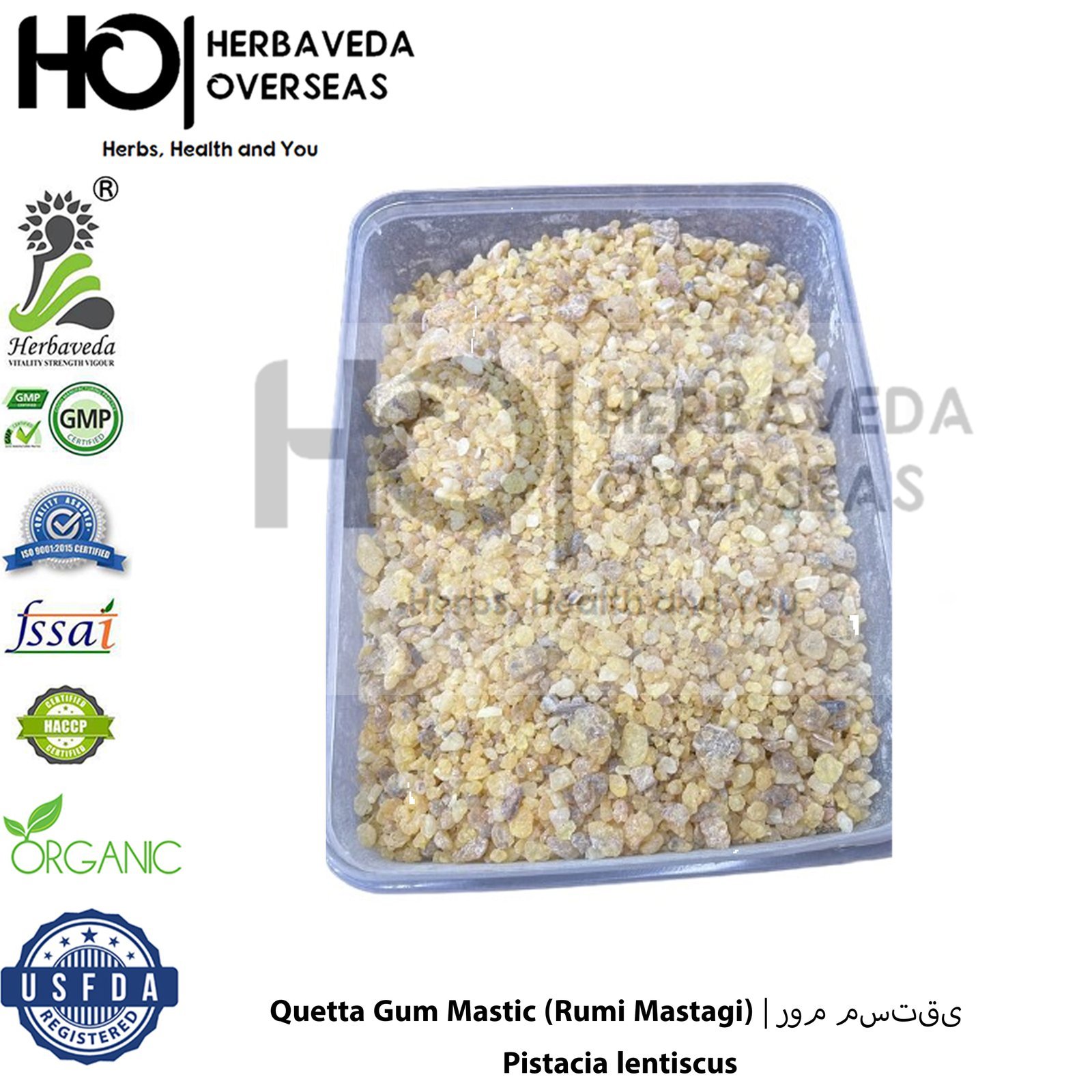
Gum mastic is a resin that seeps from the bark of mastic and wild pistachio trees and dries into small, clear, pale-yellow tears. Quetta mastic is the grade that reaches Indian markets through Quetta in Pakistan, sourced from the hills of Balochistan and Afghanistan. It is usually a little darker and less uniform than Greek mastic and costs less. It has the same pine-like smell and turns into a chewy gum in the mouth.
Quick facts
- Botanical name: Pistacia lentiscus and related Pistacia species
- Family: Anacardiaceae
- Part supplied: dried resin tears
- Hindi: रूमी मस्तगी
- Urdu: رومی مصطگی
- Other names: Mastagi, Rumi Mastagi, Mastiki, Kabuli mastic, mastic gum
Traditional uses
- Used in Unani medicine, where mastagi is described as a warming, aromatic ingredient in digestive preparations.
- Chewed as a natural gum.
- Used to flavour sweets, kulfi and some bakery items.
Who buys it from us
- Unani manufacturers and dawakhanas
- Sweet and bakery makers
- Pansari shops and dry-fruit traders
Quality and packing
- Clear, pale yellow tears that are brittle and glassy.
- Softens into a chewy gum when chewed, with a fresh pine-like taste.
- Free from bark bits, dust and dark pieces.
- Packed in bulk bags to the buyer’s requirement and shipped across India from Delhi.
Herbaveda Overseas has traded raw herbs from Khari Baoli, Delhi, since 1971. Use our Request a Quote form for the latest bulk price, a sample or a custom pack size.
Frequently asked questions
How is Quetta mastic different from Greek mastic?
Greek (Chios) mastic is the premium grade – clearer, more even and costlier. Quetta mastic is regional, slightly darker and more affordable.
Is mastagi the same as gond katira?
No. Gond katira is tragacanth gum, which swells in water. Mastagi is a resin and does not dissolve in water.
Do you supply Quetta mastic in bulk?
Yes. Send an enquiry with your quantity.
Sold as a raw herb for traditional and trade use. This information is educational and is not a substitute for medical advice.