Herbaveda Overseas

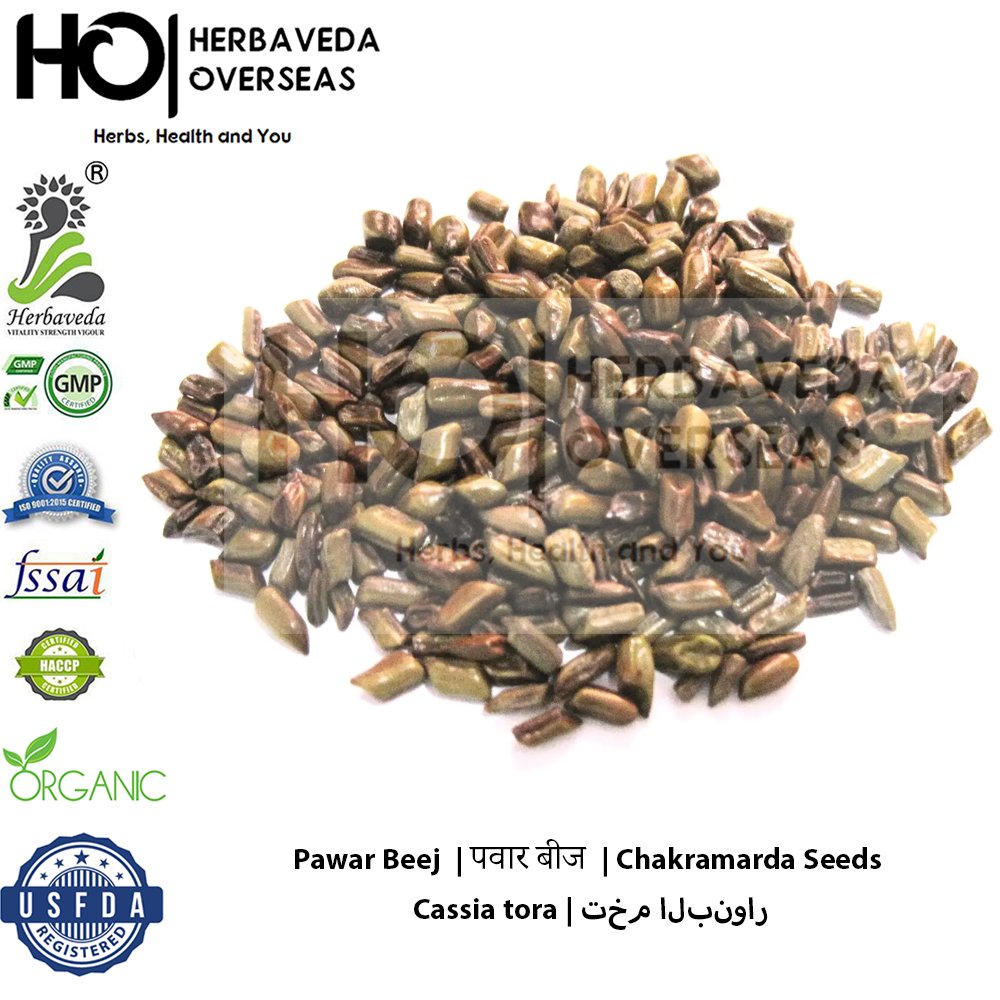
Pawar Beej (Cassia Tora Seeds) | पवार बीज | Cassia tora

in stock

Cassia tora is an annual herb native to tropical and subtropical South and Southeast Asia, widely naturalised as a weed of disturbed habitats across tropical Africa and the Americas. Its seeds are documented in Ayurvedic and Unani literature for preparations addressing skin conditions, eye health, and liver function.

  • Free Shipping & Exchanges
  • Flexible and secure payment, pay on delivery
  • 600,000 happy customers
Guarantee Safe & Secure Checkout

Quick facts: Pawar Beej (Cassia Tora Seeds)

Common name
Pawar Beej, Cassia Tora Seeds
Hindi / local name
पवार बीज
Botanical name
Cassia tora
Type
Whole edible and oil seeds
Packed by
Herbaveda Overseas, Khari Baoli, Delhi (since 1971)
Storage
Airtight container, cool and dry place, away from sunlight
Bulk / export
Available – ask for a wholesale quote

What is Pawar Beej called in English?

Pawar Beej (पवार बीज) is Cassia Tora Seeds – botanical name Cassia tora.

How do I order Pawar Beej in bulk?

Send us your quantity and destination through the contact page or WhatsApp +91-99717-54285 for a wholesale or export quote.

For traditional and culinary use. Not intended to diagnose, treat, cure or prevent any disease. Consult a doctor before use, especially if you are pregnant, nursing or taking medicines.

Description

Cassia tora, the sickle pod or sickle senna, is an erect, strongly smelling annual herb of the family Fabaceae (Caesalpinioideae), native to tropical and subtropical South and Southeast Asia, now pantropically naturalised as a common weed of agricultural margins, roadsides, and disturbed land. The plant produces distinctive sickle-shaped pods containing hard, rhomboidal seeds. Known as Chakramarda in classical Ayurveda, the seeds are documented in the Charaka Samhita and Sushruta Samhita for preparations addressing skin conditions — particularly fungal and inflammatory dermatological conditions — and for ophthalmic applications. In Unani medicine, the seeds are classified as Hab-ul-Falus for skin and liver-related formulations. The seeds also contain the polysaccharide galactomannan, traded as cassia gum in the food industry. Commercially harvested across Maharashtra, Karnataka, and Andhra Pradesh.
shopping cart