
Description
What is it?
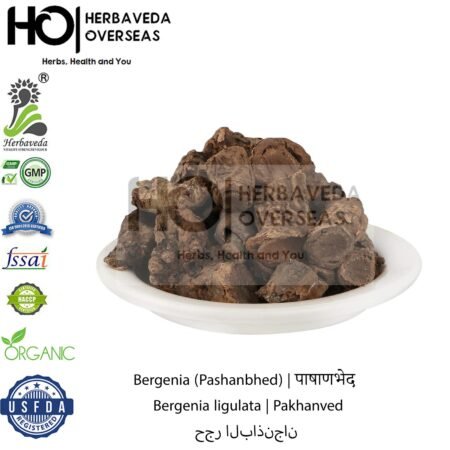
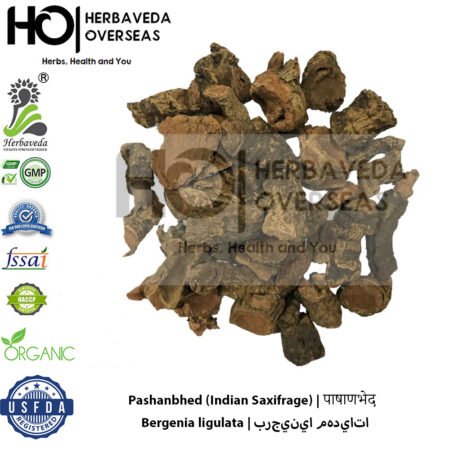
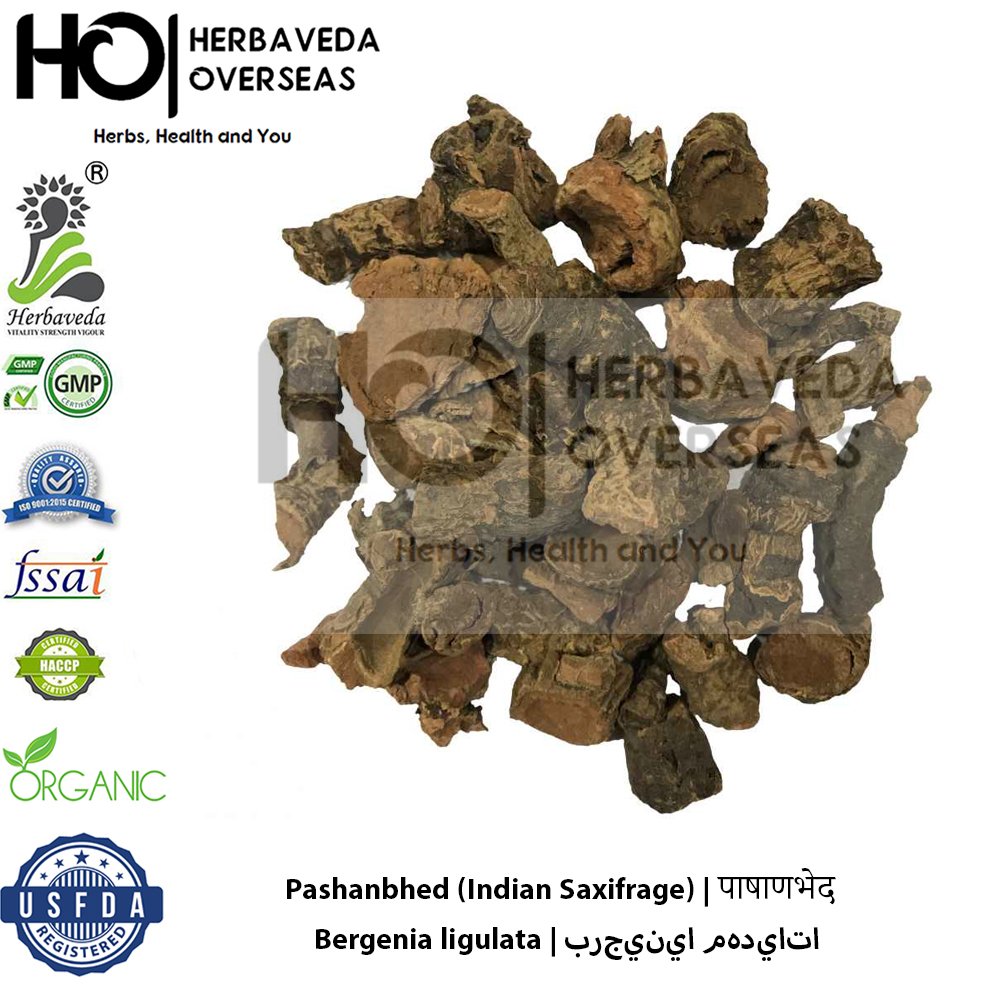
Pashanbhed is the dried underground stem of a Himalayan plant that grows in rock cracks and on wet cliffs. It has big glossy leaves and pink flowers. The rhizome is brown outside, pinkish inside and tastes astringent.
Also known as
Pashanabheda, Ashmabheda (Sanskrit), Silphara, Indian saxifrage, پاشان بید (Urdu), Bergenia ligulata
How it is used
- Kadha: the coarse powder is boiled in water to make a traditional decoction.
- Ayurvedic formulas: a classic ingredient in preparations for urinary wellness.
How to use
Traditionally about a teaspoon of coarse powder is boiled in two cups of water until reduced to half, then strained. Ask an Ayurvedic practitioner for the right amount for you.
How to judge good quality
- Rough, brown rhizome pieces, pinkish to light brown inside.
- Astringent taste, dry and hard, with no soil or mould.
Storage
Keep in an airtight container in a cool, dry place away from sunlight and moisture.
Frequently asked questions
Is this the same as pattharchur?
Not always. The name pattharchur is used for other plants too. This is true pashanbhed, Bergenia ligulata.
Who should check with a doctor first?
Pregnant or breastfeeding women, children and anyone on regular medication.
Do you deliver across India?
Yes. Orders ship from Delhi to all states, usually within 1–3 working days. For bulk quantities, use our Request a Quote form.
Herbaveda, Delhi – trusted since 1971.
Sold as a raw herb for traditional and trade use. This information is educational and is not a substitute for medical advice.