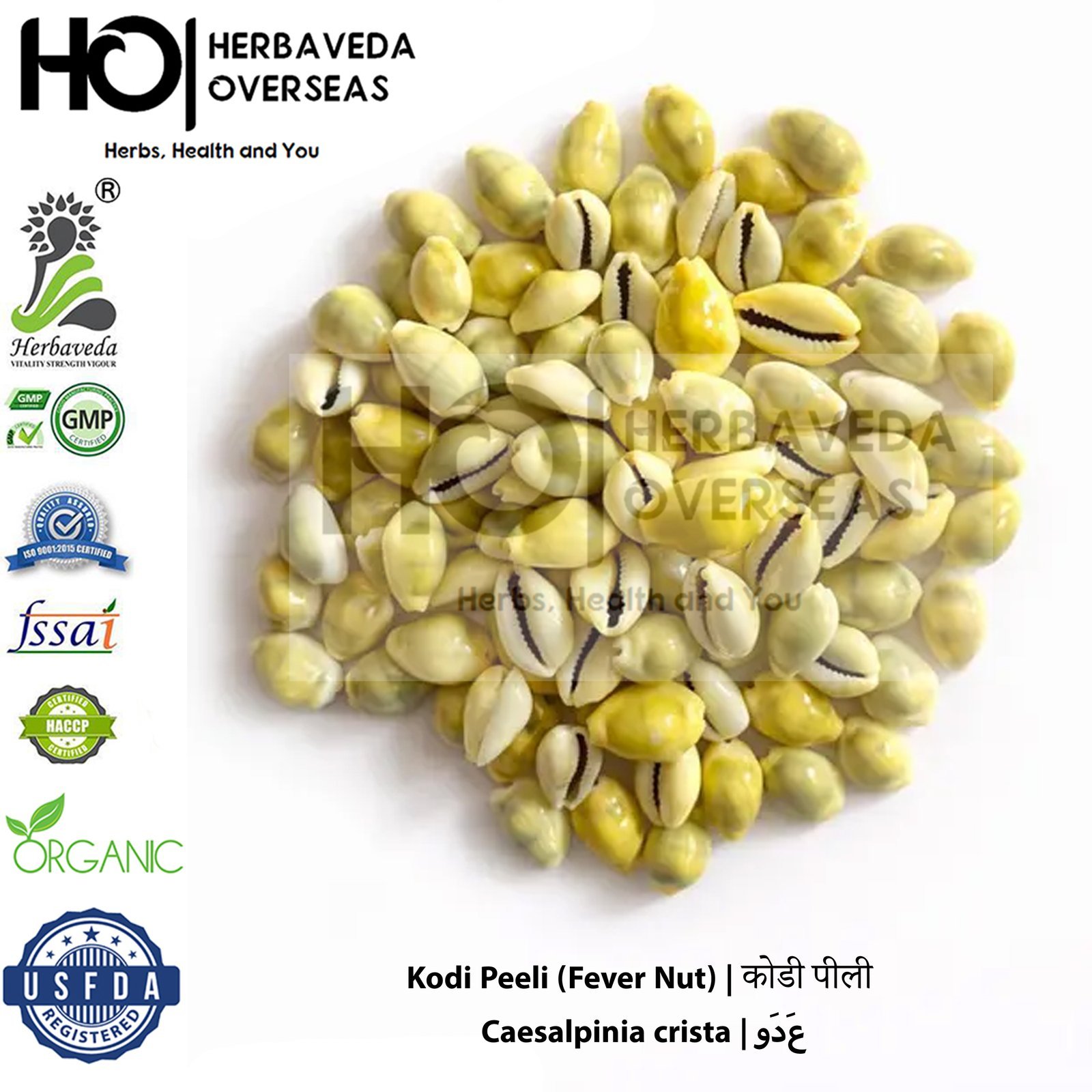

Description
Caesalpinia crista, the fever nut or physic nut of early colonial botanical literature, is a large woody climber of the family Fabaceae (Caesalpinioideae), native to the coastal forests, mangrove margins, and dry tropical scrubland of South Asia, Southeast Asia, and tropical Africa. The hard, grey-brown seeds are contained within flat, spiny pods and have been documented in Ayurvedic and folk medical traditions across India and Sri Lanka for preparations traditionally associated with malarial fever, intestinal parasites, and anti-inflammatory applications. Known as Kuberakshi in some Ayurvedic references, the seeds contain cassaïne and related diterpene alkaloids. The plant is widespread along the Konkan and Malabar coasts and in the mangrove forest margins of West Bengal’s Sundarbans.