Herbaveda Overseas

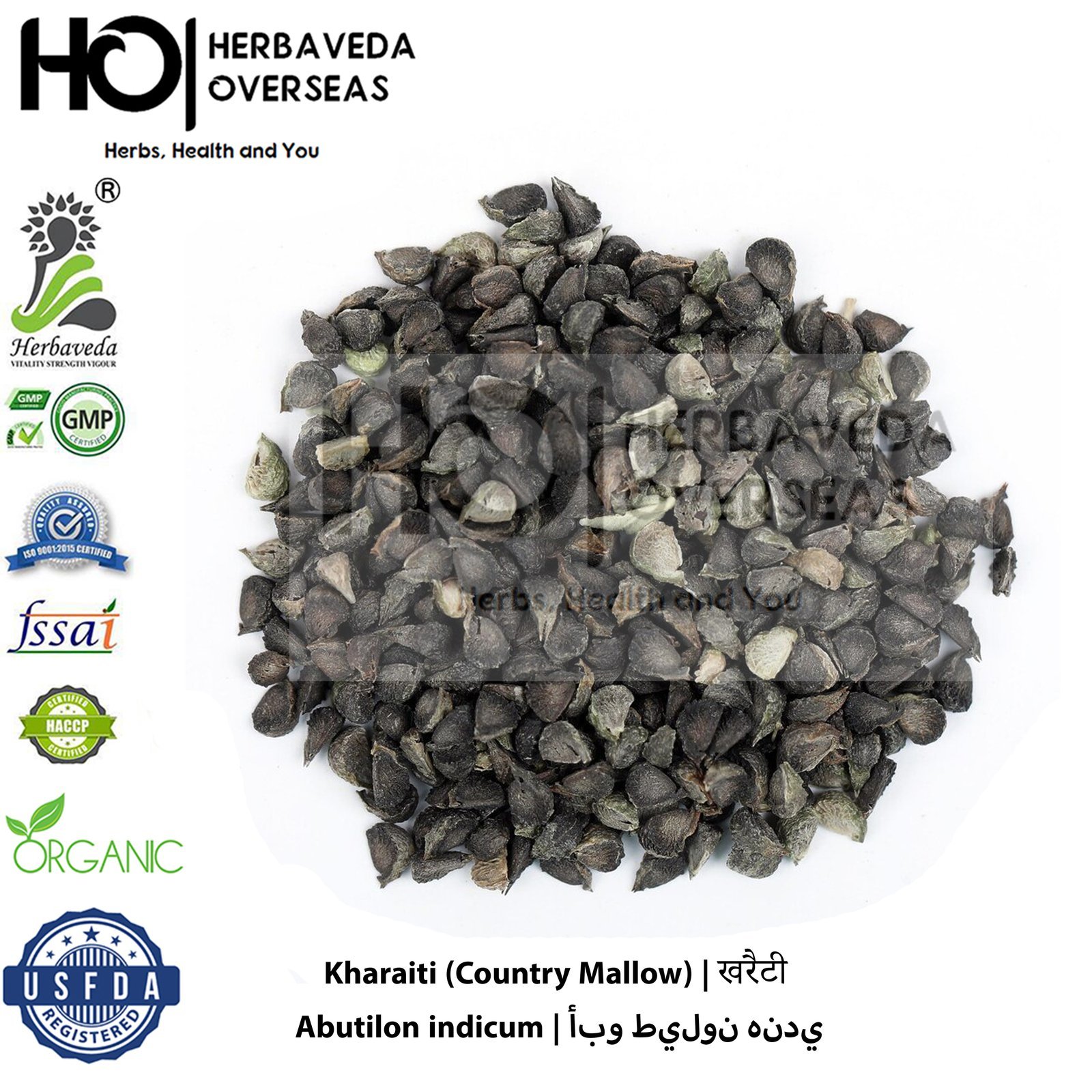
Kharaiti (Country Mallow) | खरैटी | Abutilon indicum

in stock

Abutilon indicum is a soft, erect shrubby herb native to tropical and subtropical regions of South Asia, growing prolifically along roadsides, waste ground, and field margins. Its roots, leaves, bark, seeds, and flowers are all referenced in Ayurvedic and Siddha medicine, making it one of the more comprehensively utilised plants in the indigenous material medica.

  • Free Shipping & Exchanges
  • Flexible and secure payment, pay on delivery
  • 600,000 happy customers
Guarantee Safe & Secure Checkout

Quick facts: Kharaiti (Country Mallow)

Common name
Kharaiti, Country Mallow
Hindi / local name
खरैटी
Botanical name
Abutilon indicum
Type
Raw roots
Packed by
Herbaveda Overseas, Khari Baoli, Delhi (since 1971)
Storage
Airtight container, cool and dry place, away from sunlight
Bulk / export
Available – ask for a wholesale quote

What is Kharaiti called in English?

Kharaiti (खरैटी) is Country Mallow – botanical name Abutilon indicum.

How do I order Kharaiti in bulk?

Send us your quantity and destination through the contact page or WhatsApp +91-99717-54285 for a wholesale or export quote.

For traditional and culinary use. Not intended to diagnose, treat, cure or prevent any disease. Consult a doctor before use, especially if you are pregnant, nursing or taking medicines.

Description

Abutilon indicum, country mallow or Indian mallow, is a soft, velvety, erect shrub of the family Malvaceae, native to tropical and subtropical South and Southeast Asia, widely distributed across roadsides, disturbed agricultural land, and waste ground from sea level to 1,200 metres throughout India and Sri Lanka. Known in classical Ayurveda as Atibala — listed among the four Bala group plants in the Charaka Samhita — it is one of the more comprehensively documented Indian medicinal herbs, with roots, leaves, bark, seeds, and flowers each cited for distinct traditional applications. The roots are traditionally incorporated in diuretic and urinary formulations; the seeds in demulcent and nutritive preparations; and the bark as a fibre source with anti-inflammatory applications. It remains an important rural folk medicine plant across the subcontinent.
shopping cart