Herbaveda Overseas

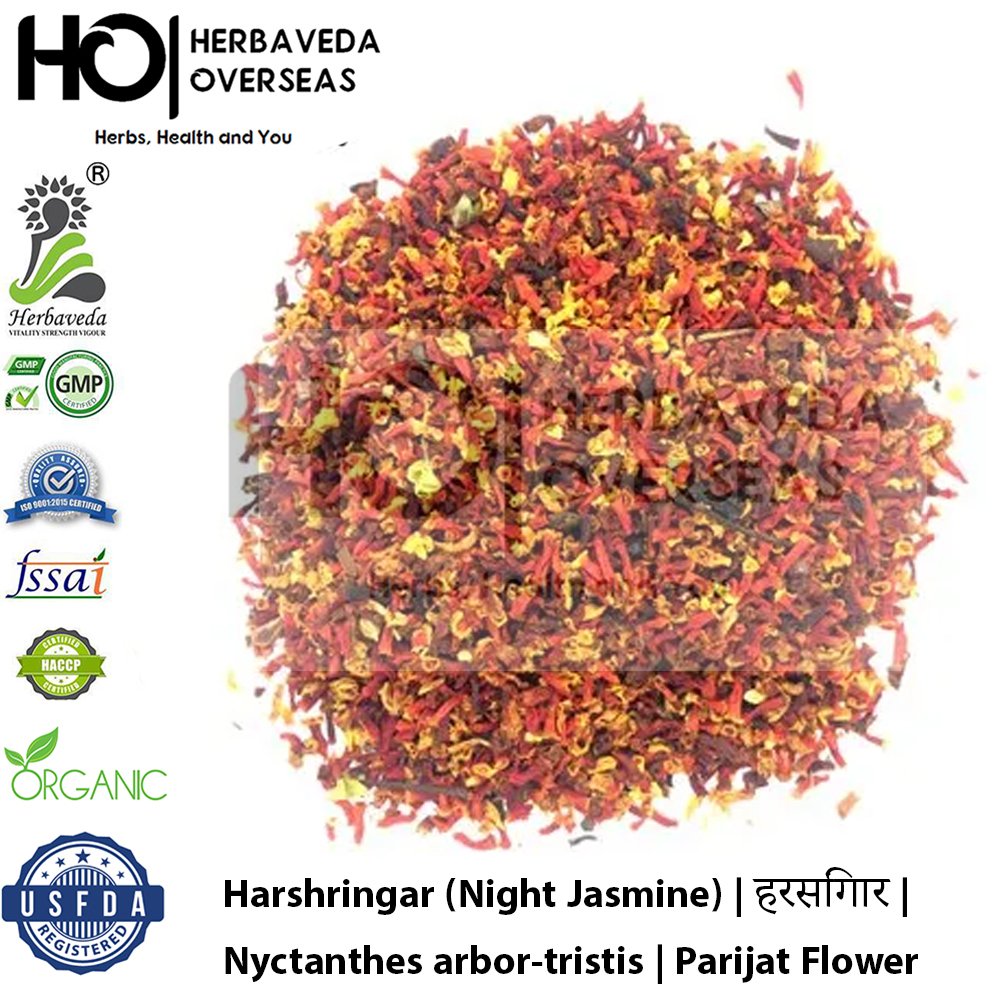
Harshringar (Night Jasmine) | हरसिंगार | Nyctanthes arbor-tristis

in stock

Nyctanthes arbor-tristis is a small shrub or tree native to South Asia and Southeast Asia, growing in tropical and subtropical moist forests and commonly cultivated as an ornamental. Its fragrant white and orange flowers — which bloom nocturnally — are documented in Ayurvedic literature for preparations traditionally addressing joint, skin, and parasitic conditions.

  • Free Shipping & Exchanges
  • Flexible and secure payment, pay on delivery
  • 600,000 happy customers
Guarantee Safe & Secure Checkout

Quick facts: Harshringar (Night Jasmine)

Common name
Harshringar, Night Jasmine
Hindi / local name
हरसिंगार
Botanical name
Nyctanthes arbor-tristis
Type
Dried flowers
Packed by
Herbaveda Overseas, Khari Baoli, Delhi (since 1971)
Storage
Airtight container, cool and dry place, away from sunlight
Bulk / export
Available – ask for a wholesale quote

What is Harshringar called in English?

Harshringar (हरसिंगार) is Night Jasmine – botanical name Nyctanthes arbor-tristis.

How do I order Harshringar in bulk?

Send us your quantity and destination through the contact page or WhatsApp +91-99717-54285 for a wholesale or export quote.

For traditional and culinary use. Not intended to diagnose, treat, cure or prevent any disease. Consult a doctor before use, especially if you are pregnant, nursing or taking medicines.

Description

Nyctanthes arbor-tristis, night jasmine or coral jasmine, is a small, deciduous shrub or tree of the family Oleaceae, native to tropical and subtropical South Asia and Southeast Asia, distributed from the Himalayan foothills through peninsular India to Thailand. The state flower of Odisha, it is widely cultivated for its intensely fragrant white flowers with an orange-red corolla tube, which open at dusk and fall at dawn. Known in Ayurveda as Shephalika, the flowers, leaves and bark are cited in the Charaka Samhita and Bhavaprakasha Nighantu for seasonal wellness, joint comfort and skin care. The orange-red corolla tubes have also been traditionally used as a source of natural dye in South Asian textile traditions, yielding a saffron-tinted colour.
shopping cart