
Description
What is it?
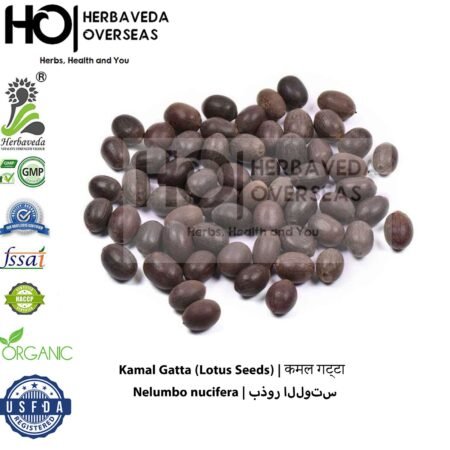
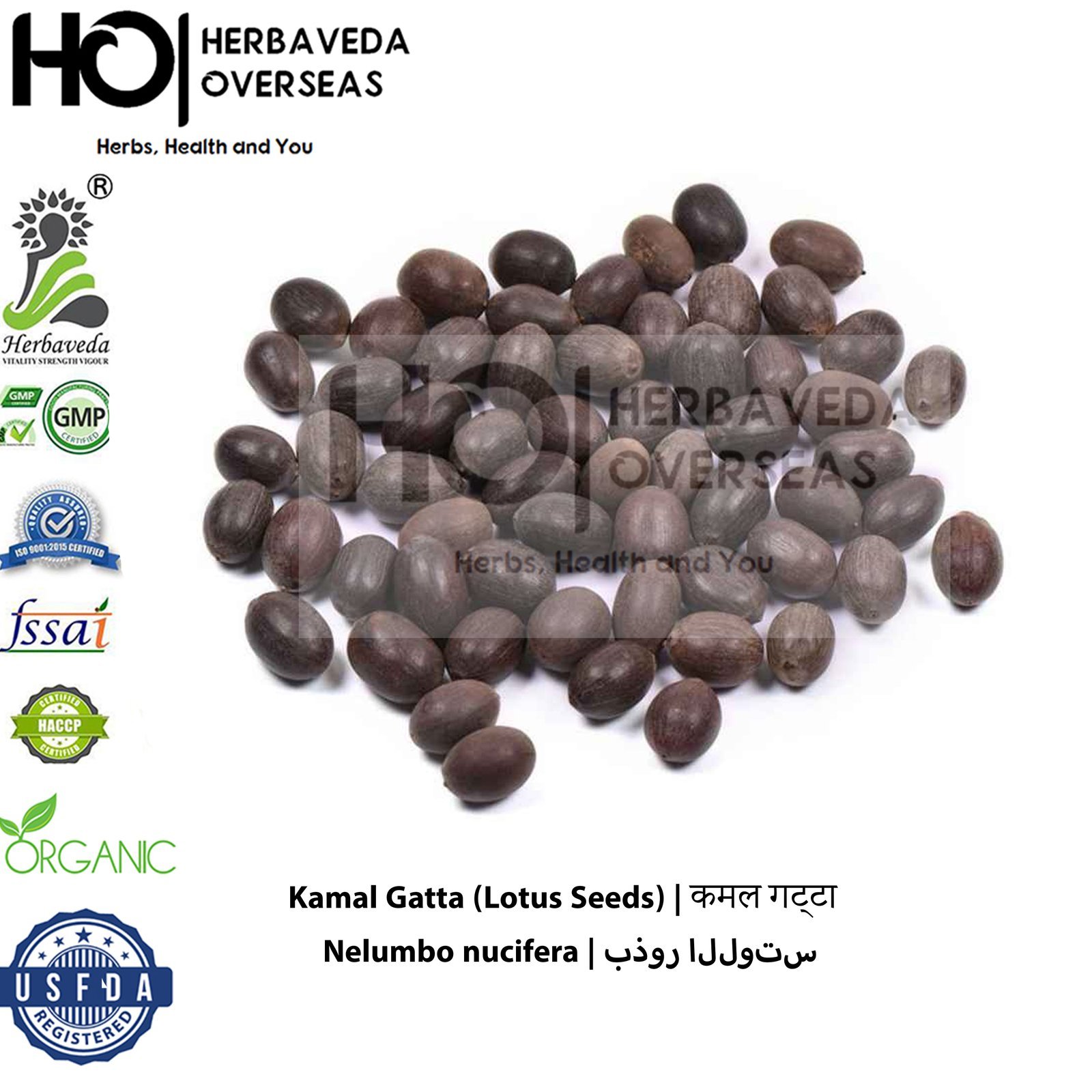
Kamal Gatta is the ripe, dried seed of the lotus flower. Each seed has a very hard dark shell and a white kernel inside. Lotus is sacred in India and closely linked with Goddess Lakshmi, which is why these seeds are so common in puja.
Also known as
Kamal beej, Padma Beeja (Sanskrit), lotus seed, کمل گٹہ (Urdu), Nelumbo nucifera
How it is used
- Puja and havan: offered in Lakshmi puja, especially at Diwali.
- Malas: strung into kamal gatta malas for jaap.
- Ayurveda: described as Padma Beeja and used in nourishing Rasayana preparations.
How to use
For home use, the shell is cracked and the white kernel is soaked or ground. The bitter green sprout in the middle is usually removed. Ask an Ayurvedic or Unani practitioner how much is right for you.
How to judge good quality
- Hard, whole, oval seeds, dark brown to black.
- Heavy for their size, with no cracks, holes or mould.
- White, firm kernel inside when broken.
Storage
Keep in an airtight container in a cool, dry place away from sunlight and moisture.
Frequently asked questions
Is kamal gatta the same as makhana?
No. Makhana comes from a different water plant, the fox nut. Kamal gatta is the lotus seed.
How many seeds are in a kamal gatta mala?
A jaap mala usually has 108 beads plus one guru bead.
Do you deliver across India?
Yes. Orders ship from Delhi to all states, usually within 1–3 working days. For bulk quantities, use our Request a Quote form.
Herbaveda, Delhi – trusted since 1971.
Sold as a raw herb for traditional and trade use. This information is educational and is not a substitute for medical advice.