
Description
What is it?
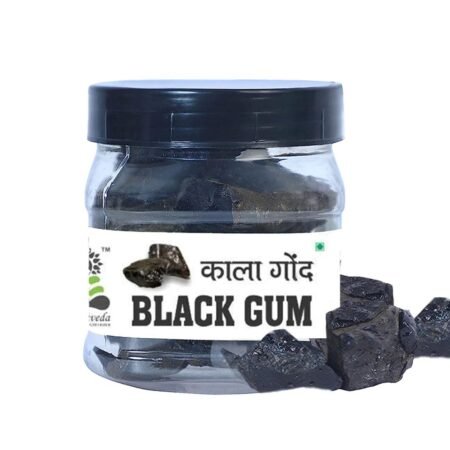
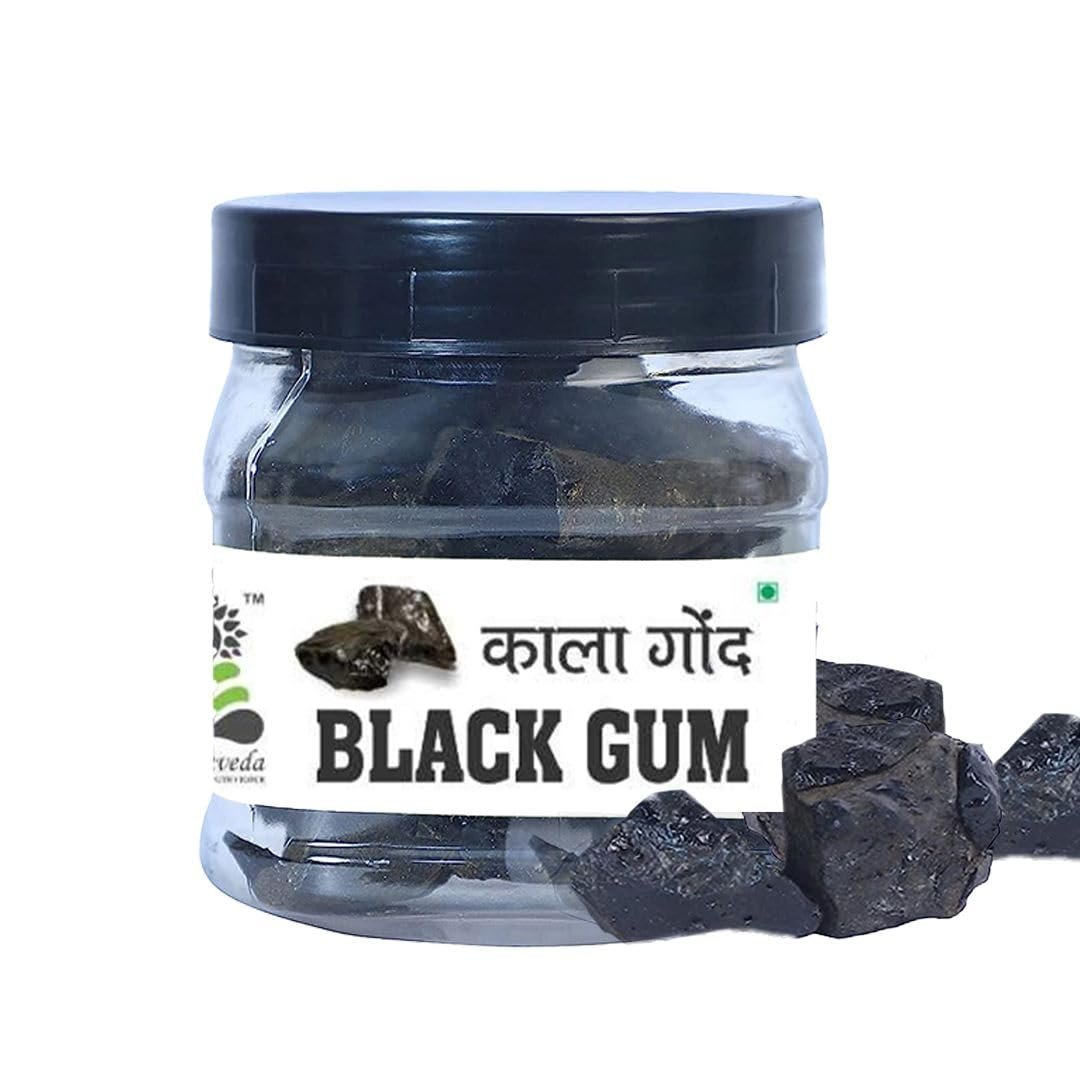
Kala Gond is a dark brown to black resin. It forms when sap seeps from cuts in the bark of Commiphora trees and dries hard in the sun. The same tree gives guggul, and kala gond is the darker, stickier kind sold in Indian herb markets.
Also known as
Black resin, black gum, Kala Gondh, related to guggul, Commiphora wightii, کالا گوند (Urdu)
How it is used
- Ayurvedic preparations: used by vaidyas in formulas for the joints and the chest.
- With milk: traditionally dissolved in warm milk in small amounts.
- Dhoop and incense: burnt on coal for its warm, smoky fragrance.
Safety
Do not take kala gond by mouth without a practitioner’s advice. Pregnant or breastfeeding women, children and anyone on regular medication should check with a doctor or Ayurvedic practitioner first.
How to judge good quality
- Dark brown to nearly black lumps, sticky or glassy, with a balsam-like smell when warmed.
- Free from bark, sand and stones; softens when held in a warm hand.
Storage
Keep in an airtight container in a cool, dry place away from sunlight and moisture. Kala gond can soften in summer, so keep it in a cool spot.
Frequently asked questions
Is kala gond the same as guggul?
It comes from the same tree. Kala gond is the darker, stickier trade kind.
Can I use it at home?
Use it for dhoop freely. For taking it by mouth, ask an Ayurvedic practitioner. Pregnant or breastfeeding women, children and anyone on regular medication should check with a doctor or Ayurvedic practitioner first.
Do you deliver across India?
Yes. Orders ship from Delhi to all states, usually within 1–3 working days. For bulk quantities, use our Request a Quote form.
Herbaveda, Delhi – trusted since 1971.
Sold as a raw herb for traditional and trade use. This information is educational and is not a substitute for medical advice.