
Description
What is it?
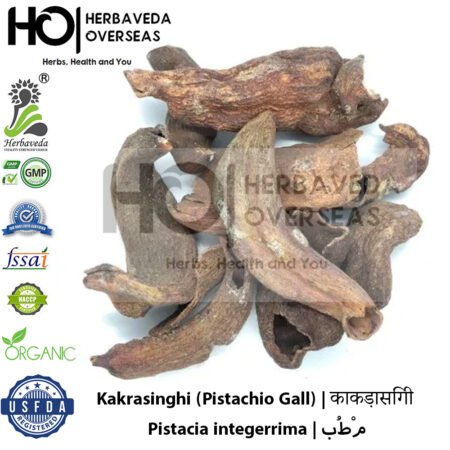
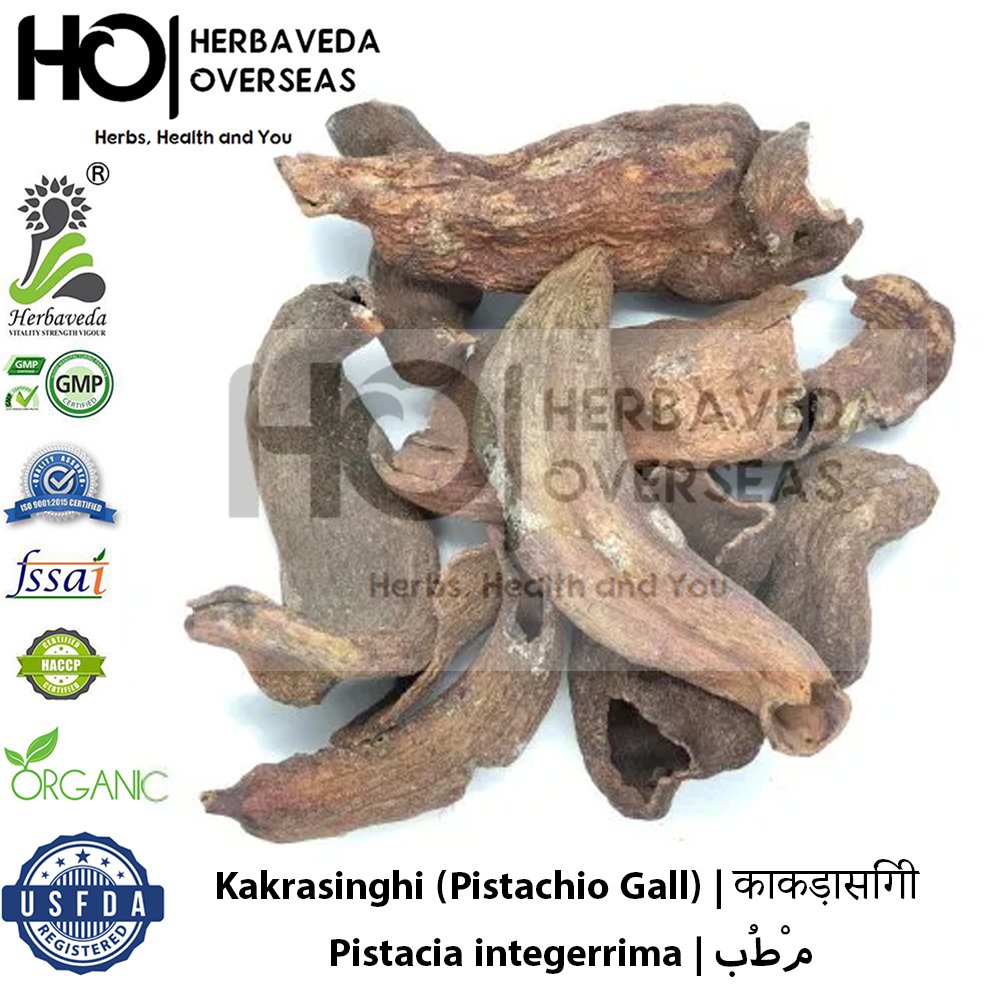
Kakrasinghi looks like small, hollow, curved horns. It is a natural gall that forms on the leaves of the Himalayan pistachio tree. In Ayurveda it is called Karkatashringi and is a familiar ingredient in traditional cough-season powders.
Also known as
Karkatashringi (Sanskrit), Kakkatashingi (Marathi), کاکڑا سنگھی (Urdu), Himalayan pistachio gall, Pistacia integerrima
How it is used
- Cough-season powders: ground and mixed with honey in traditional home use.
- Classical churnas: part of formulas like Balachaturbhadra.
How to use
Grind the galls to a fine powder. Traditionally a small pinch is mixed with honey. For children, always ask an Ayurvedic practitioner before use.
How to judge good quality
- Hollow, horn-shaped galls, light brown to reddish-brown.
- Light, dry and crisp, with no insect dust inside.
- Strong astringent, slightly resinous smell.
Storage
Keep in an airtight container in a cool, dry place away from sunlight and moisture.
Frequently asked questions
Is kakrasinghi safe for children?
It appears in traditional children’s formulas, but always ask a practitioner for the right amount.
Is kakrasinghi a root?
No. It is a gall that forms on the tree’s leaves.
Do you deliver across India?
Yes. Orders ship from Delhi to all states, usually within 1–3 working days. For bulk quantities, use our Request a Quote form.
Herbaveda, Delhi – trusted since 1971.
Sold as a raw herb for traditional and trade use. This information is educational and is not a substitute for medical advice.