

Description
What is it?
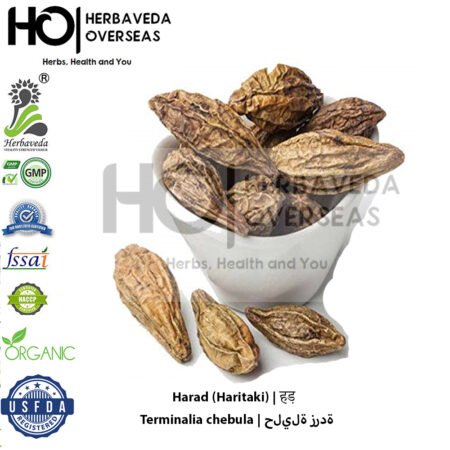
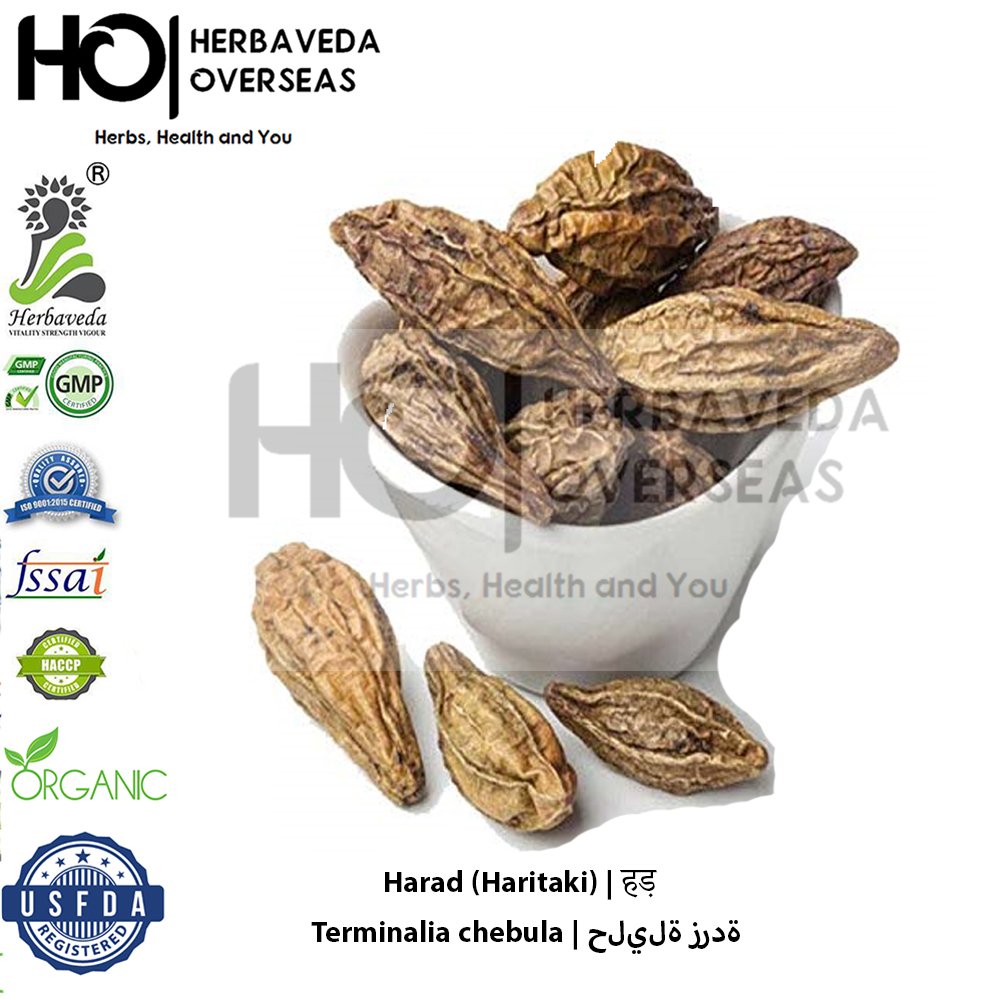
Harad is the dried fruit of the haritaki tree. The fruits are hard, ridged and yellow-brown, with a strong astringent taste. Ayurveda gives haritaki a special place and calls it the “king of medicines”. In many Indian homes a piece of harad is kept in the kitchen cupboard as a traditional digestive.
Also known as
Haritaki, Harad, Harde (Hindi), Abhaya (Sanskrit), Halela (Unani), Kadukkai (Tamil), ہڑ (Urdu), chebulic myrobalan
How it is used
- Triphala: mixed in equal parts with baheda and amla.
- Digestion: traditionally taken after meals as a digestive.
- Mouth care: used in traditional tooth powders and gargles.
- Natural dye: gives a yellow-brown colour to cloth.
How to use
Grind the fruit (without the hard seed) to a fine powder. Traditionally a small amount of the powder is taken with warm water at night. Ask an Ayurvedic practitioner for the right amount for you.
How to judge good quality
- Whole, hard, wrinkled fruits, yellow-brown to dark brown.
- Heavy for their size, with no fungus, holes or dust.
- A strong astringent taste when a small piece is chewed.
Storage
Whole fruits keep well for a long time in an airtight container in a cool, dry place. Grind small amounts at a time.
Frequently asked questions
Can harad be taken every day?
It is traditionally taken for short periods. Pregnant women, children and people on medication should ask a doctor first.
Is harad the same as Triphala?
No. Harad is one of the three fruits that make up Triphala.
Do you deliver across India?
Yes. Orders ship from Delhi to all states, usually within 1–3 working days. For bulk quantities, use our Request a Quote form.
Herbaveda, Delhi – trusted since 1971.
Sold as a raw herb for traditional and trade use. This information is educational and is not a substitute for medical advice.