Herbaveda Overseas

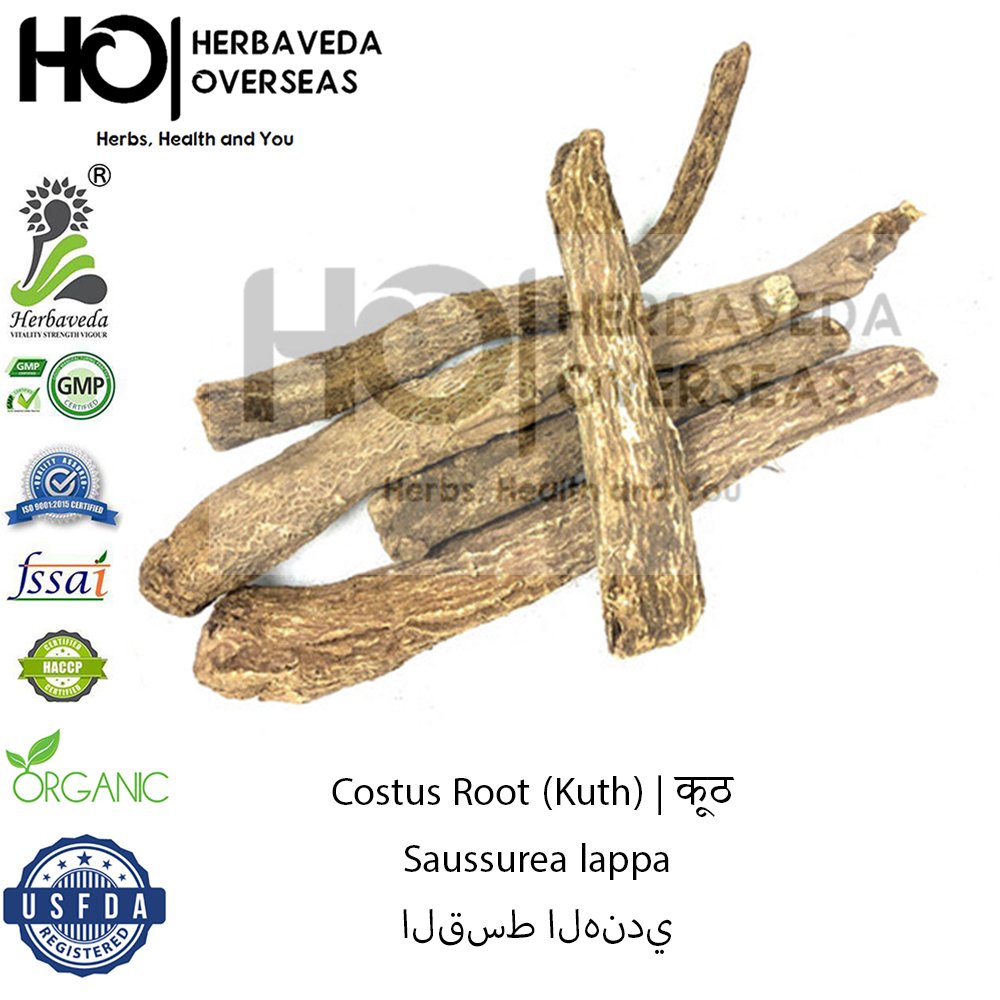
Costus Root (Kuth) | कूठ | Saussurea lappa

in stock

Saussurea lappa is a tall perennial herb native to the alpine meadows and sub-alpine regions of the western Himalayas, particularly in Jammu and Kashmir at elevations between 2,500 and 4,000 metres. Its aromatic root is one of the oldest traded medicinal botanicals in world commerce, referenced in Sanskrit, Greek, and Roman texts.

  • Free Shipping & Exchanges
  • Flexible and secure payment, pay on delivery
  • 600,000 happy customers
Guarantee Safe & Secure Checkout

Quick facts: Costus Root (Kuth)

Common name
Costus Root, Kuth
Hindi / local name
कूठ
Botanical name
Saussurea lappa
Type
Raw roots
Packed by
Herbaveda Overseas, Khari Baoli, Delhi (since 1971)
Storage
Airtight container, cool and dry place, away from sunlight
Bulk / export
Available – ask for a wholesale quote

What is Costus Root called in English?

Costus Root (कूठ) is Kuth – botanical name Saussurea lappa.

How do I order Costus Root in bulk?

Send us your quantity and destination through the contact page or WhatsApp +91-99717-54285 for a wholesale or export quote.

For traditional and culinary use. Not intended to diagnose, treat, cure or prevent any disease. Consult a doctor before use, especially if you are pregnant, nursing or taking medicines.

Description

Saussurea lappa, the costus or kuth plant, is a large perennial herb of the family Asteraceae, endemic to the high-altitude alpine meadows of the western Himalayas — principally Kashmir, Himachal Pradesh, and the Karakoram — between 2,500 and 4,000 metres elevation. The massive tap root, which may reach two kilograms in weight, carries a characteristic warm, earthy, camphoraceous fragrance derived from sesquiterpene lactones including costunolide and dehydrocostus lactone. Referenced in the Charaka Samhita as Kushtha, it appears also in Dioscorides’ De Materia Medica, Pliny’s Naturalis Historia, and ancient Arabian trade records as an article of significant commercial value transported westward via the Silk Route. It is currently listed as Vulnerable on the IUCN Red List.
shopping cart