
Description
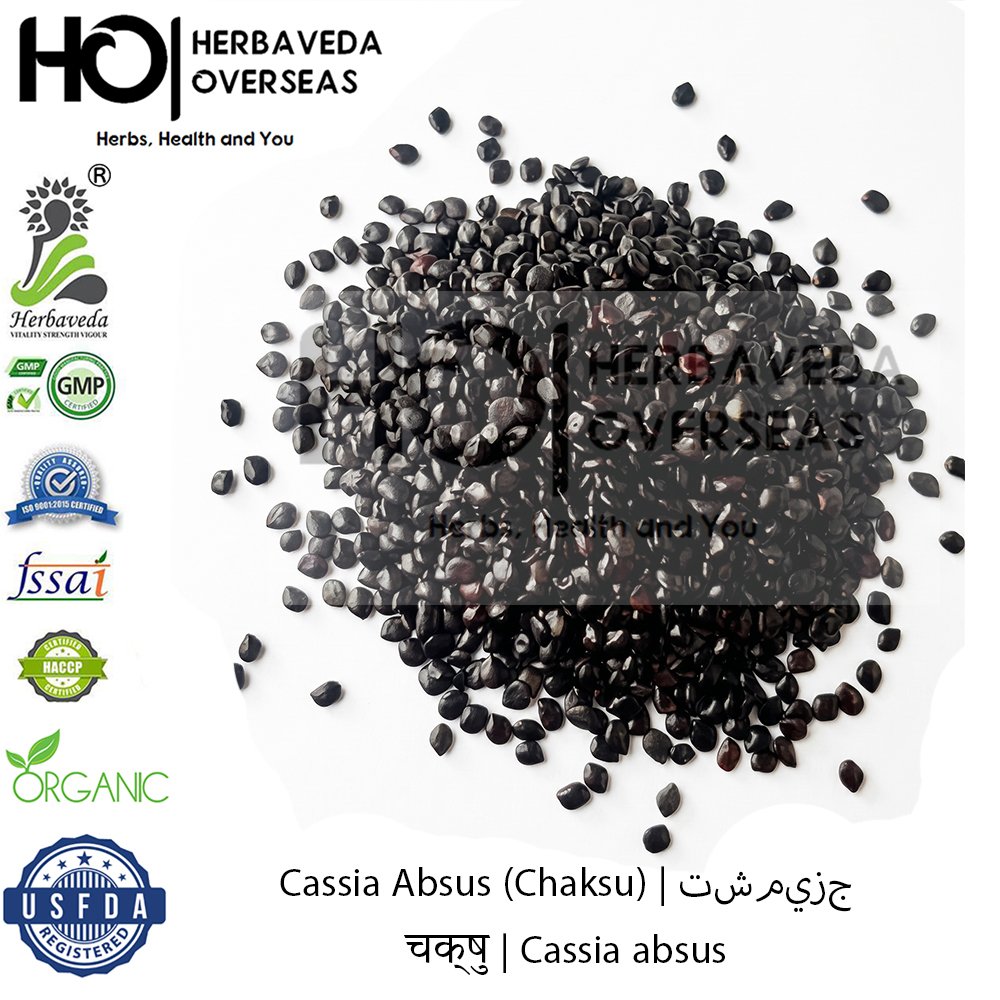
Cassia absus, known in Ayurveda as Chaksu and in Unani as Hab-ul-Hamam, is a small erect annual herb of the family Fabaceae, naturally distributed across the drier regions of tropical Africa, the Arabian Peninsula, Iran, and the Indian subcontinent, where it grows in sandy, disturbed soils and dry grasslands of Rajasthan, Gujarat, and Punjab. The small, dark, obovate seeds have a long history of traditional use in both Ayurvedic and Unani ophthalmology — referenced in the Sharangadhara Samhita and classical Unani pharmacopoeias for preparations traditionally associated with conjunctival and corneal conditions. The plant was described by the colonial botanist Roxburgh and subsequently catalogued in the Flora of British India.