
Description
What is it?
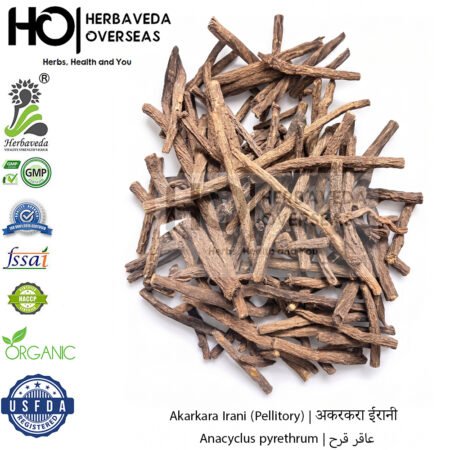
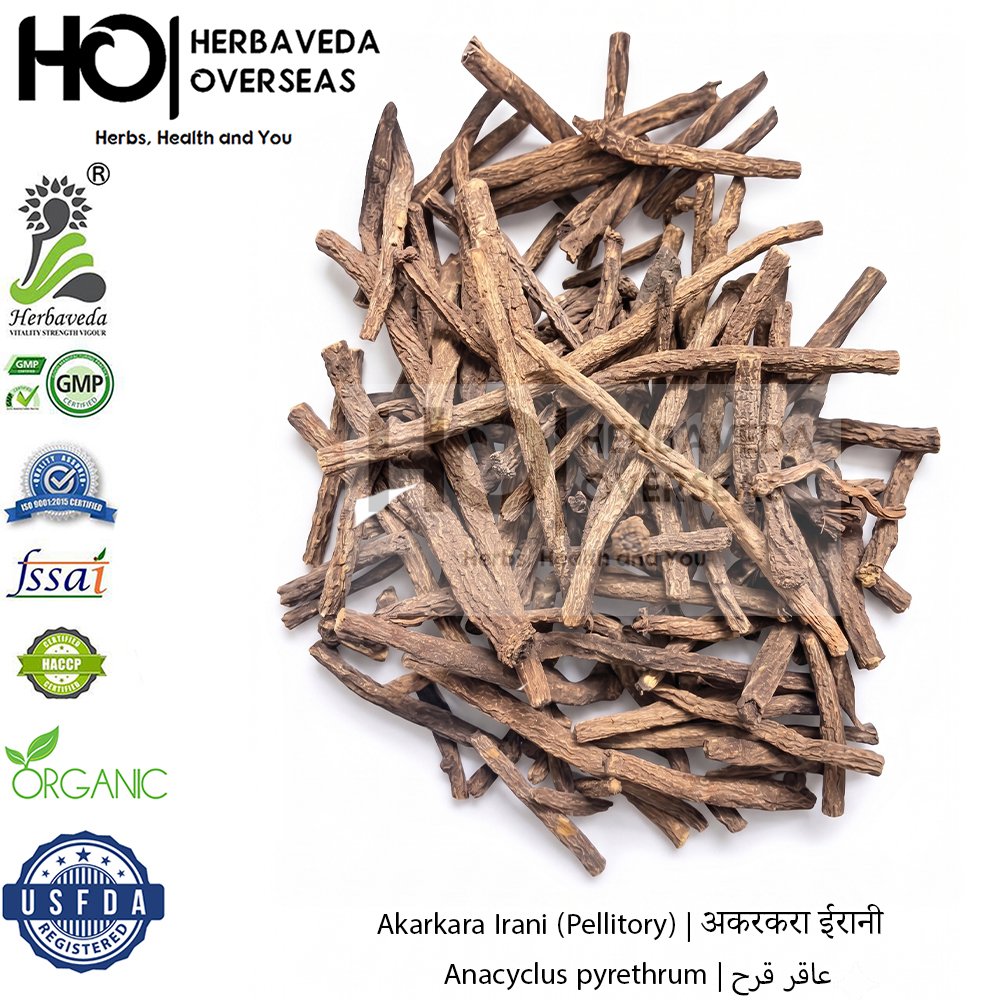
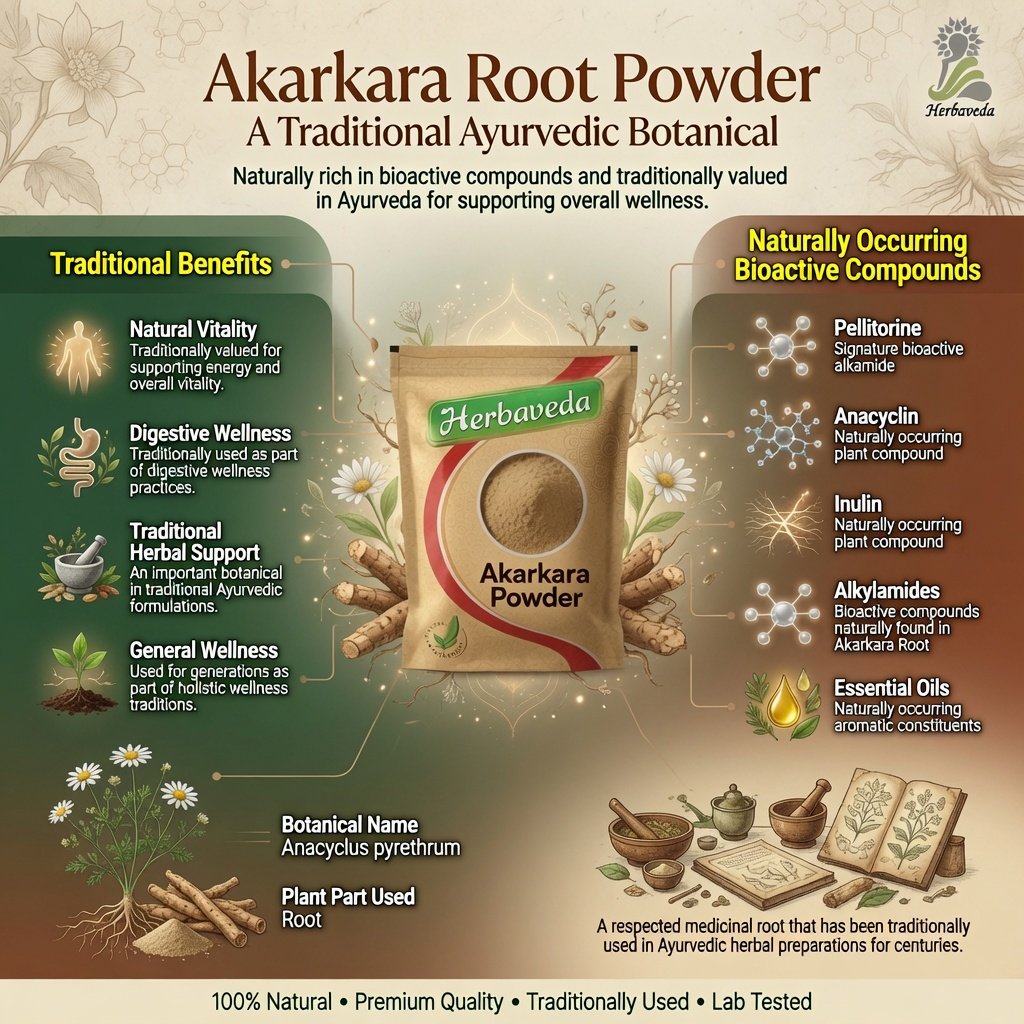
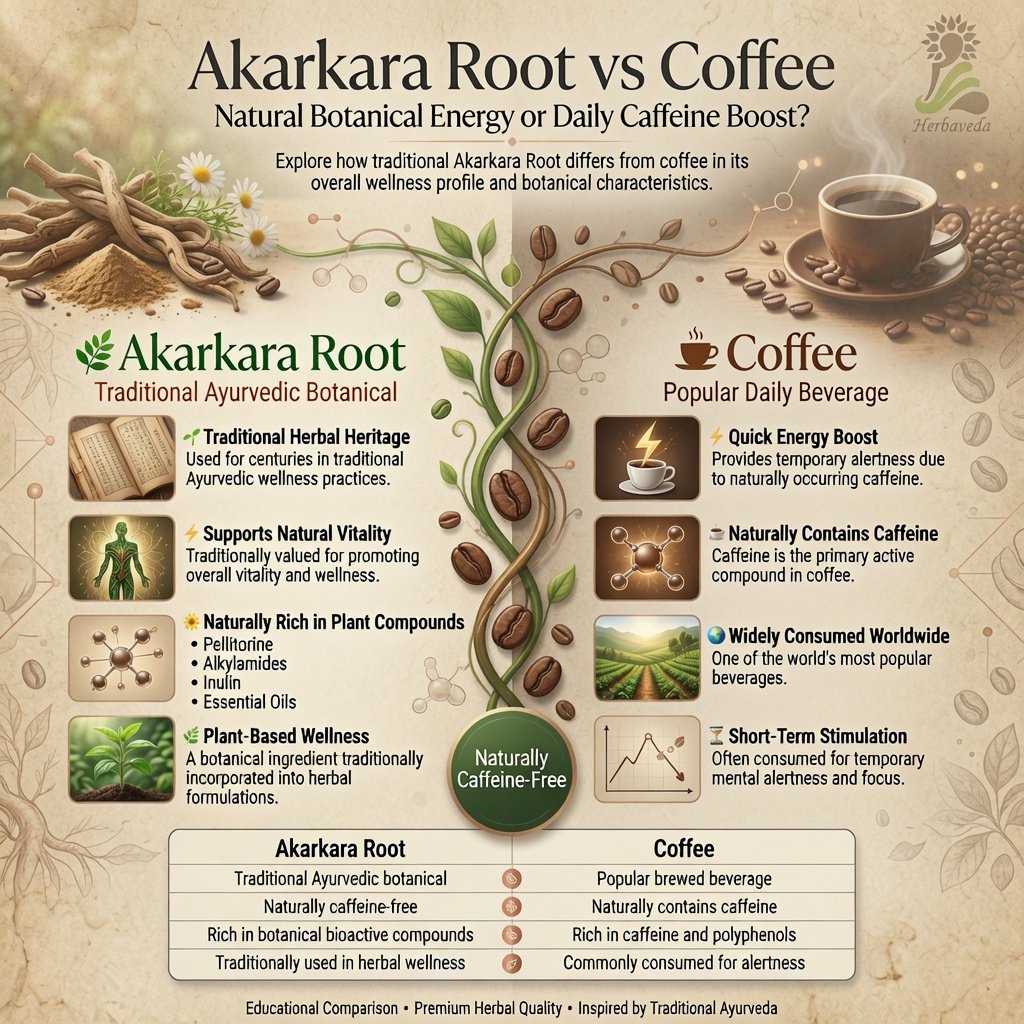
Akarkara is the dried root of pellitory, a small plant from the daisy family. Bite a piece and your mouth tingles and waters – that sharp effect is why it has been used in tooth powders for centuries. Our Irani grade is imported and has thick, strongly pungent roots.
Also known as
Pellitory root, Akarkara, Aqarqarha (Unani), Akallakam (Tamil), Akkalkara (Marathi), عاقرقرحا (Urdu), Anacyclus pyrethrum
How it is used
- Tooth powder (manjan): ground and mixed into traditional tooth and gum powders.
- Gargles: boiled in water for a traditional mouth gargle.
- Ayurveda and Unani: used by manufacturers in nerve-tonic and vitality preparations, and in Unani majoons.
How to use
Akarkara is very strong, so only a pinch is used. For a home tooth powder, mix a small pinch of fine powder with other manjan ingredients and rub gently on the gums. For any internal use, ask a qualified practitioner first. Avoid during pregnancy.
How to judge good quality
- Whole, dry root pieces, brown outside and pale inside.
- When chewed, gives a strong tingling and numbing feel and makes the mouth water – the sign of good akarkara.
- No mould, dust or insect holes.
Storage
Keep in an airtight container in a cool, dry place away from sunlight and moisture.
Frequently asked questions
Irani, Algerian or Indian – which should I buy?
Irani and Algerian are imported grades with thicker, sharper roots. Indian (desi) akarkara is a local grade and costs less.
Is it safe to chew akarkara?
A tiny piece is chewed in folk practice, but it is very sharp. Pregnant or breastfeeding women, children and anyone on regular medication should ask a doctor or qualified practitioner before using it.
Do you deliver across India?
Yes. Orders ship from Delhi to all states, usually within 1–3 working days. For bulk quantities, use our Request a Quote form.
Herbaveda, Delhi – trusted since 1971.
Sold as a raw herb for traditional and trade use. This information is educational and is not a substitute for medical advice.