

Description
What is it?
Ashwagandha is a small, hardy shrub from India’s dry lands. Its roots have a strong smell – the name means ‘smell of a horse’. In Ayurveda it is one of the best-known Rasayana herbs, and the root powder is taken by many families.
Also known as
Asgandh, Ashwagandha (Sanskrit), Asgandh Nagori (Unani), اسگندھ (Urdu), winter cherry, Indian ginseng, Withania somnifera
How it is used
- Ayurveda: described as a Rasayana and strength-giving herb.
- With milk: traditionally taken with warm milk at night.
- Blends: mixed with shatavari, safed musli or other herbs in traditional churnas.
How to use
Traditionally about half to one teaspoon is mixed in warm milk or water once a day. Ask an Ayurvedic practitioner for the right amount.
Safety
Avoid during pregnancy. People with thyroid conditions, autoimmune conditions or liver problems, and anyone taking sedatives or other regular medicines, should ask a doctor first. Ask an Ayurvedic practitioner or doctor before regular use if you are pregnant, breastfeeding, taking medicines or have a long-term health condition.
How to judge good quality
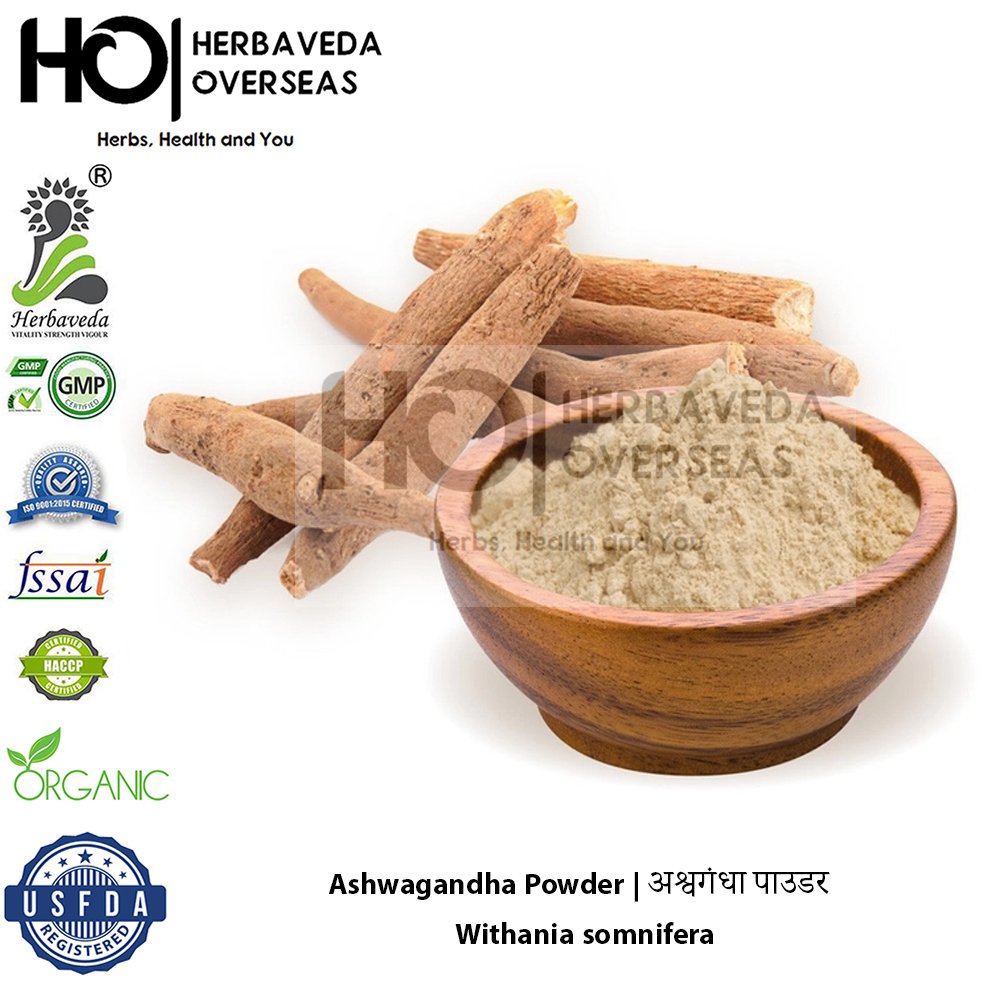
- Light brown to cream powder with a strong, horse-like smell.
- Bitter, slightly earthy taste.
- Fine and even, root powder only, with no stems or leaves.
Storage
Keep the powder in an airtight jar in a cool, dry place. Always use a dry spoon. Powders lose aroma faster than whole herbs, so use within a few months of opening.
Frequently asked questions
Why does ashwagandha smell strong?
The natural smell of the root is strong and earthy. It is a sign of genuine root.
Can women take ashwagandha?
Yes, it is used by men and women, but not during pregnancy unless a doctor advises it.
Do you deliver across India?
Yes. Orders ship from Delhi to all states, usually within 1–3 working days. For bulk quantities, use our Request a Quote form.
Herbaveda, Delhi – trusted since 1971.
Sold as a raw herb for traditional and trade use. This information is educational and is not a substitute for medical advice.