
Description
What is it?
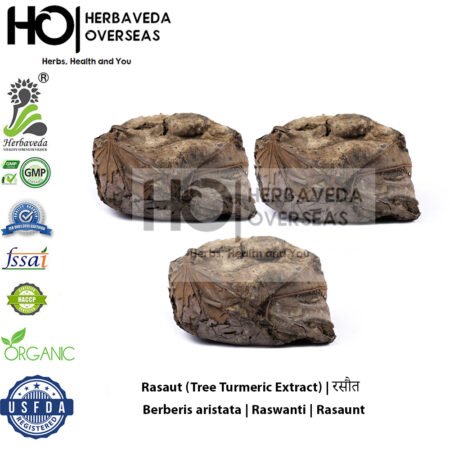
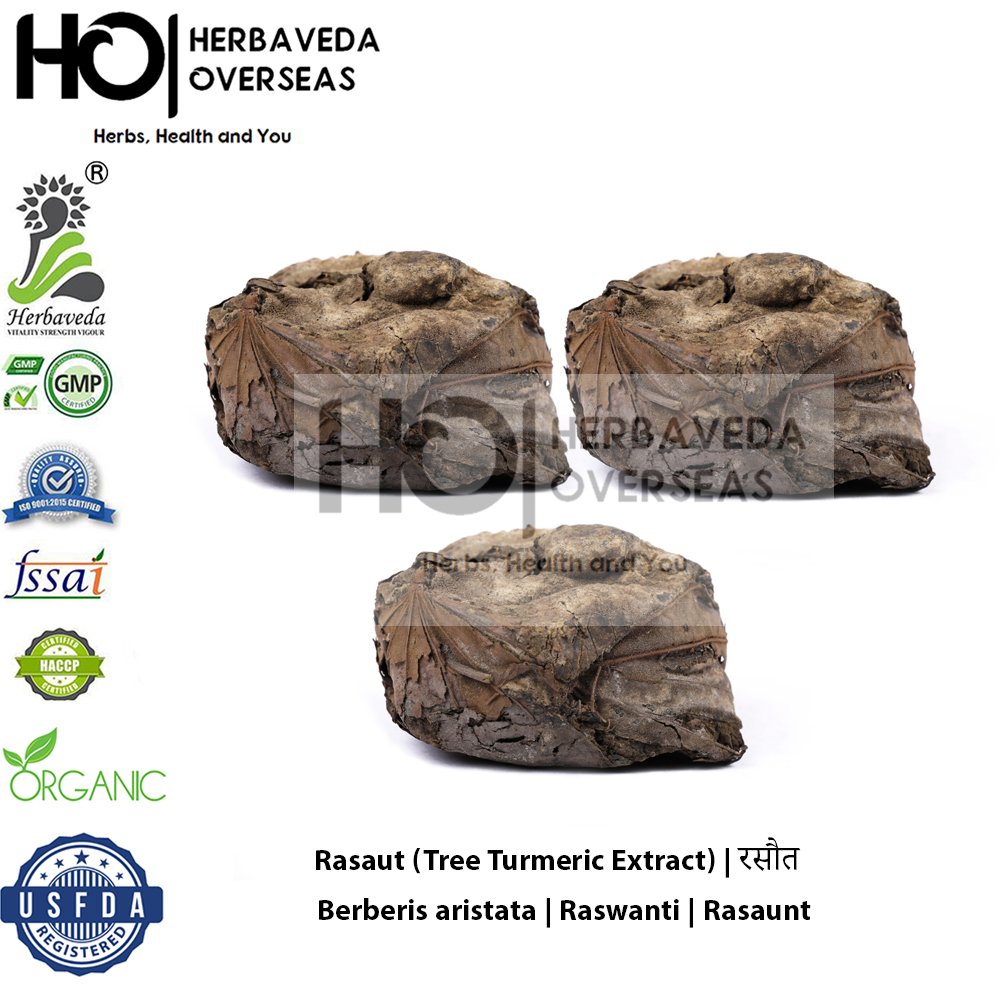
Rasaut is made by boiling the roots and stems of Daruharidra – a thorny Himalayan shrub also called tree turmeric – in water for many hours, then drying the yellow liquid into a hard, dark extract. Old Ayurvedic texts call it Rasanjana, and it is one of the earliest herbal extracts known in India.
Also known as
Rasanjana (Sanskrit), Daruharidra extract, رسوت (Urdu), tree turmeric extract, Indian barberry extract, Berberis aristata
How it is used
- Skin pastes: rubbed with water into a paste and applied in traditional folk practice.
- Classical preparations: used by vaidyas and hakims in preparations described for the eyes, skin and liver.
- Gargles: dissolved in water in traditional mouth and throat rinses.
How to use
For external use, rub a small piece with a little water to make a paste. Do not put rasaut in or near the eyes yourself – traditional eye preparations are made only by practitioners. Ask a practitioner before taking it internally.
How to judge good quality
- Dark brown to blackish solid pieces with a shiny break.
- Very bitter taste; dissolves in water to give a yellow-brown liquid.
- Free from sand, wood bits and mould.
Storage
Keep in an airtight container in a cool, dry place. It can soften and turn sticky in humid weather.
Frequently asked questions
Is rasaut the same as daruharidra?
It is made from daruharidra, as a concentrated extract.
Who should avoid it?
Pregnant or breastfeeding women and young children should not use it internally without medical advice.
Do you deliver across India?
Yes. Orders ship from Delhi to all states, usually within 1–3 working days. For bulk quantities, use our Request a Quote form.
Herbaveda, Delhi – trusted since 1971.
Sold as a raw herb for traditional and trade use. This information is educational and is not a substitute for medical advice.