
Description
What is it?
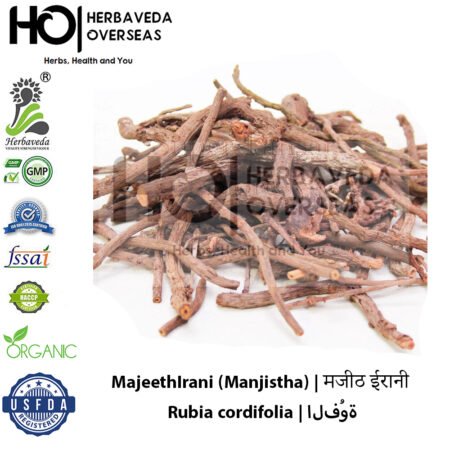
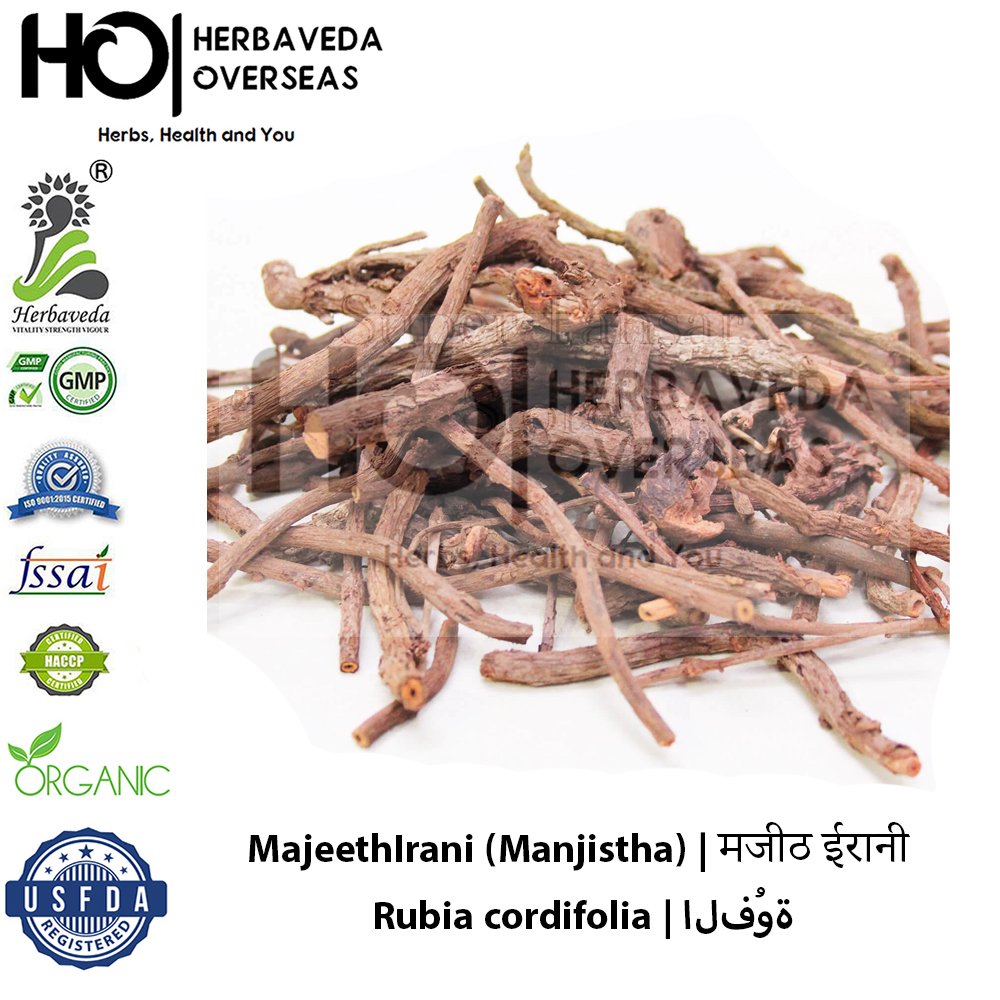
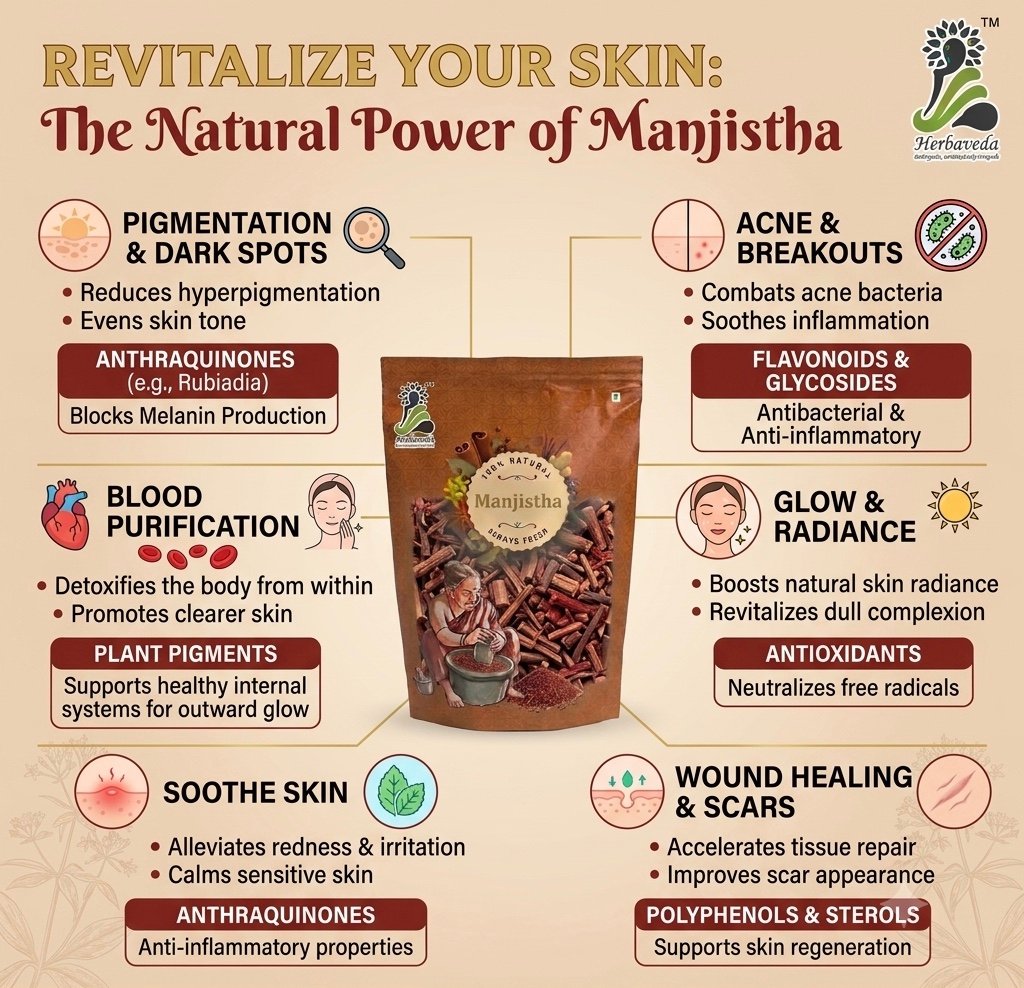
Majeeth is the long, thin root of a Himalayan climbing plant. Break a piece and you will see it is bright red inside. In Ayurveda it is called Manjistha and is one of the most used herbs for skin care. It is also one of the oldest natural red dyes in the world. Majeeth Irani is the trade name for thicker, deep-red imported pieces, which many buyers prefer for colour.
Also known as
Manjistha (Sanskrit), مجیٹھ (Urdu), Manjitti (Tamil), Indian madder, Rubia cordifolia
How it is used
- Face packs: powdered and mixed with honey, rose water or milk in traditional ubtan.
- Ayurvedic tradition: a key herb in classic skin and blood-cleansing formulas such as Manjishthadi Kwath.
- Natural dye: boiled to dye cloth and wool red to pink.
How to use
For a face pack, grind into a fine powder and mix a teaspoon with rose water or honey; leave for 10–15 minutes and wash off. Do a patch test first. For internal use, ask an Ayurvedic or Unani practitioner how much is right for you.
How to judge good quality
- Long, thin, cylindrical pieces, reddish-brown outside.
- Bright red to orange-red inside when broken.
- Dry and free from soil, mould and other plant parts.
Storage
Keep in an airtight container in a cool, dry place away from sunlight and moisture. Grind only what you need.
Frequently asked questions
Is Majeeth the same as Manjistha?
Yes, they are two names for the same root.
Why does my urine look reddish after taking Majeeth?
Its natural red colour can pass into urine. This is a known effect of the colour.
Do you deliver across India?
Yes. Orders ship from Delhi to all states, usually within 1–3 working days. For bulk quantities, use our Request a Quote form.
Herbaveda, Delhi – trusted since 1971.
Sold as a raw herb for traditional and trade use. This information is educational and is not a substitute for medical advice.