
Description
What is it?
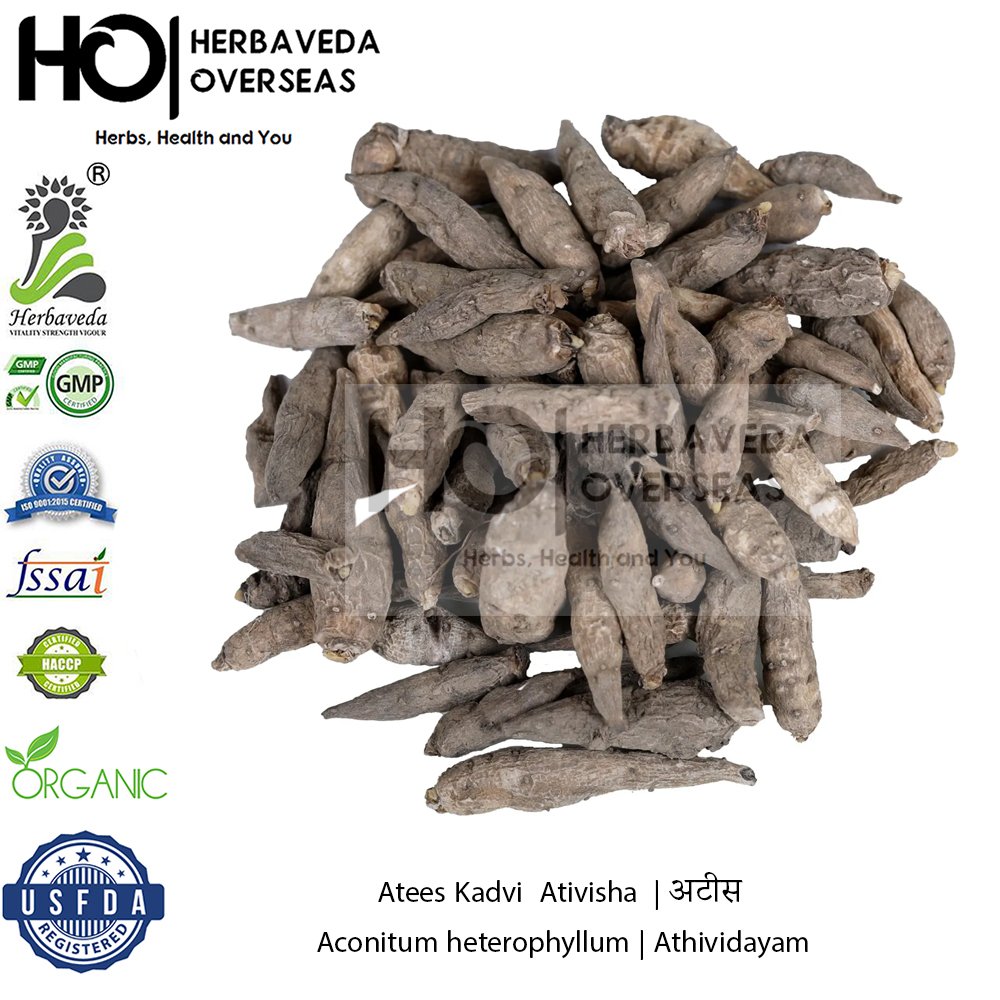
Atees Kadvi, or Ativisha, is a small tuberous root of a Himalayan plant that grows at 2,500–4,500 metres. The root is white and starchy inside and extremely bitter. Unlike its poisonous cousins, Ayurveda regards Ativisha as a milder herb, and it is well known as an ingredient of traditional balghutti for children. Wild stocks are declining, so good material is scarce.
Quick facts
- Botanical name: Aconitum heterophyllum Wall.
- Family: Ranunculaceae
- Part supplied: dried root tubers
- Hindi: अतीस, अटीस, अतिविषा
- Urdu: اتیس
- Other names: Ativisha (Sanskrit), Atees Kadva, Indian atees
Traditional uses
- Described in Ayurvedic texts for digestion and in fever-season preparations.
- A traditional ingredient of balghutti and other children’s preparations made by practitioners.
- Used in Unani as Atees.
Safety
Ativisha belongs to the aconite family. Although Ayurveda counts it among the milder members, aconite roots can look alike, so buy only from trusted sources and use it only on the advice of a qualified practitioner, especially for children.
Who buys it from us
- Ayurvedic and Unani manufacturers
- Balghutti and churna makers
- Vaidyas and pansari shops
Quality and packing
- Small, tapering, grey-brown roots that are white and starchy when broken.
- Intensely bitter taste; dry, with no mould or insect holes.
- Packed in bulk bags to the buyer’s requirement and shipped across India from Delhi.
Herbaveda Overseas has traded raw herbs from Khari Baoli, Delhi, since 1971. Use our Request a Quote form for the latest bulk price, a sample or a custom pack size.
Frequently asked questions
What is Ativisha?
It is the Sanskrit name for atees root.
Is atees poisonous?
Ativisha is considered one of the milder aconites, but it should still be used only on a practitioner’s advice.
Do you supply atees in bulk?
Yes. Send an enquiry with your quantity.
Sold as a raw herb for traditional and trade use. This information is educational and is not a substitute for medical advice.