
Description
What is it?
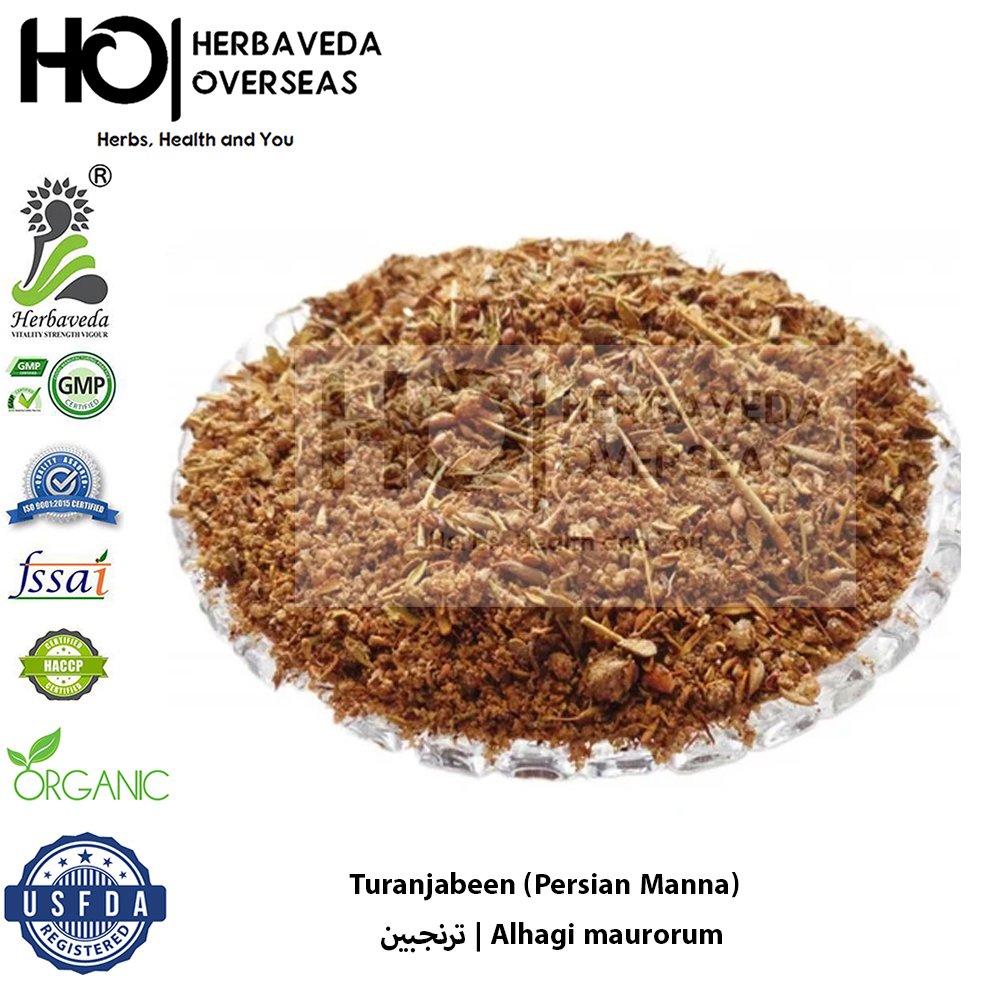
Turanjabeen is a natural sweet substance. In the hot summer months, a sugary sap seeps from the stems of the camel thorn – a thorny shrub of dry lands in Iran, Afghanistan and Central Asia – and dries into small, pale grains. These are collected and sold as Turanjabeen. It is described in Unani books, including Ibn Sina’s Canon of Medicine.
Quick facts
- Botanical name: Alhagi maurorum Medik. (syn. A. pseudalhagi)
- Family: Fabaceae
- Part supplied: dried sweet exudate (manna)
- Hindi: तुरंजबीन
- Urdu: ترنجبین
- Other names: Persian manna, camel thorn manna, Yavasa sharkara (Sanskrit)
Traditional uses
- Described in Unani texts as a mild, cooling sweet, used in traditional recipes for easy bowel movement.
- Dissolved into sharbat and other Unani preparations.
- Used as a natural sweetener in some traditional recipes.
Who buys it from us
- Unani manufacturers and dawakhanas
- Hakims
- Pansari shops
Quality and packing
- Small, pale yellowish grains and lumps.
- Sweet taste, with only a few bits of thorn or twig.
- Dry and free-flowing, not sticky or fermented.
- Packed in bulk bags to the buyer’s requirement and shipped across India from Delhi.
Herbaveda Overseas has traded raw herbs from Khari Baoli, Delhi, since 1971. Use our Request a Quote form for the latest bulk price, a sample or a custom pack size.
Frequently asked questions
Where does Turanjabeen come from?
Mostly from Iran and Afghanistan, where the camel thorn grows wild.
Is it the same as Sheer Khisht?
No. Sheer Khisht is a different manna from another shrub, though both are used in Unani.
Do you supply Turanjabeen in bulk?
Yes. Send an enquiry with your quantity.
Sold as a raw herb for traditional and trade use. This information is educational and is not a substitute for medical advice.