
Description
What is it?
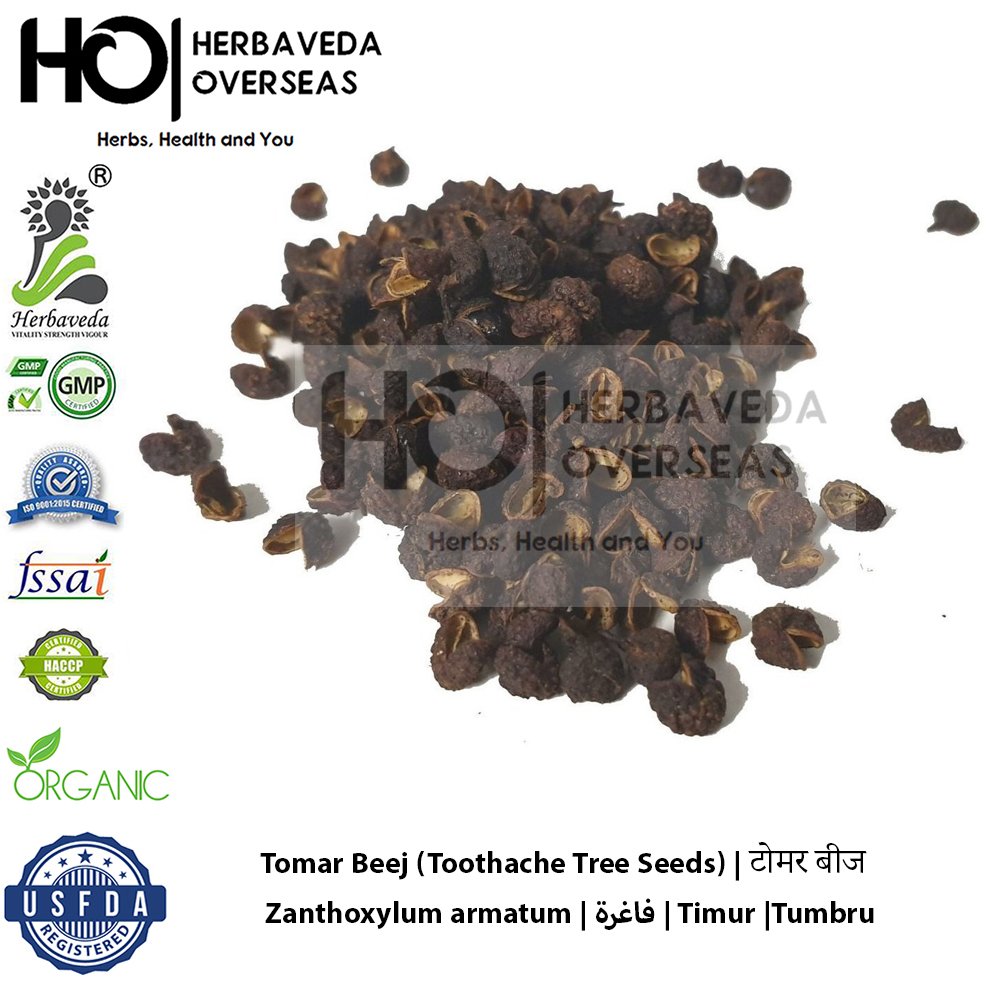
Tomar Beej comes from a small thorny tree that grows in the Himalayan foothills of India and Nepal. Its small round fruits split open when dry, showing shiny black seeds. They have a lemony smell and leave a tingling, numbing feeling on the tongue – which is why the tree is called the toothache tree. It is close to Sichuan pepper.
Quick facts
- Botanical name: Zanthoxylum armatum DC. (syn. Z. alatum)
- Family: Rutaceae
- Part supplied: dried fruits and seeds
- Hindi: टोमर बीज, तिमूर
- Urdu: تومر بیج
- Other names: Tumburu (Sanskrit), Timur (Nepali), Himalayan prickly ash, toothache tree
Traditional uses
- Used as a spice in pahadi and Nepali chutneys, pickles and curries.
- Added to traditional tooth powders and mouth rinses.
- Described in Ayurvedic texts as Tumburu, mainly for digestion.
Who buys it from us
- Spice packers and masala makers
- Ayurvedic manufacturers and tooth-powder makers
- Pansari shops
Quality and packing
- Small, round, reddish-brown husks, many split open, with a few shiny black seeds.
- Strong citrus smell; causes a tingling, numb feeling on the tongue.
- Few stalks or thorns; dry and mould-free.
- Packed in bulk bags to the buyer’s requirement and shipped across India from Delhi.
Herbaveda Overseas has traded raw herbs from Khari Baoli, Delhi, since 1971. Use our Request a Quote form for the latest bulk price, a sample or a custom pack size.
Frequently asked questions
Is Tomar Beej the same as Sichuan pepper?
They are close relatives with a similar tingling taste, but come from different Zanthoxylum species.
Is it the same as Tejbal?
Both come from the same tree. Tomar Beej is the fruit and seed; Tejbal usually means the bark and twigs.
Do you supply Tomar Beej in bulk?
Yes. Send an enquiry with your quantity.
Sold as a raw herb for traditional and trade use. This information is educational and is not a substitute for medical advice.