
Description
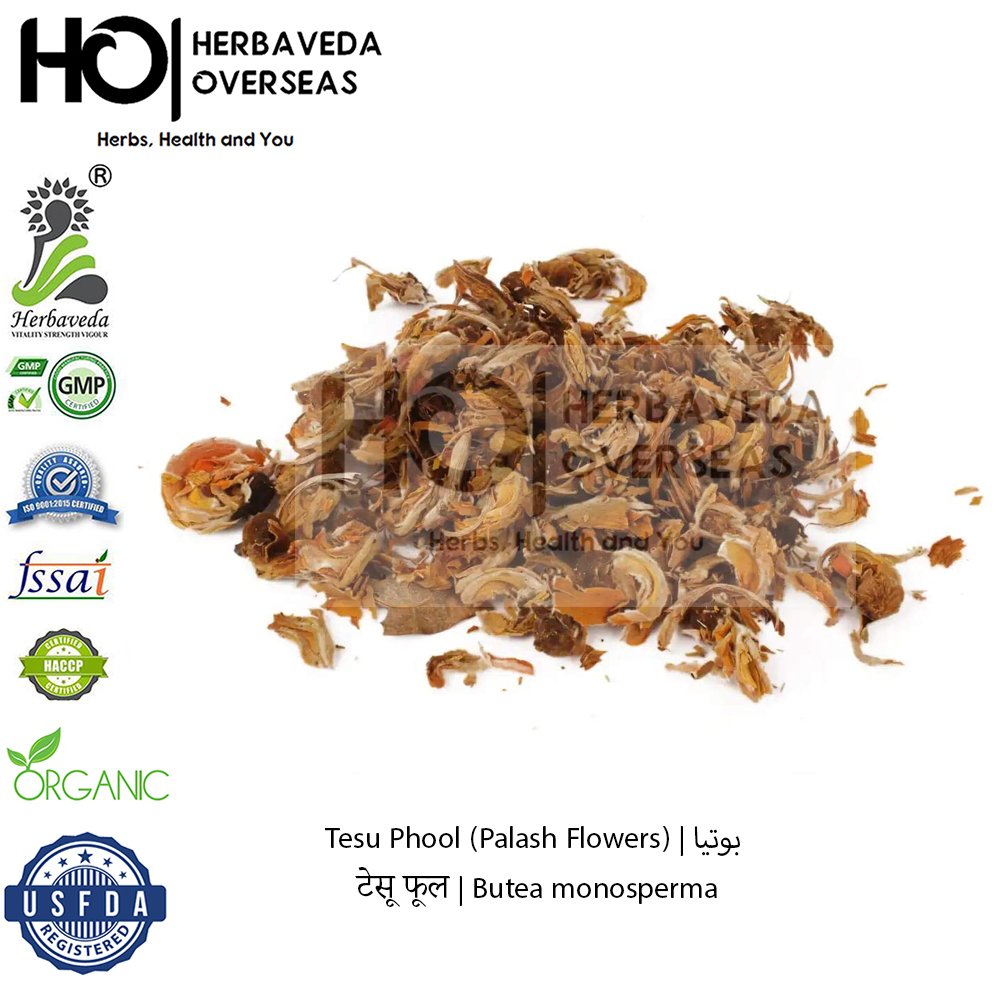
Tesu Phool — the dried flowers of Butea monosperma — represents one of the most culturally and ecologically significant flowering events in the Indian landscape. The vivid orange-red, curved, five-petalled flowers appear on leafless branches between January and March, transforming entire stretches of dry deciduous forest into a blaze of colour that inspired the Sanskrit poetic metaphor ‘Palash ki aag’ (fire of Palash). In classical Ayurveda, Palasha Pushpa is documented in the Charaka Samhita and Sushruta Samhita for preparations associated with worm expulsion, eye conditions, and skin care. The flowers are also the traditional source of the orange dye used in Holi celebrations, prepared by boiling the flowers in water. The dried flower petals are incorporated in Ayurvedic ophthalmic and haemostatic preparations.