
Description
What is it?
Sirwali comes from Celosia, a common plant with feathery, silvery-pink flower spikes that grows wild in fields and is also planted in gardens. After flowering it sheds tiny, glossy black seeds, which are collected and cleaned. The young leaves are cooked as a green vegetable in parts of India and Africa.
Quick facts
- Botanical name: Celosia argentea L.
- Family: Amaranthaceae
- Part supplied: dried seeds
- Hindi: सिरवाली, सफेद मुर्गा
- Urdu: سروالی
- Other names: Shitivaraka (Sanskrit), Kurdu (Marathi), silver cockscomb, plumed celosia, quail grass
Traditional uses
- Used in folk and Ayurvedic preparations traditionally linked to eye care.
- Used in traditional skin-care preparations.
- The leaves are cooked as a leafy green.
Who buys it from us
- Ayurvedic manufacturers
- Pansari shops and herb retailers
Quality and packing
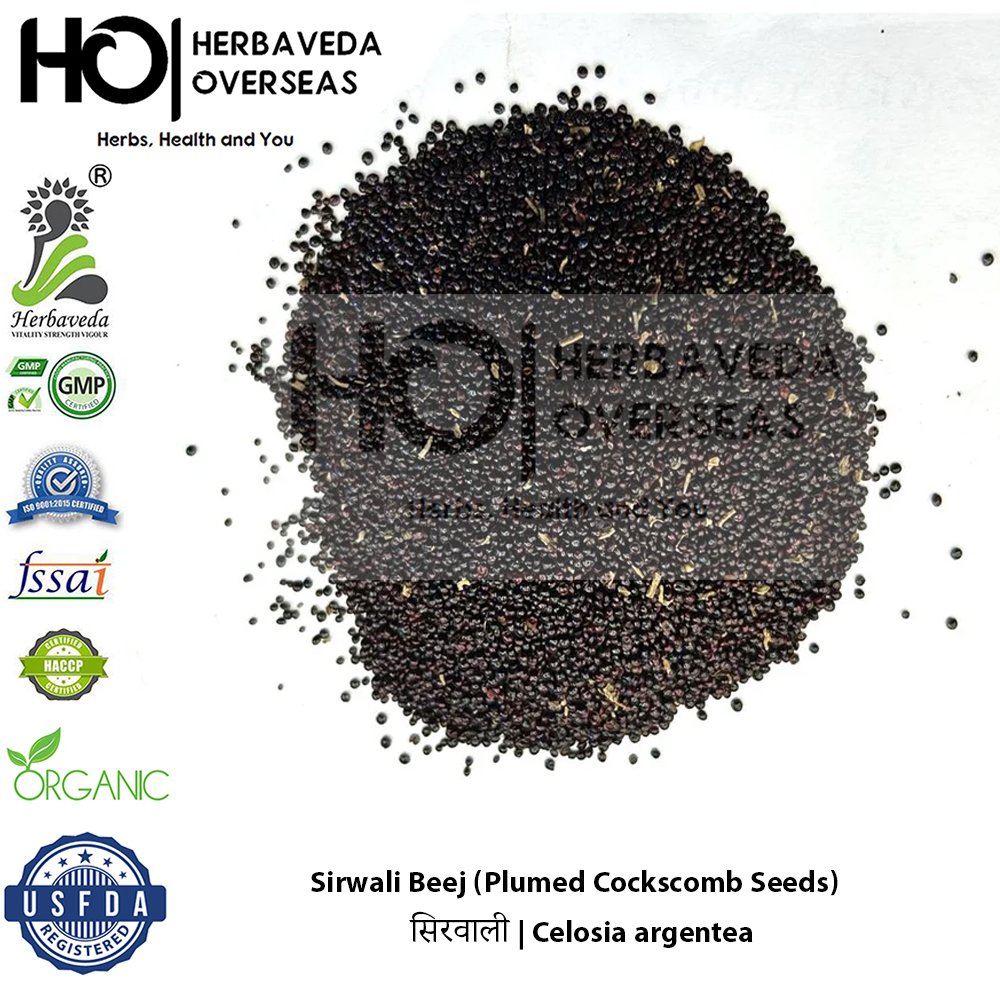
- Tiny, shiny, jet-black seeds.
- Clean, with little chaff, dust or broken seed.
- Packed in bulk bags to the buyer’s requirement and shipped across India from Delhi.
Herbaveda Overseas has traded raw herbs from Khari Baoli, Delhi, since 1971. Use our Request a Quote form for the latest bulk price, a sample or a custom pack size.
Frequently asked questions
Is sirwali the same as Mayurshikha?
Not always – Mayurshikha is used for more than one plant in different regions. Our sirwali is Celosia argentea seed.
What does sirwali seed look like?
Tiny, round-flat, shiny black seeds.
Do you supply sirwali in bulk?
Yes, across India. Send an enquiry with your quantity.
Sold as a raw herb for traditional and trade use. This information is educational and is not a substitute for medical advice.