
Description
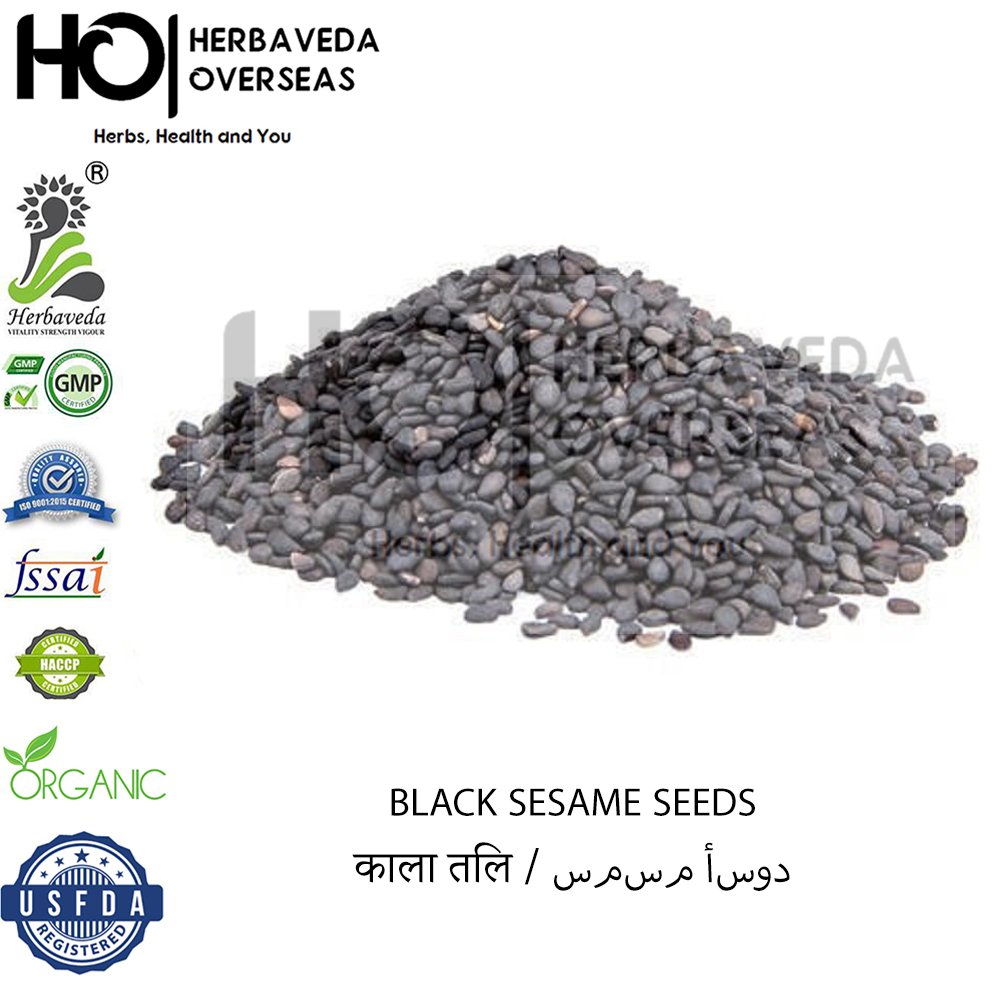
Sesamum indicum, sesame, is an annual herb of the family Pedaliaceae, believed to have been domesticated in Sub-Saharan Africa or the Indian subcontinent — with archaeological evidence from Harappan sites in Gujarat dating to 2500 BCE. Black sesame seeds — the unprocessed, unhulled variety — are distinguished in Ayurvedic pharmacology from white sesame and are cited in the Charaka Samhita as Krishnatila, associated with Pitru tarpana (ancestral ritual offerings) and Rasayana formulations for longevity and reproductive health. Rich in sesamin, sesamolin, and tocopherols, the black variety has attracted phytochemical research on hepatoprotective and antioxidant properties. The seeds are commercially produced in Gujarat, Rajasthan, and Andhra Pradesh, with India remaining one of the world’s major sesame-exporting nations.