
Description
What is it?
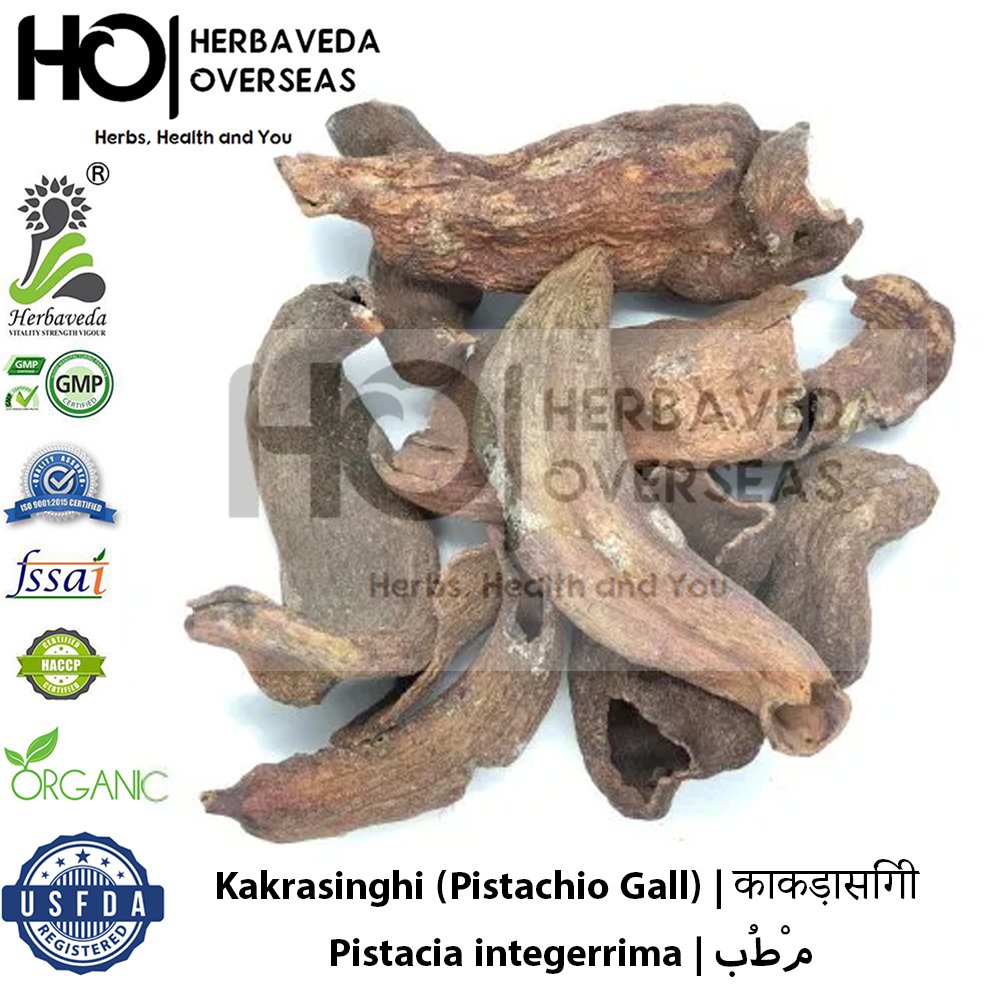
Kakrasinghi is not a root, fruit or seed. It is a gall – a hollow, horn-shaped growth that forms on the leaves of the Himalayan pistachio tree when a small insect lives on it. The galls are collected and dried. The tree grows in the dry hills of the western Himalayas, from Afghanistan to Himachal Pradesh. In Ayurveda the galls are called Karkatashringi, “crab’s horn”.
Quick facts
- Botanical name: Pistacia integerrima J.L.Stewart
- Family: Anacardiaceae
- Part supplied: dried leaf galls
- Hindi: काकड़ासिंगी, काकड़ासींगी
- Urdu: کاکڑا سنگھی
- Other names: Karkatashringi (Sanskrit), Kakkatashingi (Marathi), Himalayan pistachio gall
Traditional uses
- Used in classical Ayurvedic formulas for the cough and cold season, such as Balachaturbhadra churna.
- Described in Ayurvedic texts for children’s traditional preparations.
- Used in traditional tanning for its astringent nature.
Who buys it from us
- Ayurvedic manufacturers
- Vaidyas and practitioners
- Pansari shops
Quality and packing
- Hollow, horn-shaped galls, light brown to reddish-brown.
- Light, dry and crisp, with no insect dust inside.
- Strong astringent, slightly resinous smell.
- Packed in bulk bags to the buyer’s requirement and shipped across India from Delhi.
Herbaveda Overseas has traded raw herbs from Khari Baoli, Delhi, since 1971. Use our Request a Quote form for the latest bulk price, a sample or a custom pack size.
Frequently asked questions
What exactly is kakrasinghi?
It is a gall that grows on the leaves of the Himalayan pistachio tree, not a root.
Why is it called a horn?
The galls are long, curved and hollow, like a small horn.
Do you supply kakrasinghi in bulk?
Yes. Send an enquiry with your quantity.
Sold as a raw herb for traditional and trade use. This information is educational and is not a substitute for medical advice.