
Description
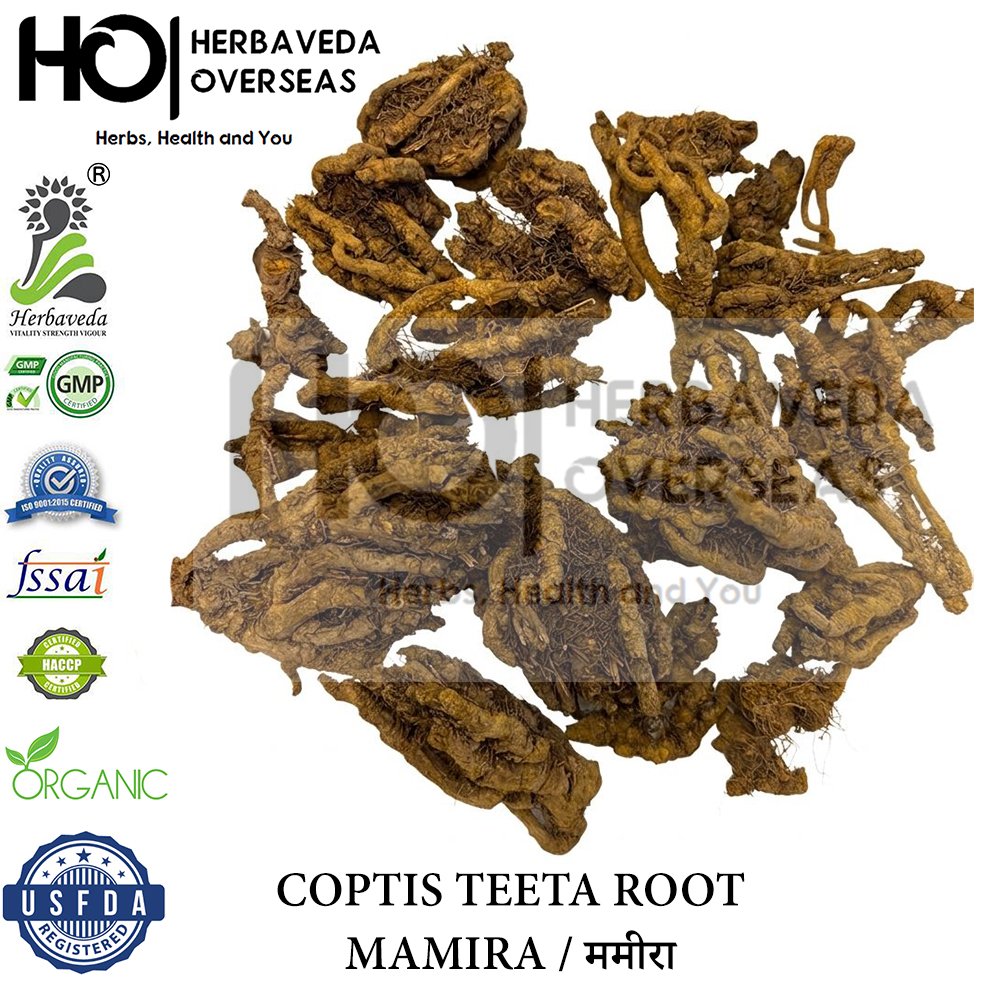
Coptis teeta, the Indian goldthread, is a small, creeping perennial herb of the family Ranunculaceae, endemic to the cool, moist temperate forests and alpine meadows of Arunachal Pradesh, India, and adjacent Yunnan, China, at elevations between 2,000 and 3,500 metres. The slender, bright yellow rhizome is intensely bitter due to its high concentration of the isoquinoline alkaloid berberine — among the highest natural concentrations documented in any plant species. Known as Mamira in Indian and Tibetan herbal traditions, the rhizome is an important drug in both classical Ayurvedic formulations for ophthalmic and hepatic conditions and in Tibetan medicine as a cooling, anti-inflammatory herb. Coptis species are among the most important medicinal plants of East Asian traditional medicine. The species is subject to significant pressure from wild harvesting and is considered rare.