
Description
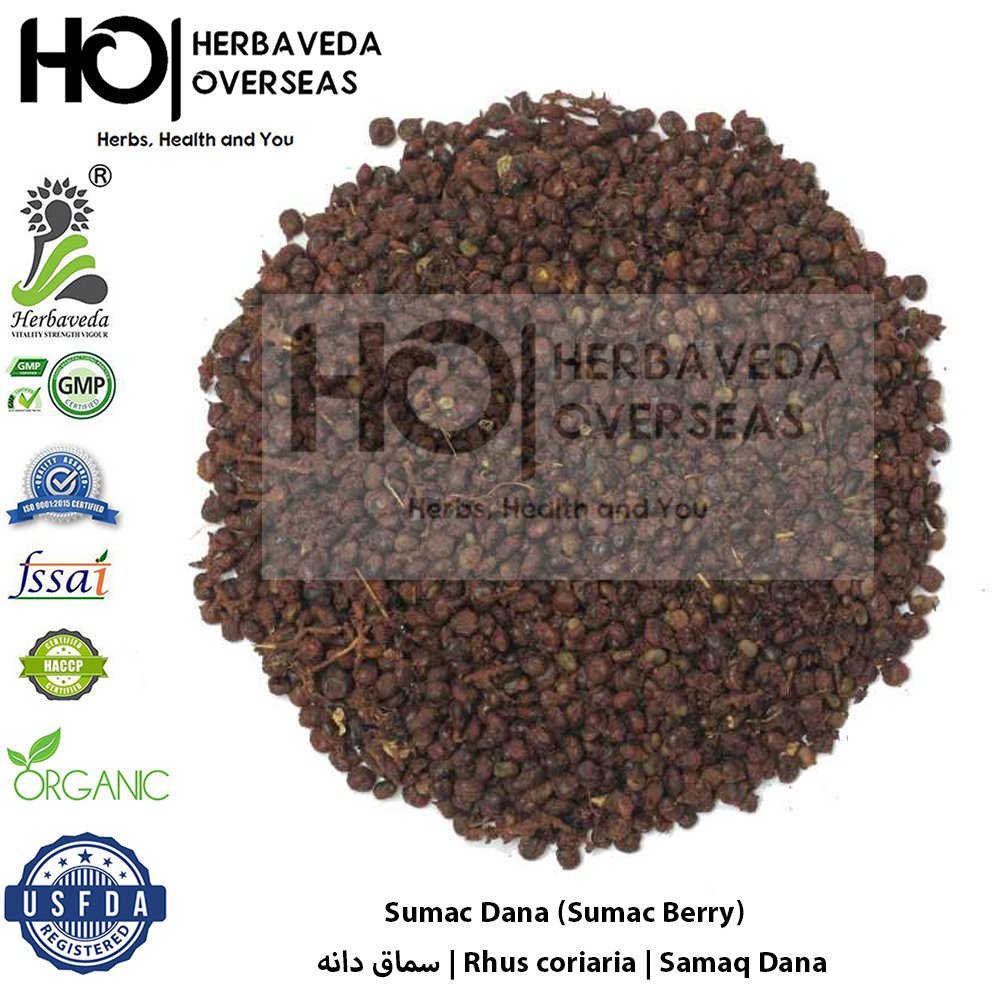
Rhus coriaria, Sicilian sumac, is a deciduous shrub of the family Anacardiaceae, native to the rocky hillsides and woodland margins of the eastern Mediterranean basin from Turkey through Lebanon, Syria, and Iran. The dense clusters of small, dark red-brownish, glandular-hairy drupes — sumac berries — are harvested in late summer, dried, and coarsely ground to produce the characteristic sour, red-purple powdered spice foundational to Middle Eastern, Turkish, and Persian cuisines. The berries contain gallic acid, malic acid, and anthocyanin pigments responsible for their vivid colour and intensely sour taste. In classical Unani pharmacopoeia, Sumaq is documented in the Makhzan-ul-Adwiya as an astringent, haemostatic, and digestive preparation for diarrhoea, nausea, and bladder conditions. Traded from Turkey, Iran, and Syria into Indian Unani pharmaceutical markets.