
Description
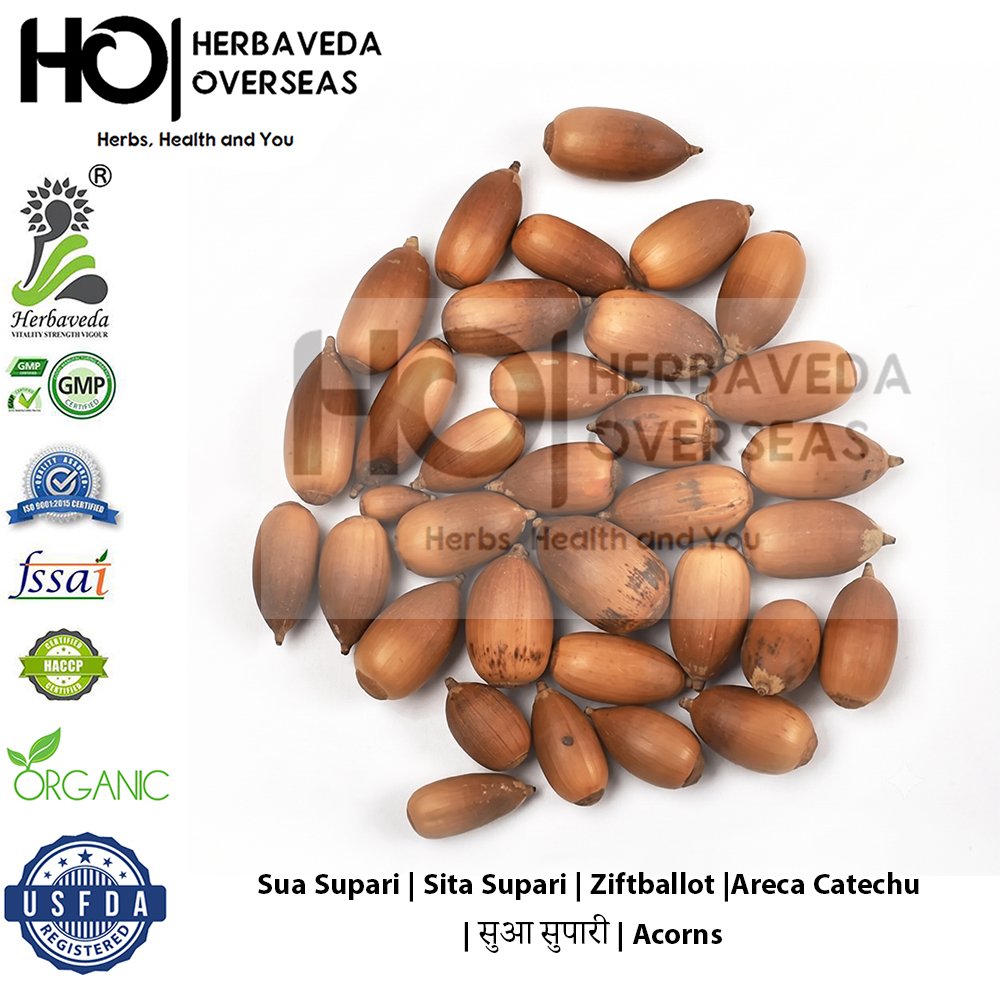
Areca catechu, the areca palm, is a slender, graceful monocotyledonous palm of the family Arecaceae, believed to have originated in the Philippines or the Malay Archipelago, now cultivated extensively across India, Sri Lanka, Bangladesh, Myanmar, and Southeast Asia in humid tropical conditions. India is among the world’s largest producers of areca nut, with Karnataka, Kerala, and Assam as primary cultivation states. The seed — known as Supari in Hindi and Puga or Kramuka in Sanskrit — has been incorporated in traditional betel quid preparations, chewed wrapped in betel leaf with slaked lime and various spices, across South and Southeast Asian cultures for over two thousand years. In classical Ayurveda, the fruit and seed are documented in the Charaka Samhita for preparations addressing worm infestations and as a component of various oral health formulations. Its cultural significance spans Hindu, Buddhist, and Islamic ceremonial traditions.