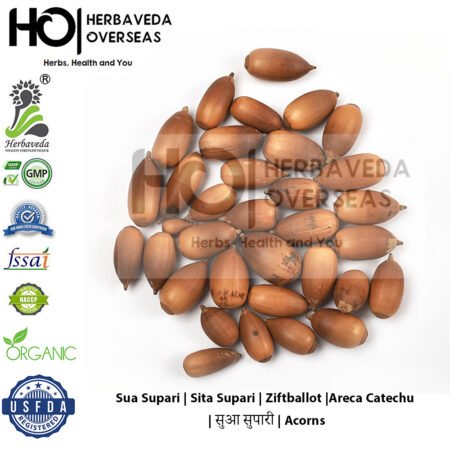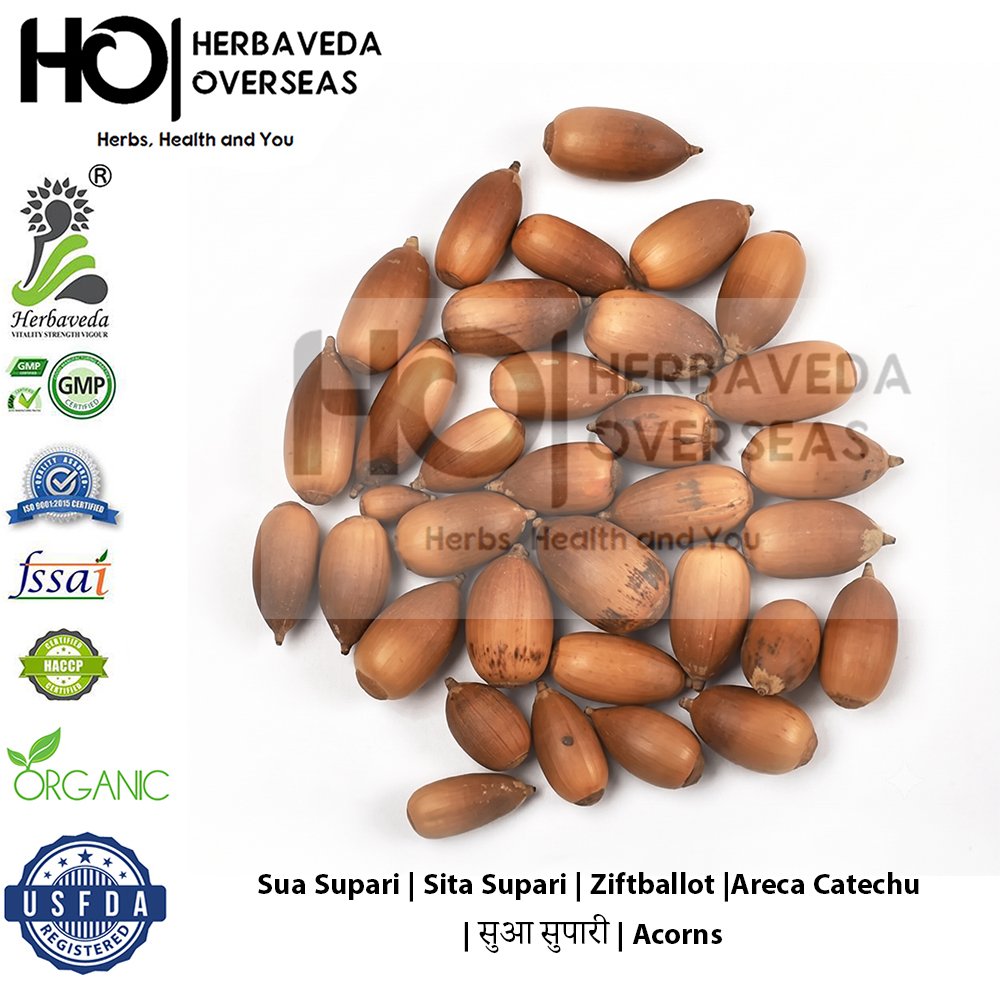
Sua Supari | Sita Supari | Ziftballot | Areca Catechu | सुआ सुपारी | Acorns

1000 in stock

Price range: ₹473.00 through ₹630.00 inc GST

Areca catechu is a slender, tall, monocotyledonous palm native to tropical Asia — believed to have originated in the Philippines or Malaysia — now cultivated extensively across South and Southeast Asia. Its seed — the areca nut or betel nut — has been chewed across South and Southeast Asian cultures for over two thousand years in traditional practices of great cultural and social significance.

Also available on Amazon
Prefer Cash on Delivery? Buy the same Herbaveda pack on Amazon with COD and fast Prime delivery.
Buy It Now
  • Free Shipping & Exchanges
  • Flexible and secure payment, pay on delivery
  • 600,000 happy customers
Guarantee Safe & Secure Checkout
SKU: hbv2_10560_parent Category:

Quick facts: Sua Supari

Common name
Sua Supari
Hindi / local name
सुआ सुपारी
Type
Whole edible and oil seeds
Pack sizes
0.5 kg, 1 kg (from ₹473)
Packed by
Herbaveda Overseas, Khari Baoli, Delhi (since 1971)
Storage
Airtight container, cool and dry place, away from sunlight
Also sold on
Amazon India (Herbaveda brand)
Bulk / export
Available – ask for a wholesale quote

Can I buy Sua Supari in bulk?

Yes. Retail packs are sold here; for bulk quantities, contact us for wholesale and export prices.

For traditional and culinary use. Not intended to diagnose, treat, cure or prevent any disease. Consult a doctor before use, especially if you are pregnant, nursing or taking medicines.

Description

Areca catechu, the areca palm, is a slender, graceful monocotyledonous palm of the family Arecaceae, believed to have originated in the Philippines or the Malay Archipelago, now cultivated extensively across India, Sri Lanka, Bangladesh, Myanmar, and Southeast Asia in humid tropical conditions. India is among the world’s largest producers of areca nut, with Karnataka, Kerala, and Assam as primary cultivation states. The seed — known as Supari in Hindi and Puga or Kramuka in Sanskrit — has been incorporated in traditional betel quid preparations, chewed wrapped in betel leaf with slaked lime and various spices, across South and Southeast Asian cultures for over two thousand years. In classical Ayurveda, the fruit and seed are documented in the Charaka Samhita for preparations addressing worm infestations and as a component of various oral health formulations. Its cultural significance spans Hindu, Buddhist, and Islamic ceremonial traditions.
Additional information

WeightN/A
DimensionsN/A