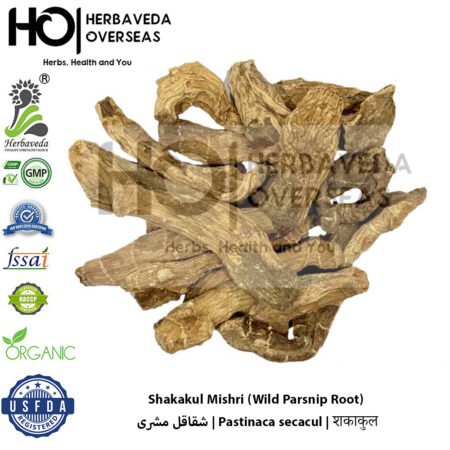
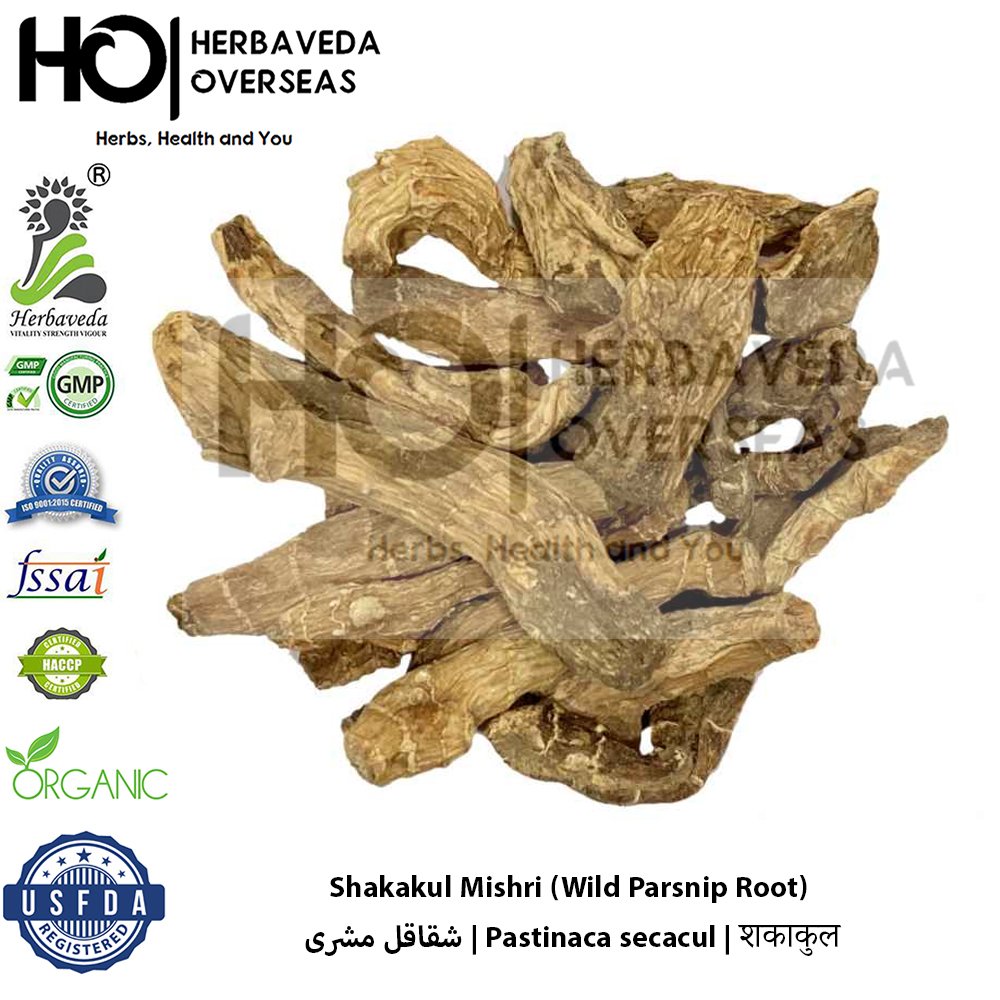
Shakakul Mishri (Wild Parsnip Root) | شقاقل مشری | Pastinaca secacul

1000 in stock

Price range: ₹158.00 through ₹210.00 inc GST

Pastinaca secacul is a biennial umbelliferous herb native to the mountainous regions of Central Asia, Afghanistan, and Iran. Its sweet, fleshy taproot — Shakakul Mishri in classical Unani pharmacopoeia — is incorporated in Mufarreh and Majoon compound preparations for vitality, male reproductive health, and nervous system tonification.

Buy It Now
  • Free Shipping & Exchanges
  • Flexible and secure payment, pay on delivery
  • 600,000 happy customers
Guarantee Safe & Secure Checkout

Quick facts: Shakakul Mishri (Wild Parsnip Root)

Common name
Shakakul Mishri, Wild Parsnip Root
Hindi / local name
شقاقل مشری
Botanical name
Pastinaca secacul
Type
Raw roots
Pack sizes
0.5 kg, 1 kg (from ₹158)
Packed by
Herbaveda Overseas, Khari Baoli, Delhi (since 1971)
Storage
Airtight container, cool and dry place, away from sunlight
Bulk / export
Available – ask for a wholesale quote

What is Shakakul Mishri called in English?

Shakakul Mishri (شقاقل مشری) is Wild Parsnip Root – botanical name Pastinaca secacul.

Can I buy Shakakul Mishri in bulk?

Yes. Retail packs are sold here; for bulk quantities, contact us for wholesale and export prices.

For traditional and culinary use. Not intended to diagnose, treat, cure or prevent any disease. Consult a doctor before use, especially if you are pregnant, nursing or taking medicines.

Description

Pastinaca secacul, the sweet Shakakul, is a biennial herb of the family Apiaceae, native to the rocky mountain meadows and dry upland grasslands of Central Asia — particularly Afghanistan, Tajikistan, and northeastern Iran — related to the cultivated parsnip but botanically distinct. The fleshy, sweet taproot, known as Shakakul Mishri (mishri meaning sugar, reflecting its sweetness), is a classical Unani pharmacopoeial drug listed in the Makhzan-ul-Adwiya and incorporated in prestigious compound preparations including Maajun Shakakul — traditionally formulated for male reproductive vitality, general strength, and nervous system tonification. Documented in Avicenna’s Al-Qanun fi al-Tibb as a nutritive Rasayana-equivalent herb, the root is traded from Afghanistan and Central Asia into Indian herbal markets through traditional trade channels.
Additional information

WeightN/A
DimensionsN/A