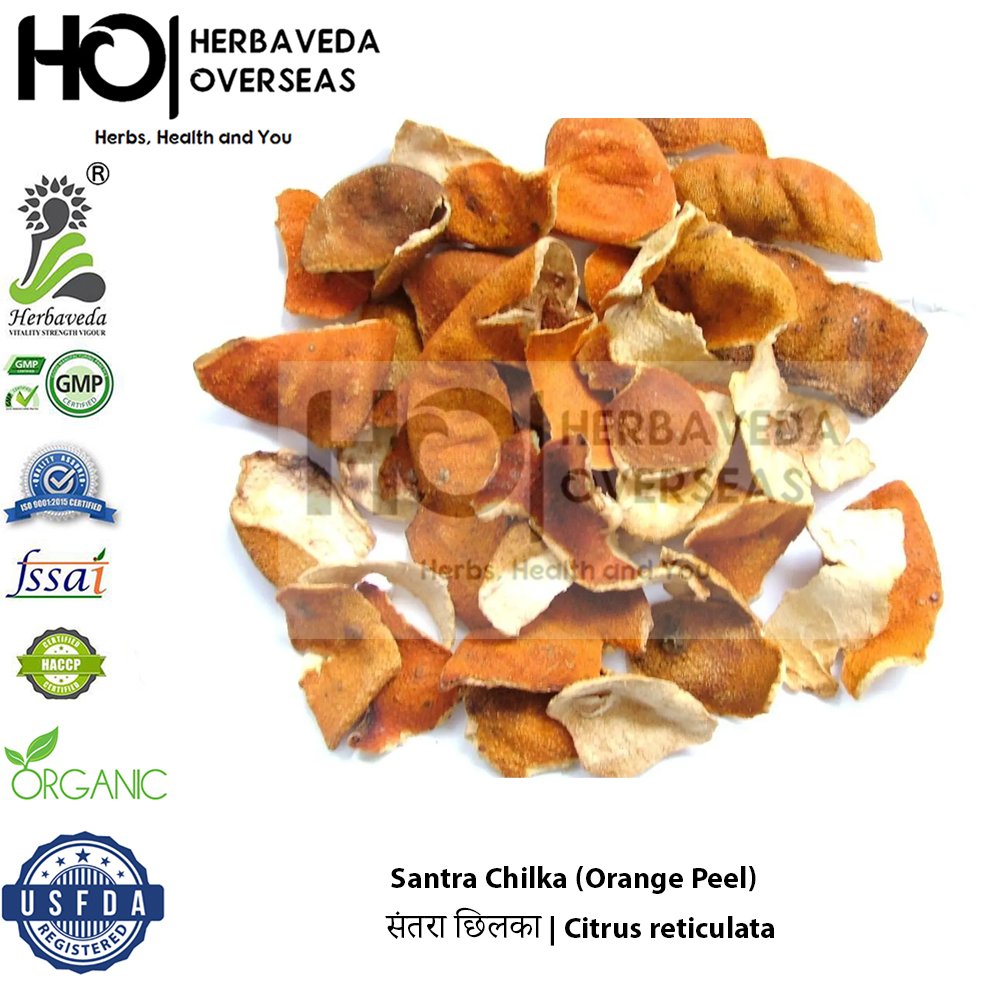
Santra Chilka (Orange Peel) | संतरा छिलका | Citrus reticulata

in stock

The dried outer peel of Citrus reticulata — the mandarin orange — contains the essential oil limonene, flavonoids including hesperidin, and pectin-rich mesocarp. Documented in Ayurvedic, Unani, and traditional Chinese medical literature for preparations addressing digestive stimulation, expectoration, and Pitta-alleviating applications.

  • Free Shipping & Exchanges
  • Flexible and secure payment, pay on delivery
  • 600,000 happy customers
Guarantee Safe & Secure Checkout
Category:

Quick facts: Santra Chilka (Orange Peel)

Common name
Santra Chilka, Orange Peel
Hindi / local name
संतरा छिलका
Botanical name
Citrus reticulata
Type
Raw roots
Packed by
Herbaveda Overseas, Khari Baoli, Delhi (since 1971)
Storage
Airtight container, cool and dry place, away from sunlight
Bulk / export
Available – ask for a wholesale quote

What is Santra Chilka called in English?

Santra Chilka (संतरा छिलका) is Orange Peel – botanical name Citrus reticulata.

How do I order Santra Chilka in bulk?

Send us your quantity and destination through the contact page or WhatsApp +91-99717-54285 for a wholesale or export quote.

For traditional and culinary use. Not intended to diagnose, treat, cure or prevent any disease. Consult a doctor before use, especially if you are pregnant, nursing or taking medicines.

Description

Santra Chilka — dried mandarin orange peel — is derived from Citrus reticulata (also encompassing Citrus sinensis varieties in the broader trade), the mandarin or tangerine citrus group of the family Rutaceae, believed to have originated in southern China and northeastern India. The outer zest layer (flavedo) is rich in limonene, beta-myrcene, and linalool from the essential oil; while the inner white spongy layer (albedo) contains pectin and hesperidin. In Ayurveda, dried citrus peel (Nimbuka-related) is incorporated in digestive and carminative preparations. In Unani medicine, Qishr-al-Naranj (dried orange peel) features in classical formulations for digestive stimulation and expectoration. Traditional Chinese medicine similarly employs Chen Pi (aged dried citrus peel) as a primary Qi-regulating digestive herb. India is among the world’s leading mandarin-producing nations, with Nagpur, Maharashtra, as the primary production centre.