Herbaveda Overseas

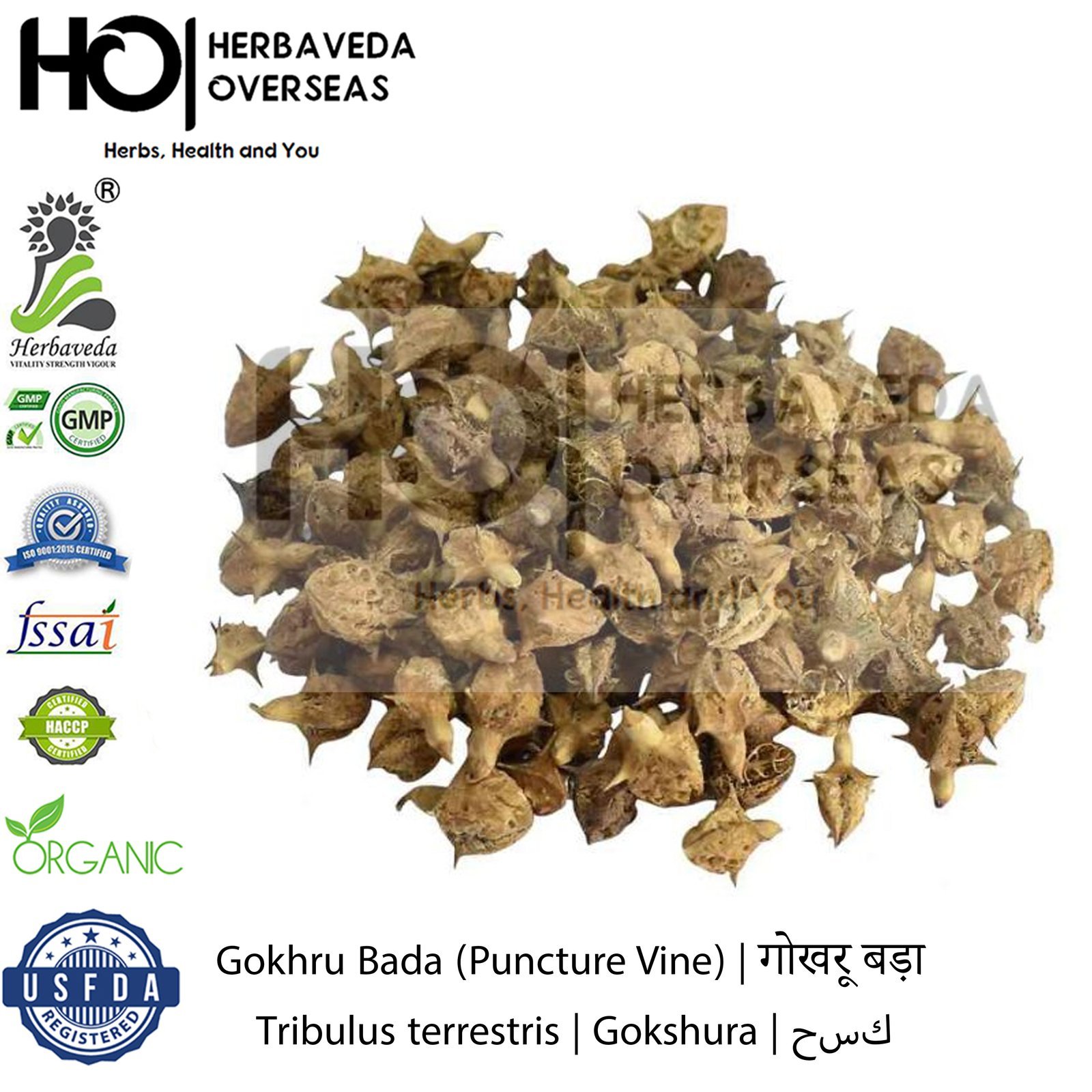
Gokhru Bada (Puncture Vine) | गोखरू बड़ा| Tribulus terrestris

in stock

Tribulus terrestris is a creeping annual herb native to warm, temperate, and tropical regions across the Mediterranean, South Asia, Africa, and Australia. Its small, spiny fruits are documented in classical Ayurvedic literature as a primary herb for urinary, reproductive, and vitality-enhancing formulations.

  • Free Shipping & Exchanges
  • Flexible and secure payment, pay on delivery
  • 600,000 happy customers
Guarantee Safe & Secure Checkout

Quick facts: Gokhru Bada (Puncture Vine)

Common name
Gokhru Bada, Puncture Vine
Hindi / local name
गोखरू बड़ा
Botanical name
Tribulus terrestris
Type
Raw roots
Packed by
Herbaveda Overseas, Khari Baoli, Delhi (since 1971)
Storage
Airtight container, cool and dry place, away from sunlight
Bulk / export
Available – ask for a wholesale quote

What is Gokhru Bada called in English?

Gokhru Bada (गोखरू बड़ा) is Puncture Vine – botanical name Tribulus terrestris.

How do I order Gokhru Bada in bulk?

Send us your quantity and destination through the contact page or WhatsApp +91-99717-54285 for a wholesale or export quote.

For traditional and culinary use. Not intended to diagnose, treat, cure or prevent any disease. Consult a doctor before use, especially if you are pregnant, nursing or taking medicines.

Description

Tribulus terrestris, puncture vine or caltrop, is a prostrate, multi-branched annual herb of the family Zygophyllaceae, native to warm temperate and tropical regions across the Mediterranean basin, the Middle East, the Indian subcontinent, and sub-Saharan Africa. In India, it colonises sandy fields, roadsides, and waste ground throughout Rajasthan, Gujarat, and Uttar Pradesh. Known in Ayurveda as Gokshura and documented in the Charaka Samhita, Sushruta Samhita, and Ashtanga Hridayam, the small, woody, spiny fruits have been traditionally incorporated into formulations addressing urinary tract function, renal health, male reproductive vitality, and athletic physical conditioning. The plant also appears in traditional Chinese and Arab medical literature with similar indications, testifying to its transcultural pharmacological significance.
shopping cart